In today’s rapidly evolving business environment, companies face a multitude of risks — from financial instability to operational disruptions, legal compliance issues, and market fluctuations. Identifying and managing these risks is crucial for long-term success. A Business Risk Report serves as an essential tool, offering organizations the insights needed to detect potential threats before they impact operations or reputation.
Proactive risk management is no longer optional; it is a core element of strategic planning. Companies that leverage Business Risk Reports are better equipped to anticipate challenges, safeguard resources, and maintain business continuity.
What Is a Business Risk Report?
A Business Risk Report is a structured document that evaluates a company’s exposure to various risks. These reports analyze financial stability, operational performance, legal compliance, market position, and other factors that may affect the organization’s success.
Typically, a risk report includes:
- Creditworthiness and payment history
- Outstanding debts or financial obligations
- Legal disputes or litigation history
- Ownership structure and corporate governance
- Operational challenges and market vulnerabilities
By consolidating this information, businesses can make informed decisions, reduce uncertainty, and strengthen partnerships with clients, suppliers, and investors.
The Importance of Identifying Unseen Threats
Many business risks are not immediately visible. Unseen threats can arise from:
- Financial Instability: Sudden drops in revenue, unpaid debts, or poor cash flow management.
- Legal or Regulatory Compliance Issues: Violations that may result in fines, penalties, or reputational damage.
- Operational Vulnerabilities: Supplier defaults, equipment failures, or process inefficiencies.
- Market Volatility: Sudden changes in demand, competition, or industry trends.
Without proper risk assessment, these threats can disrupt operations, lead to financial losses, and damage stakeholder trust. A Business Risk Report provides visibility into these hidden challenges, allowing businesses to take preventive action.
How Business Risk Reports Help Companies Manage Threats
1. Proactive Risk Identification
Risk reports provide early warning signals by analyzing company financials, compliance records, and operational history. This enables organizations to address vulnerabilities before they escalate.
2. Strategic Planning and Decision-Making
Companies can make informed decisions regarding investments, partnerships, and expansion by understanding potential risks. Risk reports guide leaders in crafting strategies that balance opportunity and caution.
3. Financial Risk Management
Evaluating creditworthiness, debt levels, and payment behavior ensures that companies engage only with reliable partners. This minimizes the likelihood of defaults and financial losses.
4. Operational Risk Mitigation
By identifying operational gaps, inefficiencies, or dependency risks, companies can implement contingency plans to maintain continuity in case of disruptions.
5. Reputation Protection
Unmanaged risks can damage a company’s credibility. Risk reports provide insights that help maintain trust with clients, investors, and regulatory bodies.
Technology’s Role in Risk Analysis
The integration of Business Intelligence Tools has revolutionized how risk is assessed. Automated platforms consolidate data from multiple sources, analyze patterns, and generate actionable insights in real time.
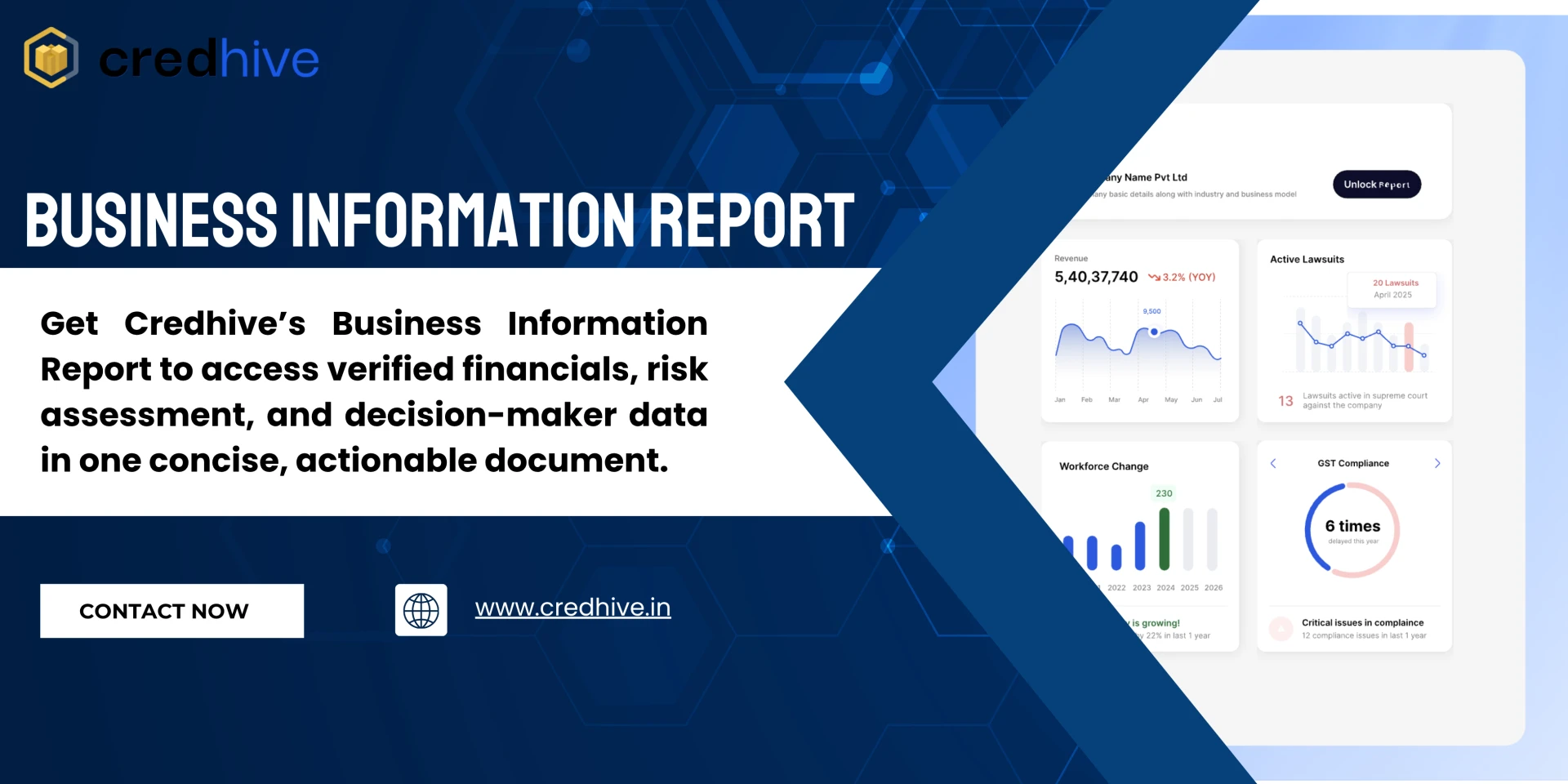
Platforms like Credhive offer advanced Business Risk Reports that combine verified data, predictive analytics, and detailed insights. This enables companies to:
- Identify financial and operational risks quickly
- Evaluate partner credibility
- Make informed strategic decisions
- Maintain compliance and transparency
By leveraging technology, businesses no longer need to rely on fragmented or outdated data, making risk management more precise and efficient.
Benefits of Using Business Risk Reports
- Early Detection of Threats: Spot potential financial, operational, or legal issues before they escalate.
- Informed Decision-Making: Base strategic choices on verified data and analysis.
- Enhanced Financial Safety: Minimize exposure to defaults and unreliable partners.
- Operational Continuity: Plan for contingencies and reduce operational disruptions.
- Reputation Management: Safeguard trust and credibility with stakeholders.
Real-World Example
Consider a technology firm looking to partner with a smaller software vendor. Without assessing risk, the firm could enter into a contract that results in delayed deliveries, financial losses, or compliance issues.
By using a Business Risk Report, the company uncovers key insights such as the vendor’s financial stability, pending legal cases, and operational capacity. Equipped with this information, the firm can negotiate safer contract terms, set performance safeguards, or select an alternative partner — avoiding costly surprises.
Conclusion
In today’s competitive and unpredictable market, companies cannot afford to ignore hidden risks. Business Credit Reports provide the clarity, foresight, and data-driven insights needed to identify threats, safeguard resources, and maintain sustainable growth.
Platforms like Credhive make risk management accessible and reliable by offering comprehensive, verified, and actionable Business Risk Reports. By integrating these insights into strategic planning, businesses can anticipate challenges, strengthen partnerships, and navigate uncertainty with confidence.
In a world where unforeseen threats can derail even well-planned operations, leveraging business risk insights is not just smart — it is essential for long-term success.