In Egypt's competitive B2B market, identifying potential customers is only part of the sales challenge. Businesses must also determine which prospects are relevant, commercially viable and likely to benefit from their products or services. Approaching every company with the same strategy often results in wasted resources, low engagement and missed opportunities.
Business Insights help organisations move beyond broad customer lists towards more precise segmentation and targeting. By analysing company characteristics, market conditions and commercial behaviour, businesses can identify valuable customer groups, prioritise opportunities and develop more relevant sales strategies.
What Is B2B Customer Segmentation?
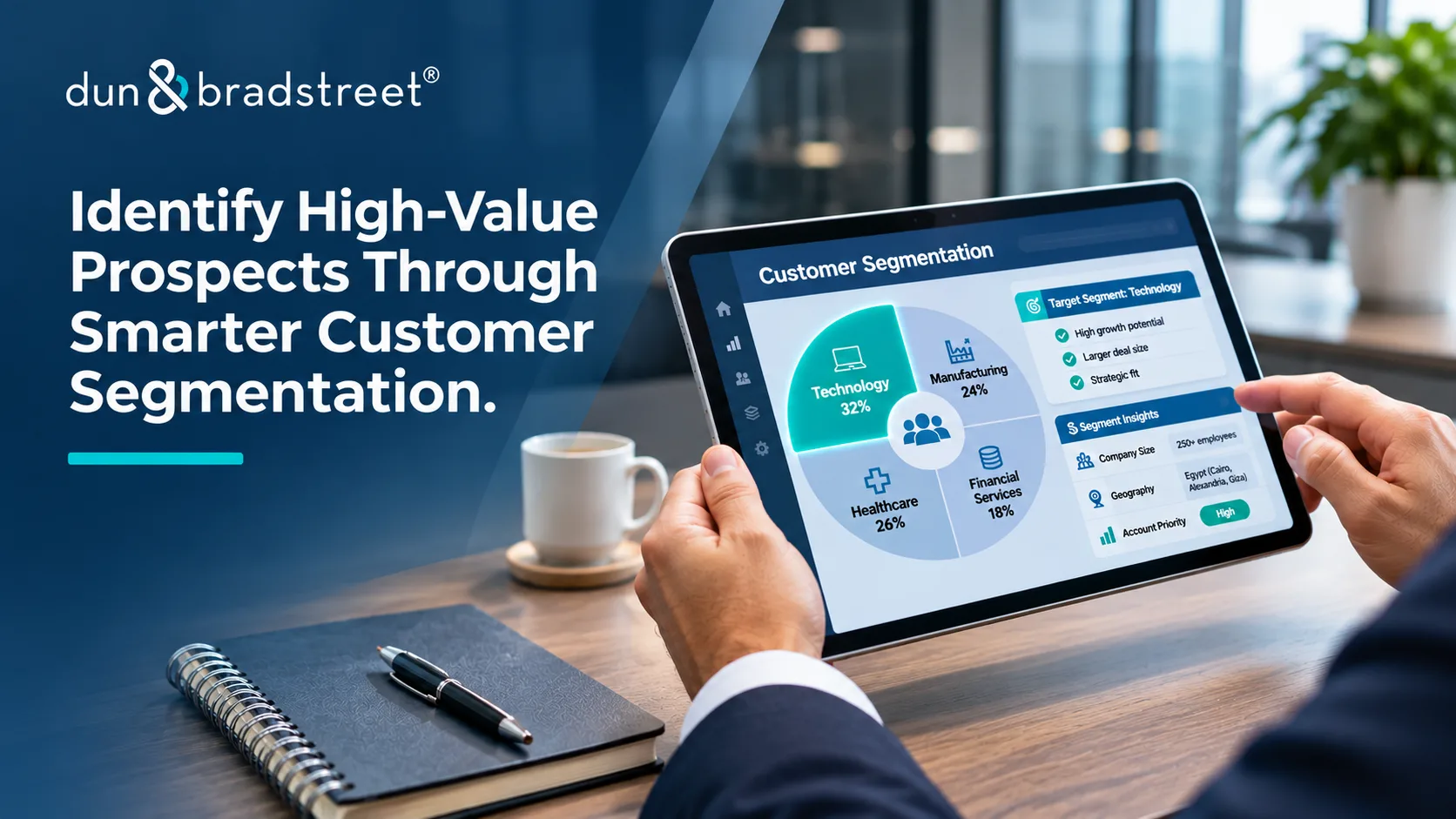
B2B customer segmentation involves dividing a business market into smaller groups based on shared characteristics, requirements or purchasing behaviour.
Unlike consumer segmentation, which often considers personal preferences and demographics, B2B segmentation focuses on organisational attributes such as industry, company size, revenue, location and business structure.
For example, a technology solutions provider in Cairo may serve businesses across logistics, healthcare, manufacturing and financial services. Although these organisations may require similar technology, their operational priorities, purchasing processes and budgets can differ significantly.
Business Insights help identify these differences, allowing sales and marketing teams to develop approaches suited to each customer segment.
How Business Insights Improve B2B Customer Segmentation
1. Identify Customers Using Firmographic Data
Firmographic data provides a foundation for effective B2B segmentation. It describes the structural and commercial characteristics of organisations, including industry classification, employee strength, business size, location and ownership.
Businesses can use these attributes to identify companies that match their ideal customer profile.
For example, an enterprise software provider may prioritise medium-sized and large organisations operating across multiple Egyptian governorates rather than targeting every registered business.
This approach helps reduce irrelevant prospecting and directs sales resources towards companies with requirements that align more closely with available solutions.
2. Understand Customer Needs Across Industries
Companies operating in different industries face distinct operational challenges, regulatory requirements and growth priorities.
Business Insights enable organisations to examine industry trends, market developments and customer requirements before approaching prospective clients.
A financial services provider, for instance, may identify different requirements among Egyptian trading companies, construction businesses and manufacturing firms.
Understanding these differences supports more relevant product positioning, personalised communication and stronger customer engagement.
Instead of promoting identical solutions to every prospect, businesses can demonstrate how their offerings address specific industry challenges.
3. Prioritise High-Value Business Opportunities
Not every potential customer represents the same commercial opportunity.
Some companies may offer greater revenue potential, recurring business opportunities or long-term partnership value. Others may have limited purchasing capacity or requirements outside the organisation's core offering.
Business Insights help sales teams evaluate prospects using factors such as company size, financial indicators, growth patterns and business activity.
Combining these findings with internal sales performance data can support more effective lead scoring and account prioritisation.
This allows businesses to focus their efforts on opportunities with stronger commercial potential rather than distributing resources equally across all prospects.
4. Improve Geographic and Market Targeting
Egypt presents diverse business opportunities across Cairo, Giza, Alexandria and industrial centres such as 6th of October City and 10th of Ramadan City. Customer requirements may vary according to geographic location, industrial concentration and business activity.
Business Insights support geographic segmentation by identifying where relevant companies operate and how business opportunities are distributed across markets.
For example, a logistics solutions provider may focus on companies operating within major manufacturing and distribution centres, while a professional services firm may prioritise established commercial districts in Greater Cairo.
Geographic intelligence can also support expansion planning, territory allocation and targeted marketing campaigns.
5. Strengthen Account-Based Marketing Strategies
Account-based marketing focuses sales and marketing efforts on selected high-value organisations rather than broad audiences.
Effective account selection requires reliable information about business structures, potential requirements and relevant decision-makers.
Business Insights help organisations identify suitable target accounts, understand corporate relationships and develop more personalised engagement strategies.
For businesses dealing with large corporate groups in Egypt, understanding parent companies, subsidiaries and related entities can also reveal additional opportunities.
This supports better coordination between sales and marketing teams and reduces duplicated outreach across connected organisations.
Why Data Quality Matters in B2B Targeting
Customer segmentation depends on the accuracy and consistency of the underlying information.
Outdated company records, duplicate profiles and incomplete business details can lead to incorrect targeting decisions, unnecessary outreach and unreliable market analysis.
Businesses should therefore establish processes for verifying, updating and enriching customer information.
Combining internal CRM records with reliable external business data helps create more complete customer profiles.
Regular data reviews are equally important because organisations may expand, relocate, change ownership or enter new markets.
Accurate information makes segmentation more dependable and supports better decisions throughout the customer acquisition process.
How Dun & Bradstreet Egypt Supports Smarter Customer Targeting
Dun & Bradstreet Egypt helps organisations strengthen B2B targeting through business data, company intelligence and sales and marketing solutions.
Its data capabilities support segmentation using attributes such as geography, industry and business size. Company profiling and data enrichment can also help businesses improve prospect information and identify relevant opportunities.
By combining reliable business information with internal customer data, organisations can develop more focused targeting strategies, improve sales planning and support informed commercial decisions.
Conclusion
Effective B2B segmentation requires more than categorising companies by industry or location. Businesses must understand customer characteristics, commercial potential and changing market requirements.
Business Insights provide the information needed to identify relevant prospects, prioritise valuable accounts and develop targeted engagement strategies.
For Egyptian organisations seeking sustainable growth, integrating reliable business intelligence into sales and marketing decisions can improve targeting accuracy, strengthen customer relationships and support more efficient resource allocation.