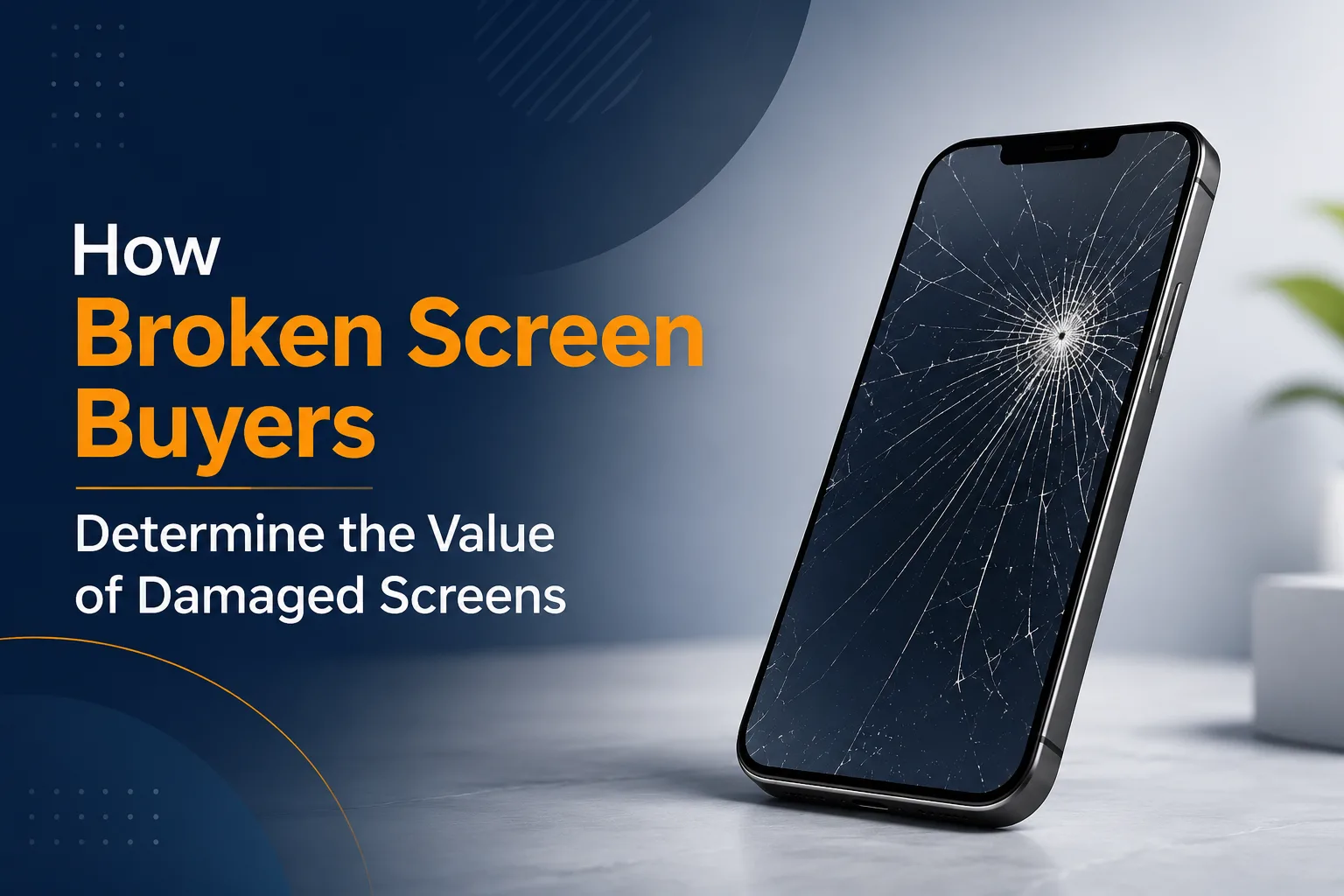
A damaged phone screen may look worthless at first. However, a cracked or faulty display can still have value depending on its model, condition, and functionality.
Broken screen buyers assess several details before deciding what a screen is worth. They look beyond visible cracks and consider whether the display still works, what type of screen it is, and how useful it may be for repair or refurbishment.
Understanding these factors can help you know what to expect when selling damaged screens. It can also help you avoid common mistakes that may reduce their potential value.
What Determines the Value of a Damaged Screen?
There is no single price for a damaged phone screen. Buyers usually consider several factors before making an offer.
The main factors include:
- Phone model and screen type
- Overall physical condition
- Display functionality
- Touch response
- Type and extent of damage
- Original or replacement screen
- Current demand
- Quantity available
Each factor can affect the final value. A screen with visible damage may still be useful if its main components remain functional.
The Phone Model and Screen Type Matter
The phone model is one of the first things a buyer will check.
Different iPhone generations use different display assemblies. Their specifications, availability, and demand can vary. This can affect how much buyers are willing to pay.
For example, an LCD from a more recent or widely serviced model may have stronger demand than one from an older device.
The type of screen also matters. Buyers may distinguish between original displays, refurbished assemblies, and aftermarket replacements.
Providing the exact model information makes it easier to assess the screen accurately.
How Screen Condition Affects Value
Physical condition is another important part of the assessment.
A screen can have different types of damage, including:
- Cracked glass
- Scratches
- Pressure marks
- Display lines
- Black spots
- Dead pixels
- Damaged connectors
- Broken frames
Not every type of damage has the same effect.
A screen with cracked glass but a working display may have a different value from one that has no visible cracks but does not display an image.
This is why simply describing a screen as "broken" does not provide enough information for an accurate assessment.
Does Display Functionality Increase Value?
Yes, functionality can make a significant difference.
A buyer may test whether the screen produces a clear image. They may also check for issues such as:
- Dead pixels
- Discolouration
- Flickering
- Lines across the display
- Black spots
- Uneven brightness
A screen that still displays an image may have more recovery potential than one that is completely non-functional.
However, the exact value depends on the buyer's grading criteria and the condition of the rest of the assembly.
What About Touch Functionality?
Touch response is another factor buyers may consider.
A display can look normal while having problems with its touch layer. Certain areas may fail to respond, or the entire screen may be unresponsive.
During inspection, buyers can test the touchscreen to identify these faults.
A fully working touch function can make a screen more useful for refurbishment. Partial or complete touch failure may affect its grading and value.
How Different Types of Damage Affect Value
The location and severity of damage can matter as much as the type of damage.
For example, a small crack may not have the same impact as severe damage across the entire display.
Likewise, a screen with cosmetic damage may be assessed differently from one with major functional problems.
This is why broken screen buyers generally inspect screens rather than relying only on a seller's description.
Do Original iPhone LCDs Have More Value?
The origin of a screen can influence its value.
Original screens can contain components that are useful for refurbishment. Replacement screens can also have value, but their assessment may differ depending on their type and quality.
If you plan to buy iPhone LCD components or sell used ones, identifying whether the screen is original, refurbished, or aftermarket can provide useful information for the buyer.
When possible, provide accurate details about the screen's history.
How Buyers Grade Damaged Screens
Grading helps buyers group screens according to their condition and potential value.
The exact grading system can differ between buyers. However, an inspection may involve checking:
- Model
The buyer identifies the phone and display type. - Physical condition
The screen is checked for cracks, scratches, marks, and other damage. - Display performance
The image is tested for pixels, brightness, lines, spots, and other faults. - Touch response
The touch layer is checked across the display. - Connectors and assembly
The buyer may inspect relevant components for damage. - Overall condition
The screen is placed into an appropriate grade based on the inspection.
This process helps create a more consistent valuation.
Does Market Demand Affect Screen Value?
Yes. Market demand can change the value of a damaged screen.
When a particular phone model is commonly repaired, there may be stronger demand for its replacement components. This can influence what buyers are willing to pay for used or damaged screens.
Demand can also change as new phone models enter the market.
This means the value of a screen is not always fixed. It can depend on what buyers currently need and what types of screens they can reuse or recover.
Why Do Broken Screens Still Have Value?
A broken screen is not necessarily useless.
Depending on its condition, parts of the display assembly may be suitable for refurbishment, repair, or component recovery.
This is one reason the LCD buyback UK market exists. Specialist buyers can assess damaged displays and determine whether they have further use.
Instead of sending every damaged screen directly to waste, sellers can check whether it qualifies for buyback.
Does Quantity Affect the Selling Process?
Quantity can be particularly important for repair businesses.
A repair shop may replace dozens or even hundreds of screens over time. Keeping them organised by model and condition can make the assessment easier.
Selling multiple screens together can also make the process more practical than handling each screen individually.
Before sending a large batch, separate the screens and record the models where possible. This gives the buyer clearer information about the stock.
How to Get a Better Value for Damaged Screens
There is no way to guarantee a specific price. However, good preparation can make the assessment easier.
Identify the Exact Model
Avoid sending screens without knowing which phone models they came from. Accurate model information helps buyers assess demand and compatibility.
Separate Screens by Condition
Keep heavily damaged screens separate from screens with minor faults. This makes your inventory easier to understand.
Describe Damage Honestly
Mention cracks, display faults, touch problems, and other known issues. Accurate descriptions help avoid confusion during inspection.
Protect Screens During Storage
Use suitable packaging to prevent additional scratches, pressure, or physical damage.
Compare Buyback Options
If you are looking for broken screen buyers, compare their accepted models, grading process, payment terms, and shipping requirements.
Can You Sell Old Broken Phones Instead?
Sometimes, selling the complete device can be an alternative to removing the screen yourself.
Some buyers accept complete damaged phones and assess the usable components inside them. This can be useful for sellers who do not have the equipment or experience needed to remove screens safely.
If you regularly sell old broken phones, check whether the buyer accepts complete devices and how they assess them.
The best option depends on the condition of the phone and the buyer's requirements.
Why Accurate Information Matters
Providing clear information about your screens can make the valuation process more straightforward.
Instead of saying that you have "some broken iPhone screens," provide details such as:
- iPhone model
- Approximate quantity
- Type of damage
- Whether the display works
- Whether touch works
- Whether the screen is original or replacement
The more accurate the information, the easier it is for a buyer to understand what you have.
Final Thoughts
The value of a damaged phone screen depends on more than just a cracked display. Broken screen buyers consider the model, screen type, physical condition, display performance, touch response, and potential for reuse.
If you have old screens from repairs or damaged devices, it is worth checking their potential value before discarding them. LCD Buyer provides a dedicated buyback option for damaged LCD screens and helps sellers turn unwanted screens into potential value.
Frequently Asked Questions
How do broken screen buyers determine value?
They typically consider the phone model, screen type, physical condition, display performance, touch functionality, damage level, and current demand.
Does a cracked screen still have value?
It can. A cracked screen may still contain usable components or have refurbishment potential. Its value depends on the extent of the damage and its overall condition.
Does the iPhone model affect screen value?
Yes. Different models can have different levels of demand, availability, and refurbishment potential.
Can a screen with dead pixels be sold?
Possibly. Buyers may accept screens with dead pixels, but the fault can affect their grading and final value.
Does a working touchscreen increase value?
A working touchscreen can make a damaged display more useful for refurbishment. However, the effect on value depends on the buyer's grading criteria.
Can I sell broken screens in bulk?
Yes. Repair shops and businesses often accumulate multiple damaged screens. Sorting them by model and condition can make bulk selling easier.
Should I repair a broken screen before selling it?
Not necessarily. Repairing a damaged screen can involve additional costs and may not increase its value enough to justify the expense. Compare the potential repair cost with the buyback value before deciding.