
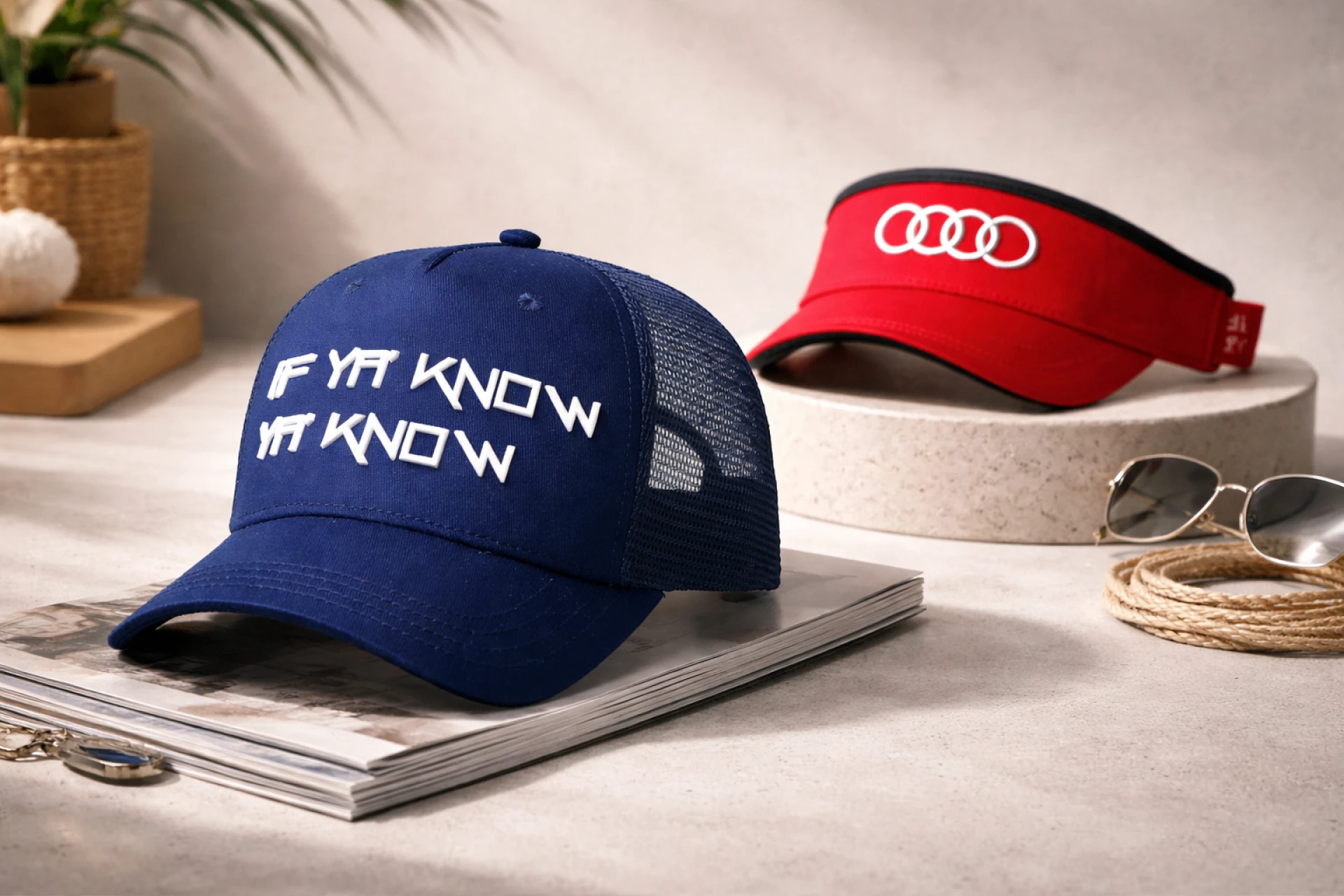
Fashion accessories have always reflected the cultural and social values of their time. Within this context, hats exemplify a shift from practical headwear to symbols of personal style, identity, and brand affiliation, demonstrating how accessories can evolve into powerful statements about who we are and what we represent.
Branded hats are now prevalent across major fashion arenas, from runway shows to everyday life. This widespread visibility is intentional, stemming from decades of cultural evolution, deliberate branding strategies, and shifting consumer expectations that clothing and accessories should communicate personal and social meaning.
This article traces the development of branded hats as statement pieces in modern fashion, examining the forces that shaped their rise and the role they continue to play in how individuals and labels present themselves.
The Origins of Branded Headwear
Functional Beginnings
Hats have been worn across virtually every human civilization, serving practical purposes related to weather, labor, religion, and social rank. In Western fashion history, the type of hat a person wore often indicated their occupation or class standing. This communicative function, while rooted in utility, laid the groundwork for a culture of branded headwear.
The transition toward the branded hats we recognize today began in earnest during the twentieth century. Sporting organizations, military branches, and work-related industries began placing insignia, logos, and identifying marks on caps. These markings were initially practical, allowing teams, units, and organizations to identify their members at a glance.
Sports Culture and the Rise of the Branded Cap
American sports culture helped normalize branded headwear for civilians. Baseball caps with team logos and colors became signs of loyalty. By the mid-twentieth century, people routinely wore team hats outside stadiums.
This crossover from sports to everyday fashion marked an important cultural moment. It established the idea that a hat carrying a name, logo, or insignia was not simply functional gear but a public declaration of affiliation. This principle would later expand far beyond sports into music, fashion, lifestyle branding, and consumer culture as a whole.
The Cultural Forces Behind the Statement Hat
Hip Hop and Streetwear Influence
Few cultural movements have shaped modern hat culture as significantly as hip-hop. From the early 1980s onward, hip hop artists and communities adopted caps, particularly snapbacks and fitted caps, as core elements of their visual identity. Brand logos and team insignia were deliberately incorporated into outfits, giving branded hats a new layer of meaning within fashion.
Streetwear, rooted in skateboarding, hip-hop, and youth culture, solidified branded hats as a signature of subcultural identity. Brands centered on graphic hats earned dedicated communities, using headwear to express not only style but also political and cultural stances.
This period also saw the rise of limited-edition branded hats as collectible items. Consumers began purchasing caps not only to wear but also to own as cultural artifacts. The scarcity and exclusivity of certain branded releases added perceived value to headwear in ways that had not previously existed in mainstream fashion.
Designer Fashion and Luxury Adoption
Streetwear's mainstream rise caught the attention of luxury fashion houses. In the 1990s and 2000s, high-end brands launched branded hats with prominent logos. They borrowed the successful look from streetwear and sportswear brands.
Designer caps with large logos appeared at fashion week shows and in magazines. This made branded hats be seen as serious accessories, not just casual items. Consumers began to link luxury hats with quality and status, driving demand for expensive caps.
Luxury brands making branded hats blurred the line between function and fashion. A recognizable logo transformed hats into chosen style pieces, just as shoes or handbags do.
Branded Hats as Identity Markers
Personal Expression Through Brand Affiliation
People use clothing and accessories to show their identity, values, and community. Branded hats do this well because they are worn at eye level and draw attention in social settings.
Wearing a specific branded, team, or club hat signals belonging. It shows observers the wearer’s interests and style without words. This silent communication keeps branded hats relevant as fashion trends change.
Brands have responded by creating hat collections tailored to distinct communities and lifestyles. A hat from a coastal brand signals different affiliations than one from urban streetwear. In both, the brand mark transforms the hat into a clear social and cultural message.
The Montauk Tennis Club Hat as a Lifestyle Symbol
Some branded hats represent certain cultures or lifestyles. The Montauk Tennis Club hat is one. It connects to a specific place and community, carrying strong associations.
Montauk, located on the eastern end of Long Island in New York, has long been associated with a relaxed, coastal lifestyle that blends athletic tradition with casual summer culture. A hat bearing the Montauk tennis club identity connects the wearer to that environment and its values, whether or not they have a direct personal connection to the location.
This type of place-based or activity-based branding represents a distinct category within the branded hats market. Rather than communicating allegiance to a corporation or sports franchise, it communicates an aspirational or actual lifestyle. Brands such as Montauk Hat have built product lines around this kind of identity-driven headwear, offering consumers accessories that reflect specific cultural and geographic references.
The Design Elements That Make a Hat a Statement
Logo Placement and Visibility
The placement of a brand mark on a hat significantly affects how it reads as a fashion accessory. Front-center placement on a structured cap maximizes visibility and conveys a bold, confident brand expression. Tonal or embroidered logos on unstructured caps create a more understated effect suitable for elevated casual wear.
Fashion labels and brand designers carefully consider logo scale, placement, and application method when producing branded hats intended to serve as statement pieces. These decisions affect how the hat integrates into different outfit contexts and how clearly it communicates the brand's identity.
Material and Construction Quality
Materials affect a hat’s durability and fashion value. Cotton twill, wool blends, and nylon are common in various price segments.
Strong construction, like reinforced stitching and solid closures, elevates hats as statement accessories. Fashion buyers expect quality that matches the brand’s reputation. Weak construction makes the brand logo less impressive.
Branded Hats in Contemporary Fashion Contexts
Styling Across Wardrobe Categories
One reason branded hats have sustained their position as statement pieces is their versatility across different wardrobe contexts. A well-chosen branded hat can complement athletic wear, casual streetwear, smart casual outfits, and even certain formal-adjacent combinations, depending on the hat style and brand aesthetic.
This versatility makes branded hats accessible to a wide range of consumers and styling approaches. It also makes them commercially durable. Unlike trend-driven pieces that quickly lose relevance, a branded hat with strong identity associations tends to maintain its appeal across multiple fashion seasons.
Social Media and the Visibility Economy
Social media has amplified branded hats’ function as visible statements. In a digital age where personal style is documented through images, quickly recognized accessories like these powerfully communicate identity in every shared photo.
A branded hat is easy to spot in a photo and quickly conveys identity. This visibility keeps hats popular in street style and influencer fashion content.
Brands benefit every time someone wears and shares a well-designed branded hat, both in public and online.
Conclusion
The evolution of branded hats from functional headwear to deliberate fashion statements reflects broader changes in how consumers relate to clothing, brand identity, and public self-presentation. This evolution was shaped by sports culture, streetwear movements, the adoption of luxury fashion, and the growing importance of visible brand affiliation in everyday life.
Today, branded hats are among the most direct and versatile tools available to fashion labels and consumers alike for communicating identity and aesthetic values. Their continued presence across every segment of the fashion market confirms that the statement hat is not a passing trend but a permanent feature of modern fashion culture.