Bed bugs are among the most difficult pests to remove without professional intervention. They hide inside mattress seams, wall voids, furniture joints, and electrical outlet covers. They can survive for months without feeding. Standard cleaning and over-the-counter sprays do not eliminate an established population. What does work is a structured, professional process carried out by trained technicians who understand the biology and behavior of the pest.
This article explains how a professional bedbug removal service in Cleveland approaches an infestation, from the initial inspection through treatment and follow-up, and why the process matters for both residential and commercial properties.
What Makes Bed Bugs Difficult to Remove
Before examining the removal process, it helps to understand why bed bugs resist easy solutions. Several biological traits make them a persistent pest problem.
Hiding behavior: Bed bugs are flat, which allows them to fit inside cracks and gaps that most people would not think to inspect. A single adult bed bug can squeeze into a space no thicker than a credit card. They stay close to their food source (people and animals) but in locations that are rarely disturbed.
Reproduction rate: A single fertilized female can produce hundreds of eggs over her lifetime. Under warm conditions, eggs hatch within one to two weeks. A small infestation left untreated for a month becomes a much larger one.
Pesticide tolerance: Bed bugs in many regions have developed resistance to common pyrethroid insecticides. Spraying a visible cluster may kill some insects but leave eggs and hidden individuals intact. Those survivors repopulate quickly.
Wide dispersal: Bed bugs travel through luggage, used furniture, clothing, and shared laundry facilities. In multi-unit buildings, they move through wall voids, plumbing chases, and electrical conduit openings between units.
These characteristics are exactly why professional bedbug removal services in Cleveland rely on a multi-step process rather than a single treatment application.
Step One: The Bed Bug Home Inspection in Cleveland
Every effective removal process begins with a thorough inspection. A bed bug home inspection in Cleveland conducted by a licensed technician covers every area where bedbugs are likely to harbor, not just the locations where the occupant noticed activity.
A complete inspection includes the following:
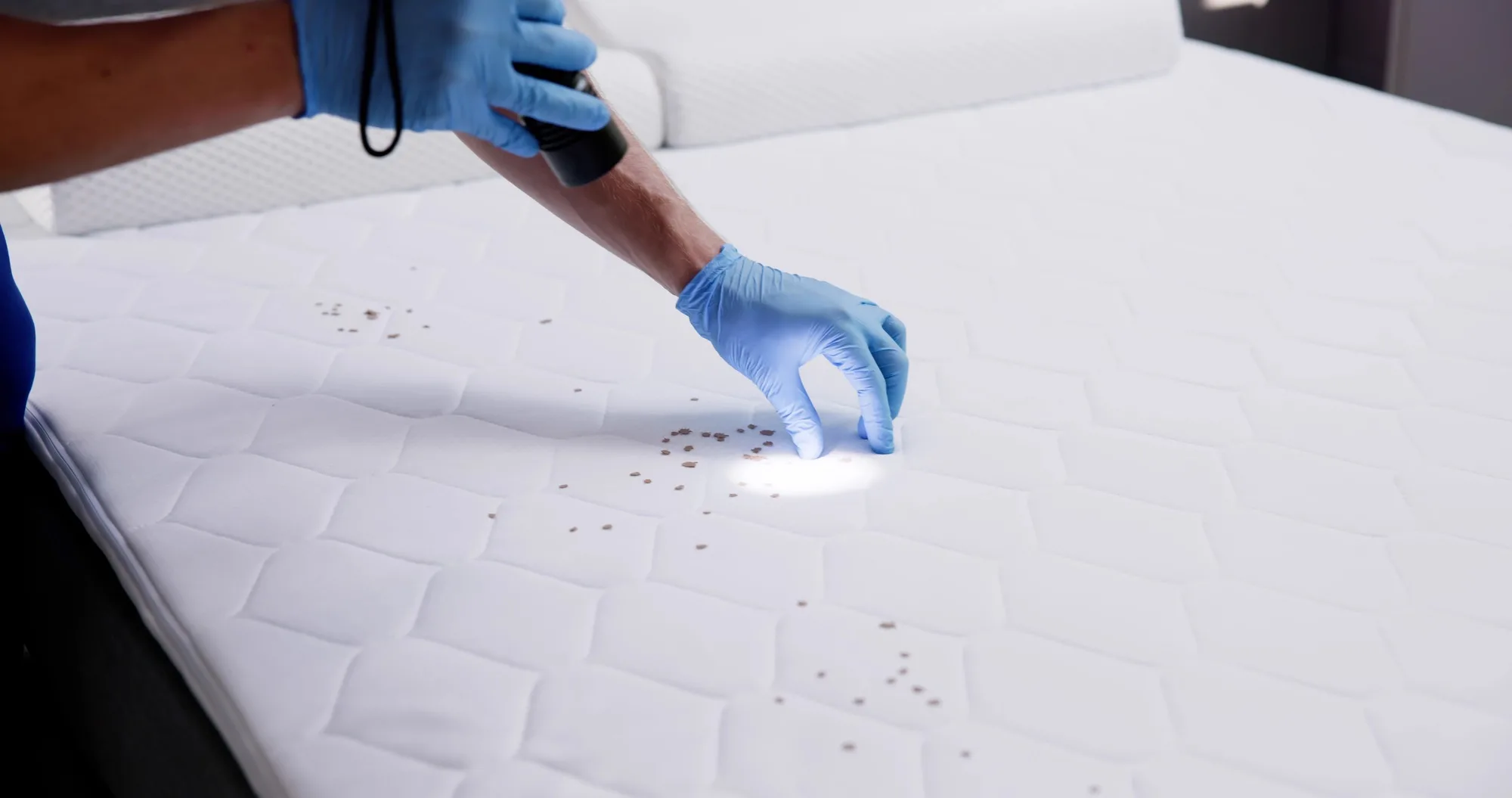
Sleeping areas: Mattresses, box springs, bed frames, and headboards receive a close examination. Technicians look for live bugs, shed skins, eggs, and fecal spotting, which appears as small dark stains on fabric or wood surfaces.
Upholstered furniture: Sofas, recliners, and chairs in bedrooms and living areas are inspected along seams, cushion folds, and frame joints. Bed bugs frequently establish secondary populations in these locations.
Wall and floor junctions: Baseboards, carpet edges, and the areas behind wall-mounted items such as picture frames and electrical outlet covers are checked. These provide harborage close to sleeping areas.
Adjacent rooms: If activity is confirmed in one room, the inspection extends to neighboring rooms and, in multi-unit properties, adjacent units. Bed bugs do not stay confined to a single space once a population is established.
The findings from a bed bug home inspection in Cleveland determine the scope of treatment needed and the method best suited to the infestation level and property type.
Step Two: Identifying the Infestation Level
Not all infestations are the same. Technicians classify bed bug infestations based on the scope of activity identified during the inspection. This classification directly affects the treatment plan.
Early stage: Live bugs and eggs are confined to one or two pieces of furniture or a localized area. Treatment can often be completed in a single visit with limited preparation required.
Moderate stage: Activity is present in multiple furniture pieces or in both sleeping and living areas. Treatment requires more thorough preparation by the occupant and may involve multiple methods or a follow-up visit.
Severe stage: Bugs are found throughout the unit, in wall voids, or across multiple rooms. This level requires the most intensive treatment approach and extended follow-up monitoring.
Accurate staging prevents under-treatment, which is one of the most common reasons infestations return after a service visit.
Treatment Methods Used by Professional Services
Professional bedbug removal relies on methods that reach insects in all life stages and in all locations where they harbor. Safe pest control services in Cleveland use approaches that are effective for the occupants and appropriate for the property type.
Heat Treatment
Thermal remediation, commonly called heat treatment, raises the temperature in the treatment area to a level that kills bedbugs at all life stages, including eggs. Specialized heating equipment brings the space to the required temperature and holds it there for several hours.
Heat reaches inside mattresses, wall voids, and furniture without the need for chemical application in those areas. It is a practical option for properties where chemical use is restricted, such as healthcare settings or homes with infants.
The limitation of heat treatment is that it does not leave a residual effect. Bed bugs that re-enter the treated area after the heat cycle are not affected. This is why heat is often used in combination with a targeted chemical application along entry points and baseboards.
Chemical Treatment
Licensed technicians apply professional-grade insecticides to harborage sites, cracks, baseboards, furniture frames, and other identified locations. The products used by safe pest control services in Cleveland are regulated by the EPA and applied at concentrations appropriate for residential and commercial use.
Chemical treatment leaves a residual effect that continues to act on bedbugs that contact treated surfaces over the following weeks. This residual period is important for catching late-hatching eggs that were not directly contacted during the initial application.
Proper chemical treatment requires preparation by the occupant, including removing clutter, washing and sealing bedding, and clearing access to treated areas.
Steam Treatment
The steam application delivers high-temperature moisture directly to surfaces where bugs and eggs are present. It is effective on mattress seams, upholstered furniture, and baseboards. Steam is often used as a supplemental method alongside chemical or heat treatment rather than as a standalone approach.
Follow-Up Visits and Monitoring
A single treatment visit does not always resolve a bedbug infestation completely. Eggs that were not contacted during the initial treatment can hatch in the two to three weeks following service. This is why professional bedbug removal services in Cleveland include a follow-up visit as part of a complete treatment program.
During the follow-up, the technician inspects the treated areas for any new activity, applies supplemental treatment where needed, and assesses whether the infestation has been fully resolved.
Monitoring tools such as bed bug interceptors, placed under beds and furniture legs, help track activity between visits. These devices trap bugs as they move between harborage sites and sleeping areas, giving the technician a clear picture of whether activity has continued.
Bed Bug Removal in Commercial Settings
Bed bugs in Cleveland are not limited to residential properties. Hotels, extended-stay facilities, dormitories, and residential care facilities face ongoing exposure through guest turnover, shared laundry, and furniture movement.
Commercial properties require a response protocol that accounts for continuous occupancy, multiple units, and regulatory documentation requirements. A professional service experienced in commercial settings conducts unit-by-unit inspections, treats confirmed and adjacent units, and provides written documentation of findings and treatment for compliance purposes.
Providers like G & G Exterminating serve both residential and commercial clients across the Cleveland area and are familiar with the specific inspection and documentation standards that hospitality and multi-unit residential properties require.
What Occupants Can Do Before and After Treatment
Preparation by the occupant is a required part of effective treatment, not an optional step. A technician arriving at a cluttered, unprepared space cannot treat all harborage sites effectively.
Before treatment, occupants should:
- Wash all bedding, curtains, and clothing in hot water and seal in plastic bags.
- Remove items stored under the bed.
- Pull furniture away from the walls to allow the technician access.
- Clear clutter from floors in all rooms being treated
After treatment, occupants should:
- Avoid washing or vacuuming treated areas for the period specified by the technician.
- Keep bedbug interceptors in place and check them regularly.
- Report any signs of continued activity to the service provider immediately.
Following preparation and post-treatment instructions directly affects how successful the service visit is.
Why Professional Service Produces Results That DIY Does Not
Store-bought sprays, foggers, and mattress covers do not eliminate an established bed bug infestation. Foggers, in particular, can cause bugs to scatter deeper into wall voids and adjacent rooms, which expands the infestation rather than containing it.
Professional bedbug removal service in Cleveland uses regulated products at effective concentrations, applies them to the right locations, and combines methods based on the specific infestation profile. The technician's knowledge of bed bug behavior is as important as the products used.
Safe pest control services in Cleveland apply treatments that are appropriate for the property and its occupants while meeting the efficacy standards needed to resolve the infestation fully.
Conclusion
Bedbug infestations do not resolve on their own, and they do not respond reliably to consumer products. The removal process requires a thorough bed bug home inspection in Cleveland, accurate staging of the infestation, selection of the right treatment method, and follow-up monitoring to confirm the problem is resolved.
Bed bugs in Cleveland affect hotels, apartment buildings, and private homes across the city. Properties in older building stock face higher structural risk due to the wall voids and gaps that give bed bugs easy movement between spaces.
A professional bedbug removal service in Cleveland addresses all of these variables with a structured, documented process. For properties in the Cleveland area, working with a provider experienced in both residential and commercial treatment, like G & G Exterminating, gives occupants and property managers a reliable path to a fully resolved infestation.