
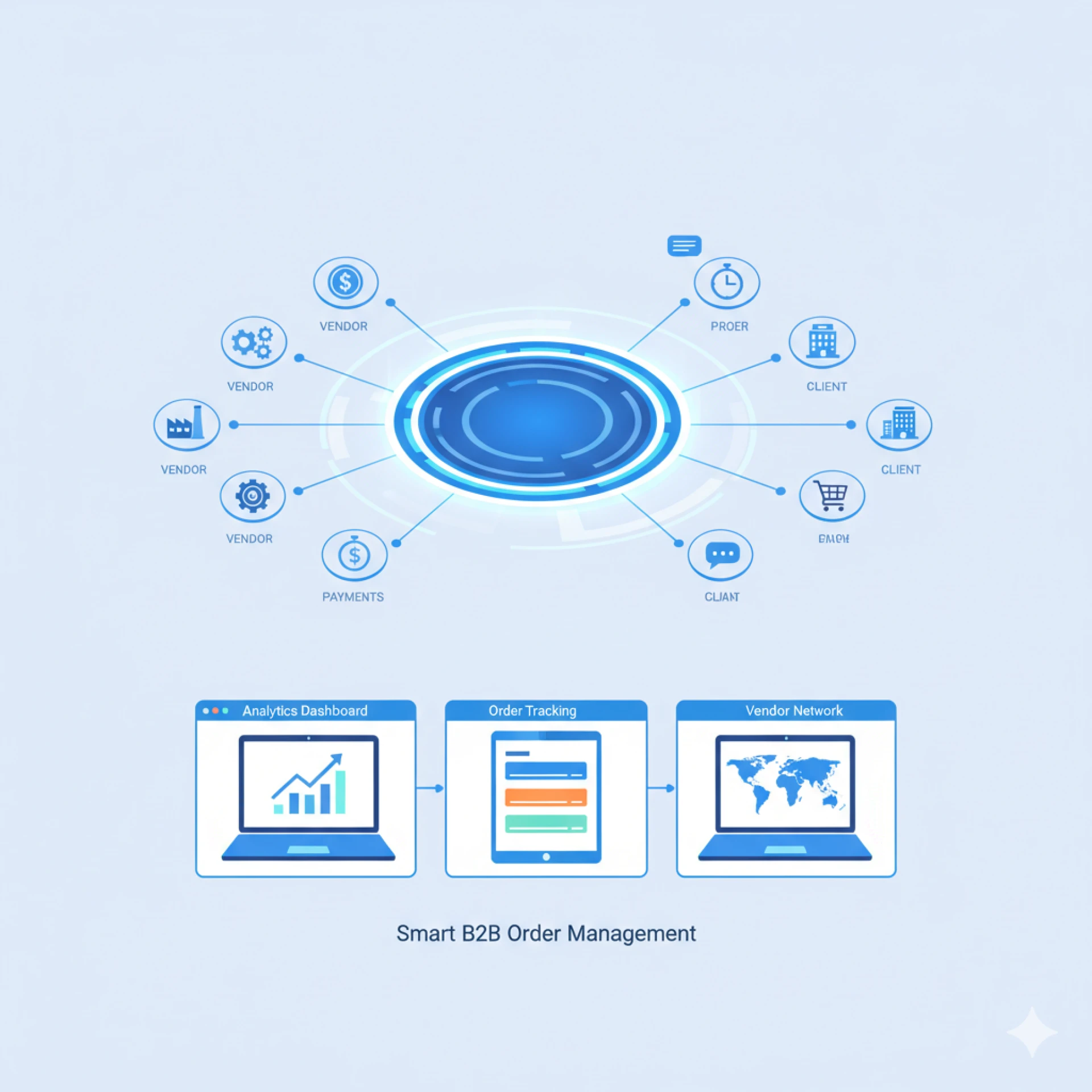
In today’s competitive B2B landscape, managing vendor relationships and ensuring smooth payment processes can be challenging. Businesses deal with multiple suppliers, fluctuating demand, and complex order cycles all of which can lead to delays or errors if handled manually. That’s where B2B order management systems come in, offering automation, transparency, and control over every stage of the buying and selling process.
Understanding B2B Order Management
A B2B order management system helps organizations manage bulk orders between businesses from purchase requests and approvals to vendor coordination and invoicing. Unlike retail order systems that focus on individual customers, B2B order management emphasizes long-term relationships, repeat orders, and multi-level pricing models.
It connects all stakeholders buyers, suppliers, distributors, and finance teams through a centralized platform that improves visibility and reduces communication gaps.
How B2B Order Management Improves Vendor Relationships
Efficient vendor management is the foundation of successful B2B operations. Here’s how an order management system helps:
1. Centralized Vendor Tracking System
A vendor tracking system within B2B order management software helps businesses monitor vendor performance, delivery timelines, and pricing consistency. It also stores vendor histories, ensuring that businesses can easily assess reliability and negotiate better deals.
2. Transparent Communication and Real-Time Updates
Automation minimizes misunderstandings between suppliers and buyers. The system provides real-time order status, shipment tracking, and communication logs, ensuring that both parties are always on the same page.
3. Performance Analytics for Smarter Decisions
With built-in analytics, businesses can evaluate vendor efficiency tracking delivery delays, product quality, and payment terms. This data-driven approach leads to more informed decisions about vendor partnerships.
4. Automated Order Approvals and Invoicing
Manual approvals often slow down operations. A B2B order management platform automates these processes, ensuring timely approvals, instant notifications, and accurate invoicing reducing the chances of errors or missed payments.
Enhancing Payment Management and Accuracy
Managing payments in B2B operations involves multiple payment modes, bulk transactions, and varying terms. A good system automates:
- Invoice generation and reconciliation
- Payment reminders and due date alerts
- Secure online transaction handling
- Integration with accounting software
This reduces payment disputes and ensures vendors are paid promptly — strengthening trust and long-term collaboration.
Seamless Integration with Business Tools
Modern B2B order management systems integrate easily with ERP, CRM, and accounting tools, creating a unified workflow. This integration streamlines procurement, financial reporting, and order processing ensuring complete visibility across departments.
Why a Vendor Tracking System Matters
A vendor tracking system not only monitors vendor performance but also ensures compliance with quality standards and delivery timelines. It empowers businesses to:
- Compare vendor efficiency
- Automate supplier scorecards
- Identify areas for cost optimization
With these insights, companies can maintain high service quality while keeping operational costs low.
The Bottom Line
Adopting a robust B2B order management system with an integrated vendor tracking system helps businesses simplify order handling, strengthen vendor relations, and maintain accurate financial processes. The result is a more transparent, efficient, and profitable supply chain where every order and payment flows seamlessly.