Businesses depend on physical assets to support their daily operations. Computers, office furniture, machinery, tools, vehicles, and warehouse equipment all contribute to productivity. However, managing these resources becomes challenging as organizations expand. An effective asset inventory management system helps businesses maintain organized asset records, monitor equipment locations, track maintenance activities, and improve visibility across their operations.
Traditional asset management methods often rely on spreadsheets, paper documents, and manual updates. While these methods may work for smaller organizations, they can become difficult to maintain when businesses manage hundreds or thousands of assets. Digital asset management provides a centralized approach to organizing important information and simplifying routine tracking activities.
What Is Asset Management Software?
Asset management software is a digital solution that helps businesses record, organize, monitor, and maintain their physical resources. It allows organizations to maintain information about individual assets, including identification details, locations, assignments, purchase information, and maintenance history.
Instead of maintaining separate spreadsheets for different departments, businesses can use a centralized system to access relevant asset information. This makes it easier to identify equipment, review records, and maintain updated information as assets move between locations or employees.
Why Is Asset Tracking Important for Modern Businesses?
Asset tracking helps organizations understand what resources they own, where those resources are located, and how they are being used. Without proper tracking, employees may spend unnecessary time searching for equipment or verifying asset details. Inaccurate records can also create confusion when businesses transfer equipment between departments or storage locations.
An organized tracking process improves visibility and supports better resource management. Businesses can maintain individual asset records, identify equipment more easily, and review available information whenever required. These practices become particularly valuable for organizations operating across multiple offices, warehouses, or business locations.
Essential Features of Asset Inventory Management Software
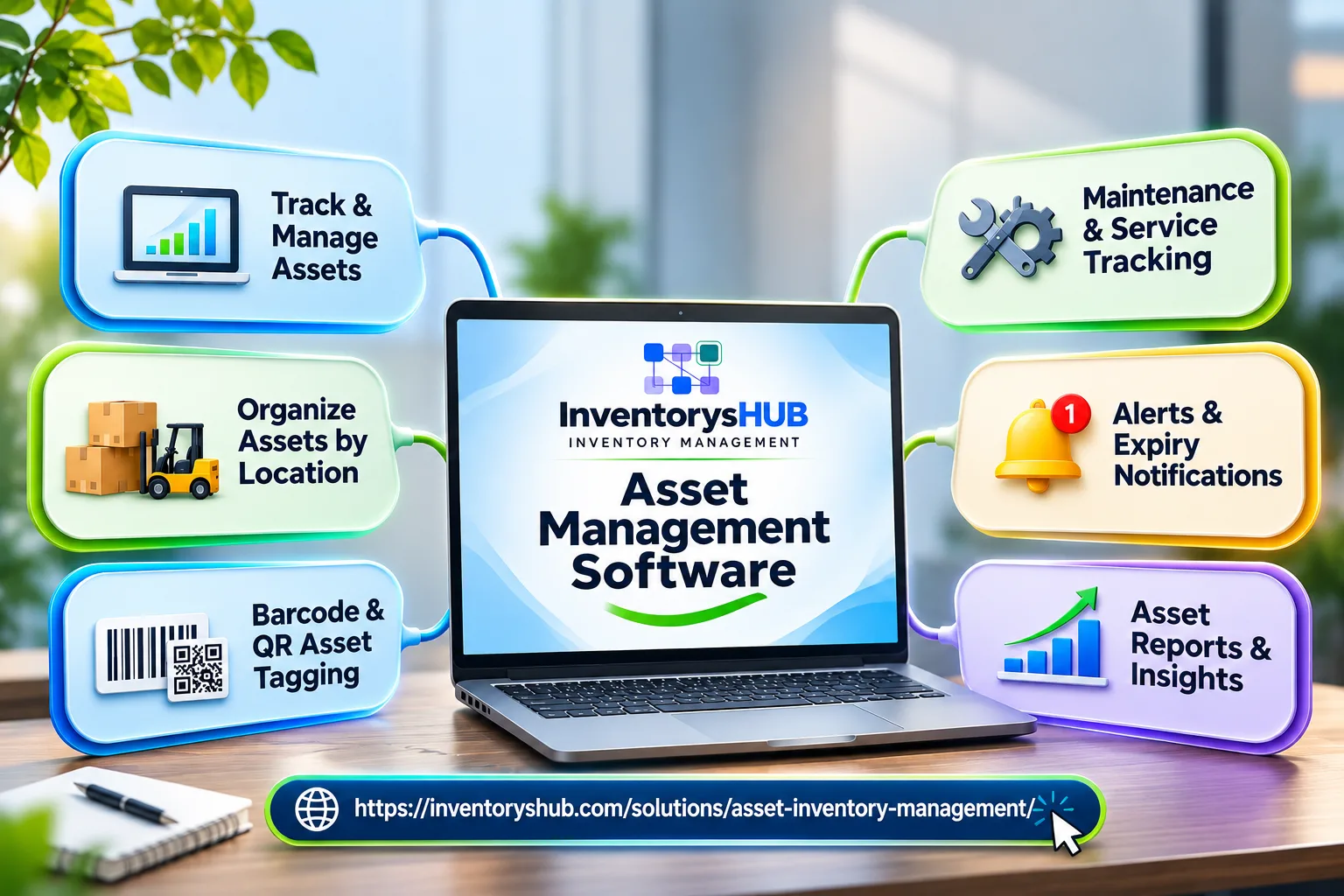
Modern asset inventory management software should provide features that support everyday asset management activities. These include asset identification, location-based organization, barcode and QR code tagging, maintenance tracking, expiry notifications, and reporting capabilities.
Each feature supports a different part of the asset management process. Asset identification helps businesses maintain individual records, while location management makes it easier to find equipment. Maintenance tracking and notifications help teams monitor important requirements, and reporting tools provide useful information for reviewing asset records.
How Technology Improves Asset Management
Digital technology has changed how businesses organize and manage their physical resources. Instead of relying entirely on manual recordkeeping, organizations can use centralized software to maintain asset information and make it accessible to authorized team members. Solutions such as InventorysHUB provide capabilities for asset tracking, location organization, barcode and QR code tagging, maintenance monitoring, notifications, and reporting.
These capabilities can help businesses establish more consistent asset management practices. Employees can access relevant information, update records, and review equipment details through an organized platform. This approach supports better coordination between teams responsible for managing business resources.
Organizing Business Assets by Location
Location-based asset organization is important for companies that operate across multiple departments, offices, warehouses, and branches. When equipment is distributed across different locations, maintaining accurate location records helps employees identify where specific resources are stored or being used.
Businesses should establish procedures for updating asset locations whenever equipment is transferred or reassigned. Consistent updates make it easier to monitor asset movement and reduce confusion during equipment verification. A centralized location management process also supports better visibility across business operations.
Barcode and QR Code Asset Tracking
Barcode and QR code technology can simplify asset identification. Businesses can assign unique codes to individual equipment and scan them using compatible devices to access associated asset information. This reduces the need to manually search through long equipment lists.
QR code asset tagging is particularly useful when organizations manage large collections of computers, machinery, tools, and other physical resources. It can support routine asset verification and help employees identify equipment more conveniently. When combined with digital asset records, scanning technology makes asset information easier to retrieve and update.
Maintenance Tracking and Expiry Notifications
Regular maintenance is essential for keeping business equipment in suitable working condition. Organizations need to monitor servicing schedules, maintenance history, inspection information, and other important requirements. Without an organized process, maintenance records may become scattered or outdated.
Expiry notifications can help businesses stay informed about relevant dates associated with warranties, certifications, inspections, or other asset-related requirements. By maintaining these details in an organized system, employees can review upcoming requirements and plan maintenance activities more effectively.
The Role of Asset Reports and Business Insights
Asset reports provide useful information about the resources maintained by an organization. Businesses can review asset categories, locations, equipment records, and maintenance information to understand how their resources are organized.
Reporting also helps managers identify incomplete records and review equipment distribution. Accurate reports depend on maintaining updated information and following consistent recordkeeping procedures. Regular reviews can support better operational planning and help organizations identify areas that need attention.
Best Practices for Choosing Asset Management Software
Selecting suitable asset management software requires understanding the organization's operational needs. Businesses should consider the number of assets they manage, the number of locations involved, employee requirements, and the type of information they need to maintain.
It is also important to evaluate features such as asset identification, location management, barcode scanning, maintenance tracking, expiry notifications, and reporting. The right solution should support existing workflows and make asset management easier without introducing unnecessary complexity.
Conclusion
Asset management is an important part of modern business operations. From identifying equipment and organizing locations to monitoring maintenance and reviewing reports, every activity contributes to better resource visibility and recordkeeping.
Adopting digital asset inventory management practices can help businesses move beyond scattered spreadsheets and establish a more structured tracking process. With appropriate software and consistent procedures, organizations can maintain organized asset records, improve equipment visibility, and manage their physical resources more effectively.