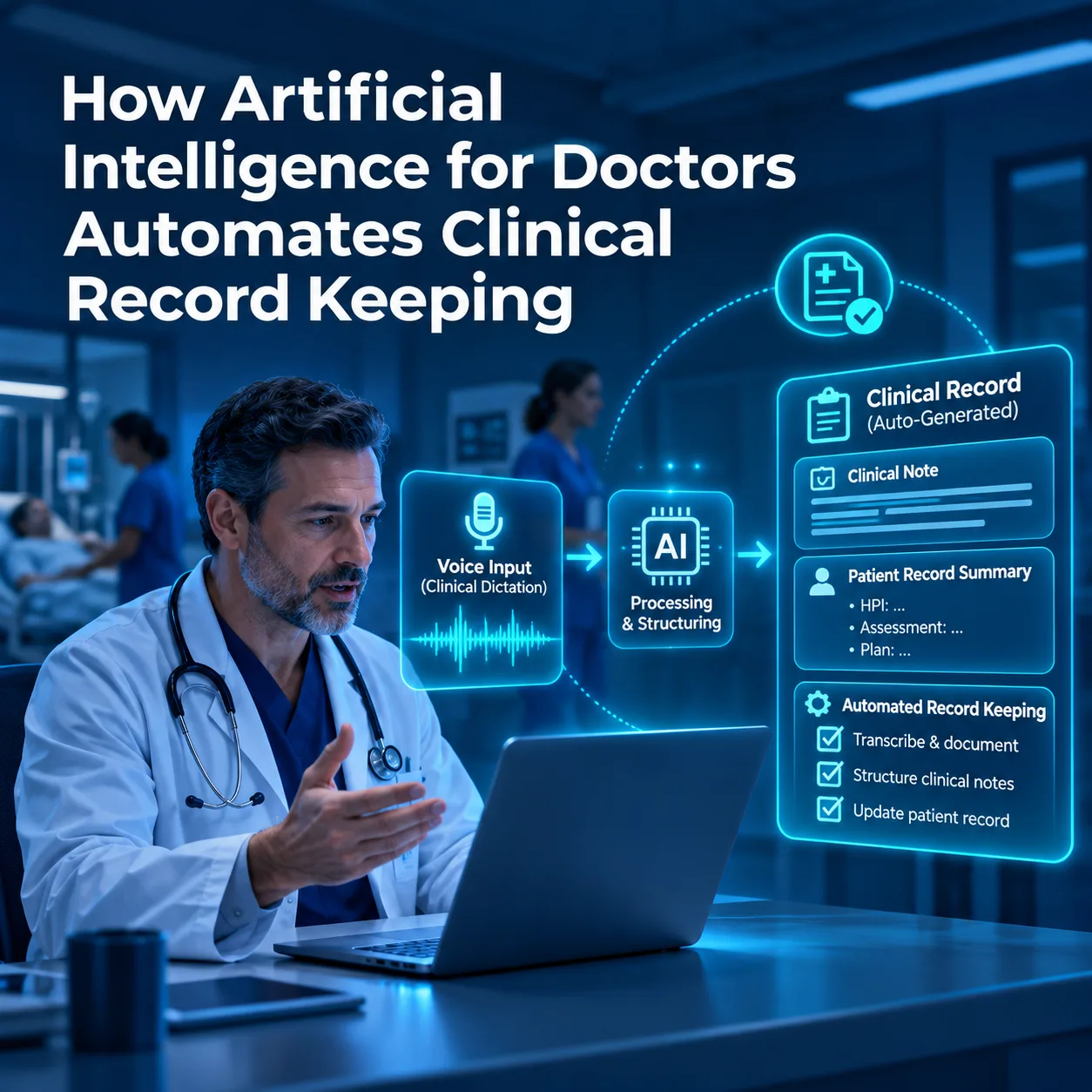
Accurate clinical records are vital to healthcare, yet extensive paperwork places added pressure on busy medical staff. Using artificial intelligence for doctors simplifies these processes by converting spoken consultations into organised clinical records for efficient review and approval.
Traditional record-keeping creates several challenges:
- Clinicians spending appointment time typing instead of connecting with patients
- Inconsistent entries, abbreviated descriptions, and forgotten details
- Growing administrative backlogs extending workloads beyond scheduled hours
- Disconnected information and inconsistent record formats
Intelligent documentation technology offers a seamless alternative to these time-intensive processes. Capturing consultation discussions and transforming them into structured drafts enables practices to manage clinical records far more efficiently.
How intelligent documentation technology improves clinical record keeping
Automating consultation notes without interrupting appointments
Recording consultation details manually can divide a practitioner's attention between the patient and the computer. Artificial intelligence for doctors can capture spoken information and organise relevant details into draft clinical notes, reducing dependence on continuous keyboard entry. Practitioners can maintain more natural conversations while ensuring important observations, patient concerns and agreed actions have a documented starting point. The resulting draft remains available for professional review before approval and inclusion in the patient's clinical history.
Improving the organisation of patient information
Clinical records must capture more than a list of symptoms. They need to reflect the patient's concerns, relevant history, examination findings, clinical reasoning and agreed next steps. AI-supported documentation can convert consultation conversations into organised draft notes, helping clinicians preserve important details while maintaining a natural discussion. Rather than relying on memory after an appointment, practitioners can review a structured record while the consultation is still fresh. This supports more consistent documentation across busy clinical sessions.
Supporting consistency across different clinical workflows
Clinical information is often required to be presented in a consistent format so that other authorised members of a care team are able to understand it quickly. AI tools can organise relevant consultation details under headings such as presenting concern, history, assessment and plan. This can make records easier to navigate and reduce variation in how information is documented. AI-supported documentation can therefore support clearer handovers and follow-up, provided the generated content is reviewed and adjusted to reflect the clinician's actual findings and decisions.
Adapting documentation to different healthcare settings
Records needs differ from general practice, specialist consultations and allied health appointments. AI systems can help shape notes around the context of a visit while allowing clinicians to correct terminology, remove irrelevant material and add details that require professional judgement. Intelligent documentation can make routine record preparation more manageable without treating every consultation as identical. A final review remains essential, particularly where medication details, allergies, investigation results or follow-up instructions must be recorded precisely.
Modernise clinical administration with intelligent record keeping
Healthcare practices need documentation processes that support clinical responsibilities without creating unnecessary administrative complications. Adopting artificial intelligence for doctors can help reduce repetitive manual tasks, improve the organisation of consultation information and establish a more manageable approach to maintaining patient records. When integrated thoughtfully into everyday workflows, these tools can help practitioners prepare documentation more promptly while retaining control over the information entered into clinical files.
The value of automated documentation extends beyond saving time during individual appointments. Better organised records can support communication between healthcare professionals, make information easier to retrieve and contribute to more consistent administrative processes. Arvi Health provides technology designed to assist clinicians with the demands of modern clinical documentation. By combining intelligent transcription with structured documentation workflows and appropriate professional oversight, practices can strengthen their approach to medical record management software and create more time for meaningful patient engagement.