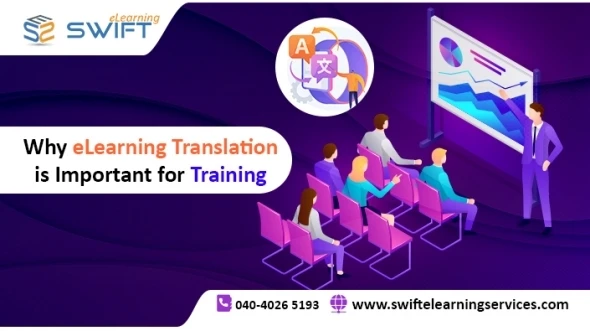
In today’s global workplace, training extends far beyond geographical boundaries, yet learner engagement often varies from one region to another. This is where an elearning translation company becomes essential. When organizations deliver learning content in multiple languages and adapt it to local cultures, learners feel more connected, understood, and motivated to complete their training. For modern enterprises, translation is no longer just about converting words—it is about creating meaningful learning experiences that improve participation, retention, and business performance across regions.
Why Does Training in a Learner’s Native Language Increase Engagement?
Language plays a critical role in how learners absorb and retain information. When training content is delivered in the learner’s preferred language, comprehension improves significantly.
Key benefits include:
- Better understanding of concepts
- Higher course completion rates
- Increased quiz and assessment scores
- Improved learner confidence
- Lower cognitive fatigue
Learners no longer need to mentally translate complex ideas, allowing them to focus on learning outcomes. This is especially valuable for:
- employee onboarding
- compliance training
- product training
- software training
- leadership development
A professional translation approach helps create a seamless learning journey that feels natural and region-specific.
How Does eLearning Localization Go Beyond Translation?
One of the most common questions businesses ask is: Is translation enough?
The answer is no.
A specialized eLearning translation company focuses on localization, which goes beyond language conversion.
Localization includes:
- adapting cultural references
- modifying examples and case studies
- changing currency, date, and time formats
- replacing visuals with region-relevant imagery
- localizing voice-over and subtitles
- adjusting tone and phrasing
For example, an employee onboarding scenario designed for a U.S. workforce may not resonate with learners in Europe, Asia, or the Middle East unless it reflects their workplace culture and communication style.
This deeper level of customization improves learner relatability and engagement.
Can Multilingual Learning Improve Completion Rates Across Regions?
Yes, significantly.
When learners can access training in their native language, they are more likely to start, continue, and complete courses.
Benefits of multilingual eLearning:
- Higher learner participation
- Employees are more willing to engage with familiar language content.
- Consistent global training standards
- All teams receive the same learning objectives across regions.
- Improved knowledge retention
- Learners retain concepts more effectively when delivered in a localized context.
- Better employee performance
- Training translates into practical workplace application.
This is why multinational organizations increasingly invest in multilingual corporate training solutions.
How Does an eLearning Translation Company Improve Interactive Learning?
Modern training is highly interactive.
It includes:
- quizzes
- gamified modules
- simulations
- click-based interactions
- scenario learning
- voice narration
- video subtitles
A professional elearning translation company ensures these interactive elements remain accurate and user-friendly in every language.
For example:
- translated buttons and menus remain functional
- quiz answers retain original logic
- subtitles sync correctly with videos
- voice-over matches the learning flow
- software simulations reflect local usage
This technical precision helps maintain a smooth learner experience across all regions.
Why Is Cultural Relevance Important for Learner Engagement?
Learners engage more deeply when content reflects their real-world environment.
Cultural relevance includes:
- local workplace scenarios
- familiar communication styles
- region-specific examples
- localized compliance references
- market-specific terminology
For example, sales training content for teams in India should differ from content created for teams in North America or Europe.
When learners see relatable scenarios, they are more likely to:
- trust the content
- stay engaged longer
- apply learning on the job
- retain information effectively
This directly improves learner satisfaction and business outcomes.
What Are the Business Benefits of Better Learner Engagement?
Higher engagement creates measurable business impact.
Key outcomes include:
- improved training ROI
- faster onboarding time
- stronger compliance adherence
- better workforce productivity
- reduced retraining costs
- improved global consistency
For large enterprises, this means faster knowledge transfer across teams and regions.
This is particularly useful for:
- global HR teams
- L&D managers
- compliance leaders
- multinational organizations
- remote workforce training
Why Should Businesses Choose Swift eLearning Services?
Swift eLearning Services specializes in delivering professional translation and localization solutions tailored for corporate learning environments.
Their expertise includes:
- multilingual course translation
- voice-over localization
- LMS-compatible course adaptation
- subtitle translation
- multimedia learning localization
- region-specific instructional design support
By combining language expertise with deep eLearning knowledge, Swift eLearning Services helps organizations improve learner engagement and create training experiences that truly connect across regions.
Final Thoughts
An elearning translation company is not just a service provider—it is a strategic partner in improving global learner engagement.
When training is delivered in the right language, with the right cultural context, learners feel more connected, motivated, and confident.
This leads to:
- better completion rates
- stronger knowledge retention
- improved performance
- higher training ROI
For organizations expanding globally, investing in professional translation and localization is one of the smartest ways to improve learning effectiveness across regions.