High-volume hiring has become one of the most pressing challenges for US staffing agencies and enterprise hiring teams. With growing talent shortages, tighter labor markets, and rising candidate expectations, traditional recruiting processes are struggling to keep pace. An AI recruiting platform is reshaping how organizations manage large applicant volumes by automating early-stage screening, improving speed, and delivering consistent, data-driven hiring decisions. For recruiters, talent acquisition managers, and HR directors, this shift represents a fundamental change in how hiring operations scale without sacrificing quality.
Challenges of High-Volume Hiring for US Staffing Agencies
US staffing agencies and enterprise employers face constant pressure to fill roles quickly while maintaining compliance, fairness, and candidate experience. High-volume hiring often means reviewing hundreds or thousands of applications for a single role. Manual resume screening and phone interviews consume valuable recruiter time, leading to burnout, delayed placements, and missed opportunities to engage top talent.
Another major challenge is consistency. When multiple recruiters screen candidates manually, evaluations can vary widely based on time constraints, subjective judgment, or incomplete information. This inconsistency increases hiring risk and can expose organizations to compliance concerns. At the same time, candidates expect faster responses and more engaging hiring experiences, especially in competitive US labor markets. Agencies and enterprises that rely on outdated processes risk losing qualified applicants before interviews even begin.
What Defines a Modern AI Recruiting Platform
A modern AI recruiting platform is designed to address the realities of today’s US hiring environment. Rather than replacing recruiters, it enhances their effectiveness by automating repetitive tasks and delivering actionable insights. At its core, the platform uses conversational AI to engage candidates, conduct structured pre-screening interviews, and collect relevant data early in the hiring process.
Unlike static screening tools, a modern AI recruiting platform adapts questions based on role requirements and candidate responses. It evaluates skills, availability, experience, and job fit using consistent criteria, ensuring every applicant is assessed fairly. For staffing agencies and enterprise HR teams, this means greater transparency, reduced bias, and more reliable candidate shortlists that align with business needs.
Automating Early-Stage Interviews at Scale
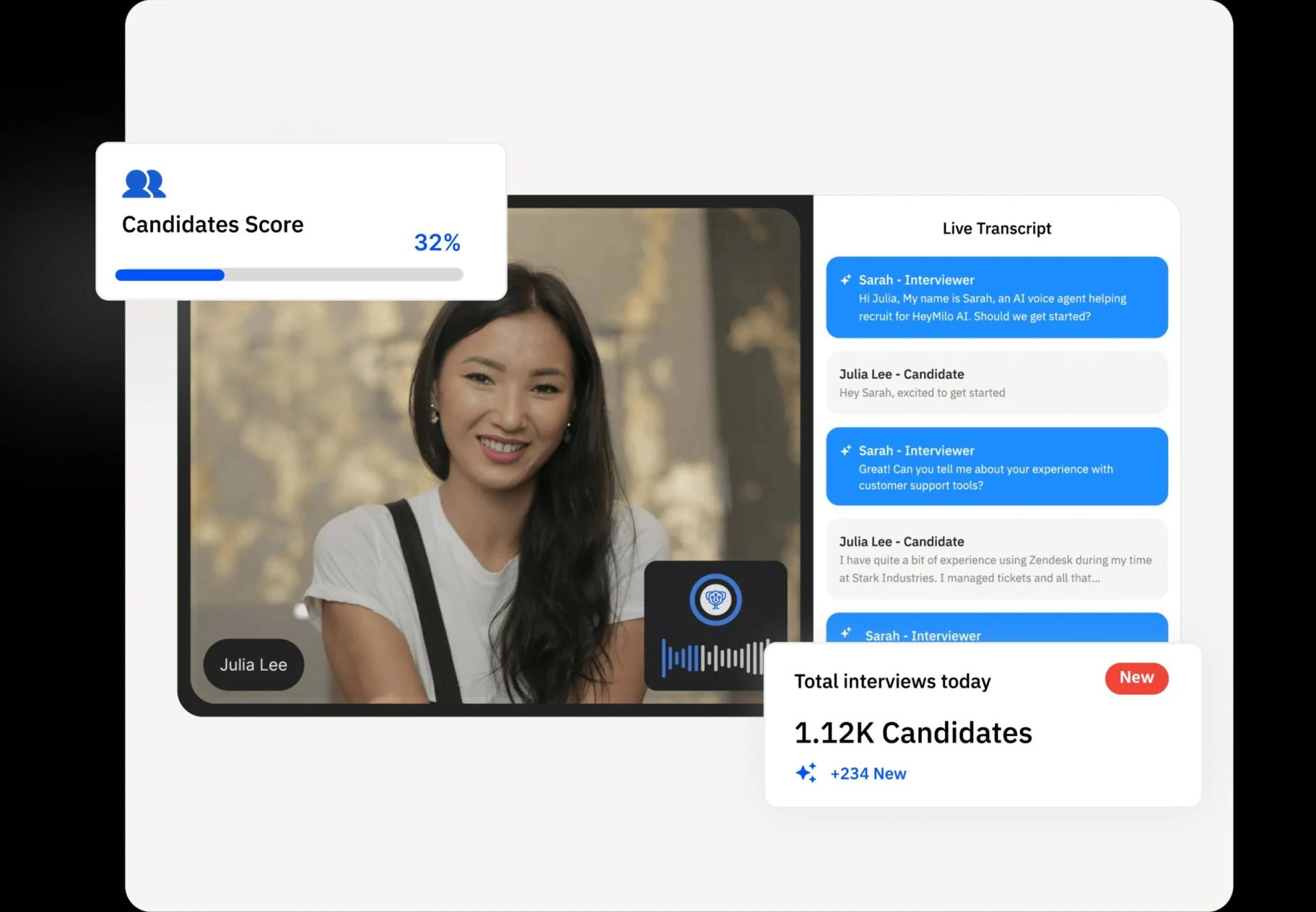
Early-stage interviews are one of the most time-consuming aspects of high-volume hiring. Recruiters often spend hours scheduling calls, asking repetitive questions, and documenting responses. An AI recruiting platform transforms this stage by conducting automated interviews through conversational AI, allowing candidates to engage at their convenience.
By automating pre-screening interviews, hiring teams can assess far more candidates in less time. The platform asks role-specific questions, captures structured responses, and generates clear summaries for recruiters to review. This approach enables staffing agencies to manage multiple client requisitions simultaneously and helps enterprise organizations handle seasonal or surge hiring without adding headcount to recruiting teams.
Improving Hiring Speed Without Sacrificing Quality
Speed is critical in the US hiring market, but moving faster should not mean lowering standards. An AI recruiting platform improves time-to-hire while maintaining quality by focusing recruiter attention on the most qualified candidates. Automated screening filters out unqualified applicants early, allowing recruiters to prioritize interviews with candidates who meet key criteria.
Because evaluations are consistent and data-driven, hiring teams gain confidence in their decisions. Recruiters no longer rely solely on resumes or rushed phone screens. Instead, they receive structured insights, candidate scoring, and interview summaries that support informed decision-making. This balance of speed and quality is especially valuable for enterprise organizations hiring across multiple locations or job families.
Why US Enterprises Are Adopting Conversational AI for Screening
US enterprises are increasingly adopting conversational AI because it aligns with both operational efficiency and candidate experience goals. Candidates appreciate immediate engagement and clear communication, rather than waiting days for a response. Conversational AI provides real-time interaction, guiding applicants through the screening process in a professional and consistent manner.
For HR directors and talent acquisition leaders, conversational AI also supports scalability. As hiring demands fluctuate, an AI recruiting platform can handle increased applicant volume without disrupting existing workflows. It integrates into established hiring operations, allowing teams to scale up or down without reengineering processes. This flexibility is critical for enterprises managing complex workforce needs across the US.
Conclusion: The Future of Scalable Hiring with an AI Recruiting Platform
As hiring demands continue to evolve, US staffing agencies and enterprise organizations must rethink how they approach high-volume recruitment. An AI recruiting platform offers a practical, scalable solution by automating early-stage interviews, improving consistency, and freeing recruiters to focus on strategic hiring decisions.
By leveraging conversational AI, hiring teams can engage candidates more effectively, reduce time-to-hire, and maintain high standards across every role. For recruiters, talent acquisition managers, and HR directors, the future of hiring is not about doing more manual work faster, but about using intelligent technology to hire smarter. An AI recruiting platform is no longer a competitive advantage—it is becoming a necessity for organizations that want to succeed in the modern US recruitment landscape.