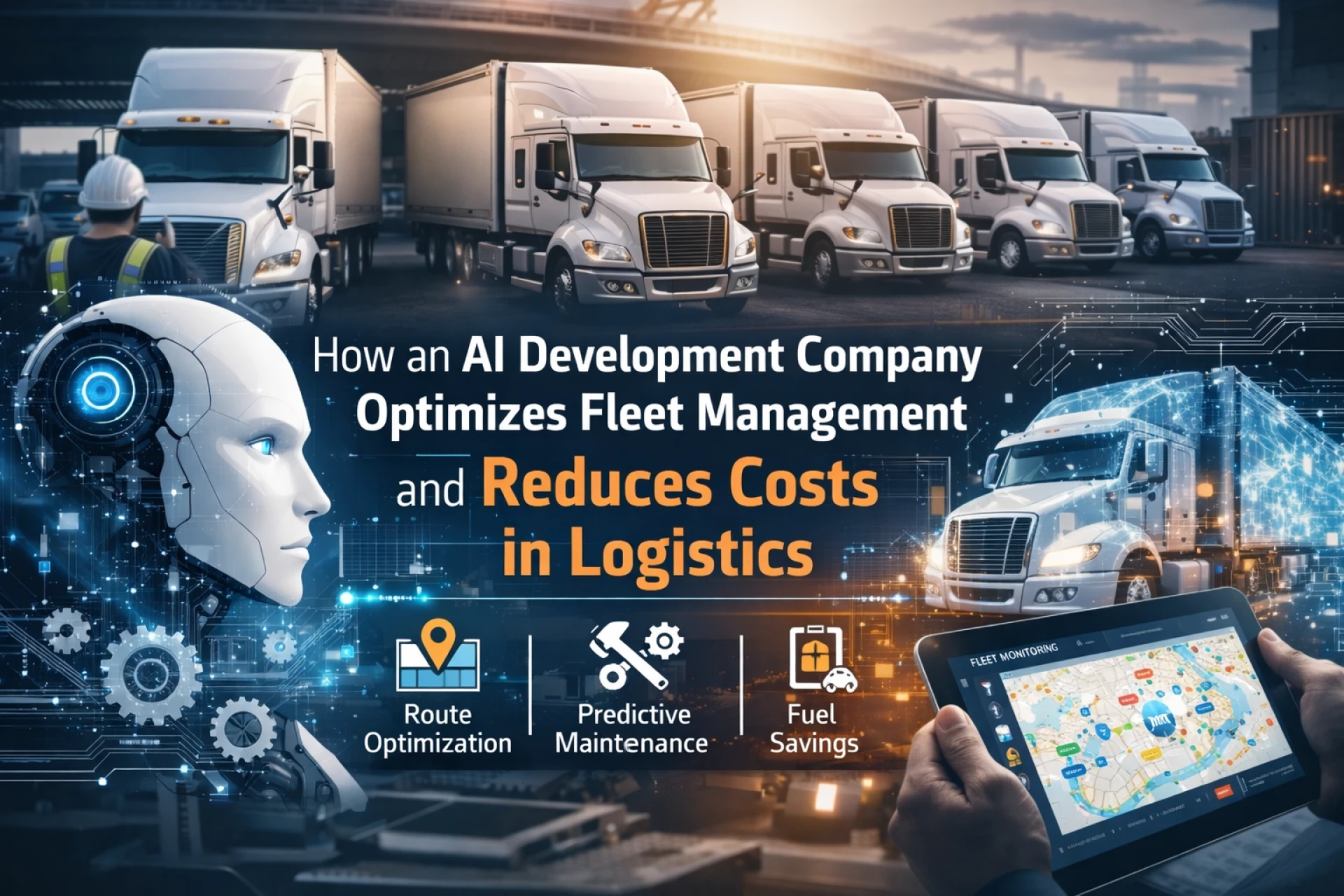
The logistics and transportation industry is facing unprecedented challenges. Rising fuel costs, delivery delays, regulatory compliance, and increasing customer expectations have made efficient fleet management more critical than ever. Traditional fleet management methods relying on manual tracking, scheduled maintenance, and driver reports are no longer sufficient.
Many logistics companies are now leveraging artificial intelligence (AI) to optimize operations, reduce costs, and enhance customer satisfaction. By collaborating with an AI development company, organizations can implement smart systems that provide real-time insights, predictive analytics, and automated decision-making for every vehicle in their fleet.
The High Cost of Inefficient Fleet Management
Inefficient fleet management directly impacts a company’s bottom line. Common cost drivers include:
- Fuel wastage due to poor route planning and idle times
- Vehicle downtime from unexpected breakdowns
- Higher maintenance expenses caused by reactive repairs
- Labor inefficiency when drivers spend time on suboptimal routes or administrative tasks
- Missed deadlines, harming client relationships and reducing repeat business
Industry studies indicate that unoptimized fleets can cost companies up to 20 to 30 percent more annually in operational expenses. AI solutions provide measurable returns by addressing these inefficiencies.
How AI Transforms Fleet Management
AI-driven fleet management leverages data from GPS systems, sensors, telematics, and driver behavior to generate actionable insights. The results include:
Route Optimization and Dynamic Scheduling
AI algorithms analyze traffic patterns, delivery schedules, and vehicle capacity to optimize routes in real time. This reduces fuel consumption, prevents delays, and ensures on-time deliveries.
Predictive Maintenance
Sensors on vehicles collect data on engine performance, oil levels, and brake systems. AI models analyze this data to predict maintenance needs, preventing unexpected breakdowns and costly repairs.
Fuel and Cost Management
AI tools monitor fuel usage per vehicle, detect inefficiencies, and recommend fuel-saving strategies. Optimized routing and predictive analytics can reduce fuel costs by 15 to 20 percent annually.
Driver Behavior Analysis
AI monitors driver habits such as harsh braking, rapid acceleration, and speed compliance. Providing feedback helps improve safety, reduce accidents, and minimize insurance claims.
Real-Time Fleet Monitoring
Logistics managers gain a 360-degree view of their fleet. Real-time dashboards track vehicle location, performance, and delays, enabling informed decisions instantly.
Practical Use Case: AI in Action
A national logistics company faced recurring delivery delays due to inefficient routing and unplanned truck maintenance. By implementing an AI-powered fleet management system, they achieved significant operational improvements:
- Delivery routes were optimized based on real-time traffic and weather data
- Predictive maintenance alerts reduced vehicle downtime by 25 percent
- Fuel costs dropped by 18 percent through route optimization and driver behavior monitoring
The results were clear: improved operational efficiency, reduced costs, and higher customer satisfaction without adding extra staff.
Technologies Used by AI Development Companies
An AI development company typically leverages a combination of technologies to optimize fleet management:
- Machine Learning algorithms that analyze historical and real-time data to predict vehicle performance and optimize routes
- Internet of Things (IoT) sensors that track speed, engine health, and fuel levels
- Telematics integration connecting vehicles, drivers, and logistics software for seamless monitoring
- Computer vision to monitor cargo handling, driver behavior, and potential hazards
- Predictive analytics dashboards providing actionable insights for fleet managers
Benefits of AI-Driven Fleet Management
Reduced Operational Costs
AI helps logistics companies significantly cut expenses from fuel savings to maintenance optimization.
Increased Fleet Uptime
Predictive maintenance minimizes unplanned breakdowns, ensuring vehicles remain operational.
Improved Delivery Efficiency
Optimized routes and dynamic scheduling ensure on-time deliveries and satisfied customers.
Enhanced Driver Safety
Monitoring driving habits reduces accidents and insurance claims while promoting safer practices.
Data-Driven Decision Making
Fleet managers can make informed operational and strategic decisions based on real-time and historical data.
Nextbrain: Enabling Intelligent Fleet Solutions
Nextbrain assists logistics organizations in implementing AI-powered fleet management systems that streamline operations, reduce costs, and improve customer satisfaction. Their solutions include:
- Real-time vehicle tracking and monitoring dashboards
- Predictive maintenance algorithms for proactive repairs
- AI-powered route optimization and dynamic scheduling
- Driver behavior monitoring and feedback systems
- IoT integration for comprehensive fleet data insights
These solutions allow logistics companies to transition to proactive maintenance practices and efficient fleet operations.
Future of AI in Logistics
The logistics sector is just beginning to realize AI’s full potential. Emerging trends include:
- Autonomous delivery vehicles, including trucks and drones for last-mile delivery
- Smart warehouse integration coordinating inventory and fleet for optimized order fulfillment
- Predictive supply chain analytics allocating fleet resources based on demand forecasts
- Sustainability analytics reducing carbon footprint through optimized energy consumption and routing
Organizations that adopt AI early gain a competitive advantage in efficiency, cost savings, and customer service.
Conclusion
AI-driven fleet management is transforming logistics. By working with an AI development company, operators can predict maintenance issues, optimize delivery routes, reduce fuel consumption, and improve overall operational efficiency.
Companies that implement AI solutions not only reduce costs but also enhance safety, reliability, and customer satisfaction. The future of logistics lies in intelligent, data-driven decision-making, and AI is the key enabler.
Contact Nextbrain today to explore AI-powered fleet management solutions that optimize logistics operations and reduce operational costs.
FAQs
1. What is AI fleet management?
AI fleet management uses artificial intelligence to monitor, analyze, and optimize vehicle operations for efficiency, cost reduction, and safety.
2. How does predictive maintenance reduce costs?
AI analyzes real-time vehicle data to predict failures before they occur, avoiding expensive emergency repairs and downtime.
3. Can AI optimize routes in real time?
Yes. AI algorithms consider traffic, weather, vehicle capacity, and delivery priorities to generate optimal routes instantly.
4. Is AI suitable for small logistics companies?
Absolutely. Scalable AI solutions can be implemented for small, medium, or large fleets depending on operational needs.
5. How quickly can AI improve fleet efficiency?
Most organizations see measurable improvements in route optimization, fuel savings, and maintenance planning within a few weeks of implementation.