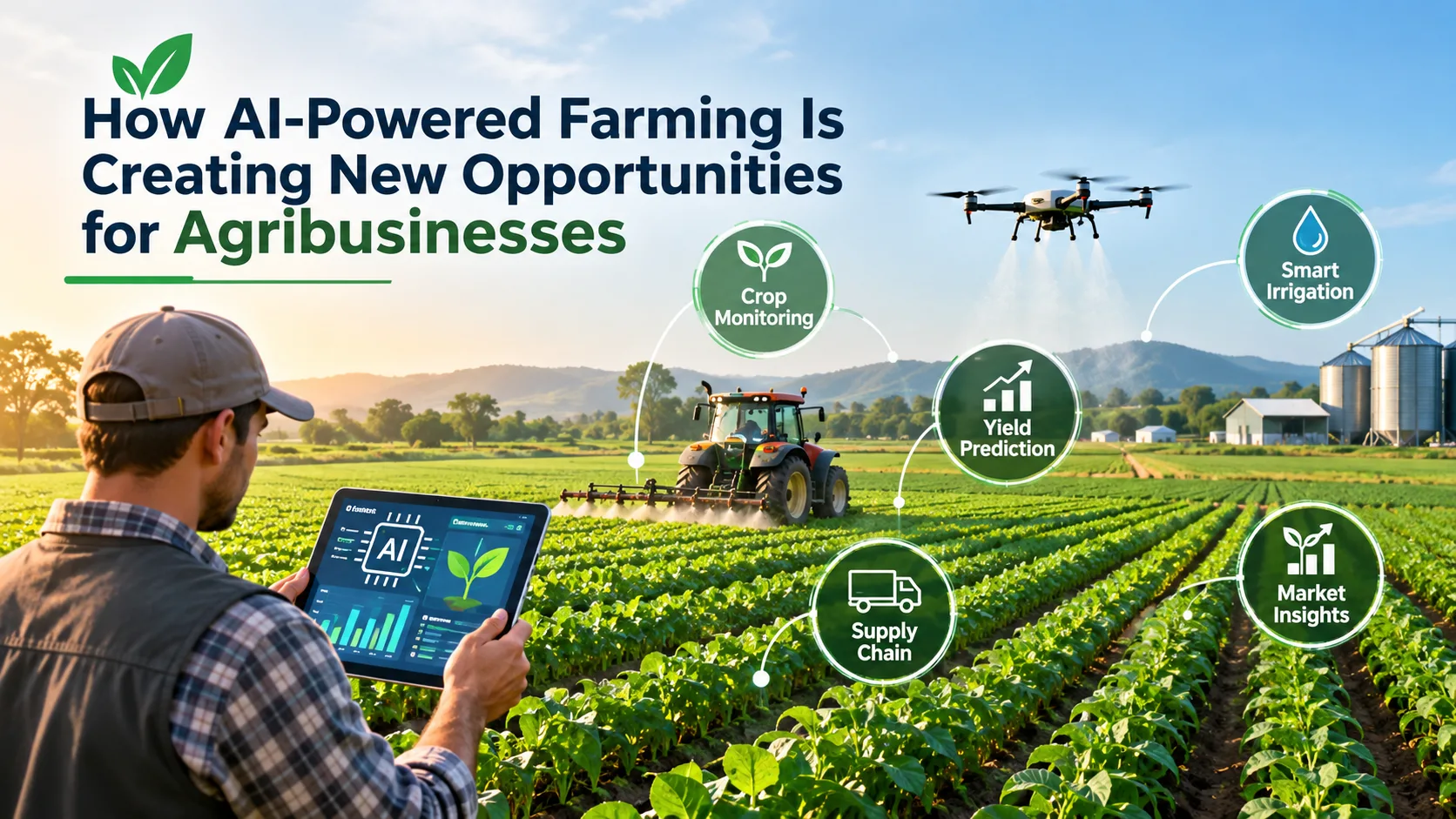
Agriculture is changing with the help of modern technology. Farmers no longer depend only on manual work and old farming methods. Today, artificial intelligence (AI), smart machines, and digital tools are helping them manage farms in better ways.
Agribusinesses face many problems. These include rising costs, changing weather, water shortages, crop diseases, and a lack of workers. These issues can affect crop growth and reduce profits. AI-powered farming offers new ways to deal with these problems. It helps farmers use data to make better choices.
AI is also creating new business opportunities beyond crop production. Companies can use smart tools to manage stock, track machines, plan deliveries, and study market demand. This helps farmers, food producers, suppliers, and distributors manage their work with greater ease.
As more businesses move towards digital farming, an Agriculture Software Development Company can help them build tools that match their needs. These may include farm management apps, crop monitoring systems, smart irrigation tools, and AI-based reports. Such solutions can bring many farming tasks together in one place.
One of the biggest benefits of AI is its ability to turn farm data into useful information. Farmers can use smart tools to find problems, check field conditions, and plan their next steps. This saves time and helps them manage their farms with more confidence.
1. AI Is Helping Farmers Improve Crop Production
Crop production depends on many things, such as soil, water, weather, seeds, and plant health. A small problem in any of these areas can affect the final harvest. AI tools are helping farmers keep track of these factors.
Smart systems can study soil reports, weather data, crop images, and past harvest records. They use this information to help farmers understand what their crops may need.
For example, a farmer growing wheat may use an AI tool to check crop growth. The system can study field images and weather data to find areas where plants are not growing well. The farmer can then check those areas and take action.
AI can also help with seed choice and crop planning. It can study soil and local weather to help farmers compare crops for the next season. This gives farmers more information before they make a choice.
Better crop planning can help reduce waste and improve the use of farm resources. It can also support better harvest results.
2. Smart Crop Monitoring Is Reducing Farm Risks
One of the biggest risks in farming is finding crop problems too late. Diseases, insects, and poor soil can damage plants before farmers notice the issue.
AI-based crop monitoring tools can help find these problems early. They use cameras, drones, and smart software to study plant images and look for signs of damage.
For example, a farmer can take a picture of a damaged leaf through a mobile app. The system can study the image and show signs of possible disease. This gives the farmer a starting point to check the problem.
Drones make crop checks easier on large farms. They take pictures from above and help farmers find areas with poor crop growth or water stress. Some drones also use special cameras to study changes that are hard to see with the human eye.
These tools can help farmers:
- Find early signs of crop disease.
- Check plant growth across large fields.
- Find areas with low water levels.
- Track damage caused by pests.
- Plan field visits based on crop health.
AI cannot find every problem with full accuracy. Results can change due to image quality, light, and crop type. Farmers should confirm important findings before treating their crops.
3. AI-Powered Irrigation Is Helping Businesses Save Water
Water is a major concern for farming businesses. Too much water can damage crops and raise costs. Too little water can slow plant growth and reduce the harvest.
AI-powered irrigation systems use sensors to check soil moisture, temperature, and humidity. They can also study weather reports and crop needs to help farmers decide when to water their fields.
For example, sensors placed in a field can send soil moisture updates to a digital system. If the soil becomes too dry, the system can alert the farmer or turn on the water supply. It can stop watering once the soil has enough moisture.
An Agriculture Software Development Company can help businesses connect these sensors with mobile apps and farm management systems. Farmers can then check field conditions, control connected devices, and get alerts from one place.
Smart irrigation is useful for farms that grow crops with different water needs. It can also help businesses manage water across many fields.
However, each farm needs the right setup. Soil type, crop needs, and local weather must be checked before using an automatic irrigation system.
4. Predictive Analytics Is Helping Agribusinesses Plan Ahead
Agricultural businesses need to make many plans before the harvest. They must choose crops, set planting dates, buy seeds, plan workers, and arrange storage and transport. Poor planning can lead to higher costs and losses.
Predictive analytics uses AI to study past and current farm data. It helps businesses estimate crop production, study weather risks, and understand market demand.
For example, a farm may have records of its wheat harvest from the last five years. An AI system can study these records along with rainfall, soil, and temperature data. It can then estimate the possible yield for the next season.
These estimates can help businesses plan storage, transport, workers, and sales.
Predictive tools can also help with:
- Crop Yield Forecasting: Estimate how much crop a farm may produce.
- Weather Risk Planning: Study weather that may affect farming.
- Pest Risk Analysis: Find signs linked to possible pest attacks.
- Market Demand Forecasting: Study past demand and price changes.
- Resource Planning: Estimate the need for water, seeds, and fertiliser.
A 2025 review of 95 research studies looked at how AI is used in crop management. It covered crop checks, yield estimates, and better use of farm resources.
Still, AI predictions are not always exact. Their results depend on data quality, local weather, crop type, and farming methods.
5. Digital Farm Management Is Creating New Business Opportunities
Running a modern farm involves more than growing crops. Businesses also need to manage workers, machines, suppliers, stock, transport, and sales. When these tasks are handled through separate systems, it becomes hard to track daily work.
An Agriculture Software Development Company can help by building custom platforms for farms and agribusinesses. These platforms can bring different tasks together and give owners a clear view of their business.
For example, a farm management app can help a business record crop details, check stock, track machines, and manage daily tasks. Managers can see this information on one screen instead of checking many records.
AI can make these platforms more useful. It can study business data and find patterns. This can help managers see which tasks take more time, where resources are wasted, and which areas need attention.
This also creates new chances for technology companies. They can build software for farmers, food producers, farm suppliers, and equipment makers.
6. AI Is Improving Agricultural Supply Chains
Agricultural supply chains connect farms, storage centres, transport companies, wholesalers, retailers, and customers. A delay at any stage can lead to food waste and money loss.
AI can help businesses manage this process. It can study sales records, stock levels, transport details, and customer demand.
For example, a food supplier can use AI to estimate how much fresh produce a market may need. This helps the business plan orders from farmers and avoid buying more stock than it can sell.
AI can also help with:
- Tracking stock in warehouses.
- Estimating delivery times.
- Planning transport routes.
- Finding delays in product movement.
- Checking storage conditions.
- Estimating future product demand.
Storage is very important for products such as fruits, vegetables, and dairy items. IoT sensors can check temperature and humidity during storage and transport. If the readings move outside the set range, the system can send an alert.
These tools can help businesses reduce waste and move products from farms to markets more smoothly.
7. AI Is Helping Agricultural Businesses Understand Market Trends
Growing crops is only one part of running a farm business. Farmers also need to understand market prices, customer needs, and changes in buying habits. Selling products at the right time can make a big difference to income.
AI tools can study market data and help businesses understand what customers may need. They can look at past sales, seasonal demand, weather changes, and price records.
For example, a vegetable supplier can use AI to study demand for potatoes, onions, and tomatoes in different markets. This information can help the supplier plan purchases and decide where to send the products.
AI can also help businesses:
- Study changes in crop prices.
- Understand customer buying habits.
- Plan supply based on demand.
- Compare market trends across areas.
- Prepare sales and stock reports.
These tools can support better planning. However, market prices can change due to weather, transport costs, and government rules. AI should support business choices, not make every decision alone.
8. New Business Opportunities Created by AI in Agriculture
AI in farming is creating new chances for more than just farmers. Technology companies, machine makers, food businesses, and startups can also benefit.
As more farms use digital tools, the need for smart software and connected devices is growing. This is opening new areas for businesses that want to serve the agriculture sector.
Some growing business opportunities include:
Smart Farm Management Platforms
Businesses can build apps that help farmers manage crops, workers, stock, machines, and daily tasks. These platforms can also provide reports on farm work.
AI-Based Crop Health Tools
Startups can develop mobile apps that study crop images and help farmers find signs of disease or pest damage.
Smart Farming Equipment
Companies can create connected sensors, automatic irrigation tools, and smart machines that reduce manual work.
Agricultural Data Services
Businesses can study farm, weather, and market data. They can then share useful reports with farmers, suppliers, and food companies.
Digital Marketplaces
Online platforms can connect farmers with buyers, wholesalers, retailers, and suppliers. This can make it easier to find customers and manage orders.
An Agriculture Software Development Company can help turn these ideas into working digital products. From simple mobile apps to large business platforms, custom software can help farming startups build useful services.
9. Challenges Businesses Should Know Before Using AI
AI can improve many farming tasks, but it also comes with some problems. Businesses should understand these issues before spending money on new tools.
High Setup Costs
AI tools, smart machines, sensors, and software can be costly. Small farms may not have enough money to buy advanced systems at the start.
Poor Internet Access
Some farming areas have weak internet connections. This can affect tools that need regular data updates or online access.
Lack of Good Data
AI needs correct data to give useful results. Poor crop images, wrong sensor readings, and missing records can affect its output.
Need for Training
Farmers and workers may need time to learn how to use new machines and apps. Simple designs and proper training can make this easier.
Data Safety
Digital farming systems store important business records. Companies must protect farm data, customer details, and device information.
A 2026 review of AI and IoT in precision farming highlighted issues such as setup costs, data safety, internet access, and a lack of technical skills.
These findings show why businesses should plan before using new technology. They need tools that fit their budget and daily work.
Choosing an Agriculture Software Development Company with experience in custom apps and connected devices can help businesses plan their software needs. The right solution should be safe, easy to use, and suitable for the size of the business.
10. What Is the Future of AI-Powered Farming?
AI-powered farming is still growing. New tools are being built to help farmers manage their work, reduce waste, and use resources in better ways.
Some technologies that may play a bigger role in the coming years include:
Digital Twins
A digital twin is a virtual copy of a real farm, machine, or farming system. It uses real data to show how different conditions may affect farm work. Businesses may use it to test watering plans and study changes before taking action.
AI Farming Assistants
AI assistants may help farmers read crop reports, check machine alerts, manage records, and find useful farming information. Farmers may be able to ask questions through voice or text.
Advanced Farming Robots
Future robots may become better at planting, harvesting, spraying, and removing weeds. Better cameras and sensors may help them work in more difficult field conditions.
Satellite-Based Crop Monitoring
Satellites can take images of large farming areas. AI can study these images to track plant growth and find changes in crop health.
Edge AI
Some AI tools need the internet to process data. Edge AI allows devices to process information directly on a machine or sensor. This can help farming equipment respond faster in areas with poor internet access.
A 2026 review of 55 studies on crop yield prediction discussed how satellite images, weather records, and soil data can help improve crop estimates.
These tools still need more testing. Their success will depend on cost, accuracy, and how well they work in different farming conditions.
Conclusion
AI is creating new chances for farmers and agricultural businesses. It is helping them check crops, manage water, predict production, track stock, and understand market demand. Smart machines and connected devices are also making daily tasks easier.
The biggest change is the use of data in farming. Businesses can now use smart tools to find problems and plan their work. They no longer have to depend only on manual checks and old records.
However, using AI needs proper planning. Businesses need good data, affordable tools, trained workers, and software that meets their needs.
As more farms move towards digital tools, AI and automation will create new ways to improve farm work and business growth. Companies that use these tools wisely can build stronger and more efficient farming systems.
Frequently Asked Questions (FAQs)
1. How is AI used in modern agriculture?
AI helps farmers check crops, find diseases, study soil, predict harvests, and manage water. It uses farm data to support better decisions.
2. Can AI help farmers increase crop production?
Yes. AI can help find crop problems early, plan watering, and study soil and weather. These insights can support better crop growth and may improve production.
3. What are the main benefits of AI-powered farming?
The main benefits include better crop checks, less water waste, improved planning, lower manual work, early disease detection, and better use of farm resources.
4. What is smart farming software?
Smart farming software is a digital tool that helps farmers manage crops, fields, machines, workers, and farm records. Some tools also connect with AI and smart sensors.
5. How can an Agriculture Software Development Company help farmers?
An Agriculture Software Development Company can build farm management apps, crop monitoring tools, smart irrigation systems, and stock management software. These tools help farmers manage daily work through digital platforms.
6. Is AI-powered farming suitable for small farms?
Yes. Small farms can start with simple tools such as crop monitoring apps, soil sensors, and digital farm records. They do not need to buy costly machines at the start.
7. What is the role of IoT in agriculture?
IoT connects farming devices such as soil sensors, weather stations, and irrigation tools. These devices collect data and send it to digital platforms.
8. What is the future of AI in agriculture?
AI is likely to play a bigger role in crop checks, farm machines, yield estimates, smart irrigation, and supply chain management. AI assistants may also make farming information easier to access.