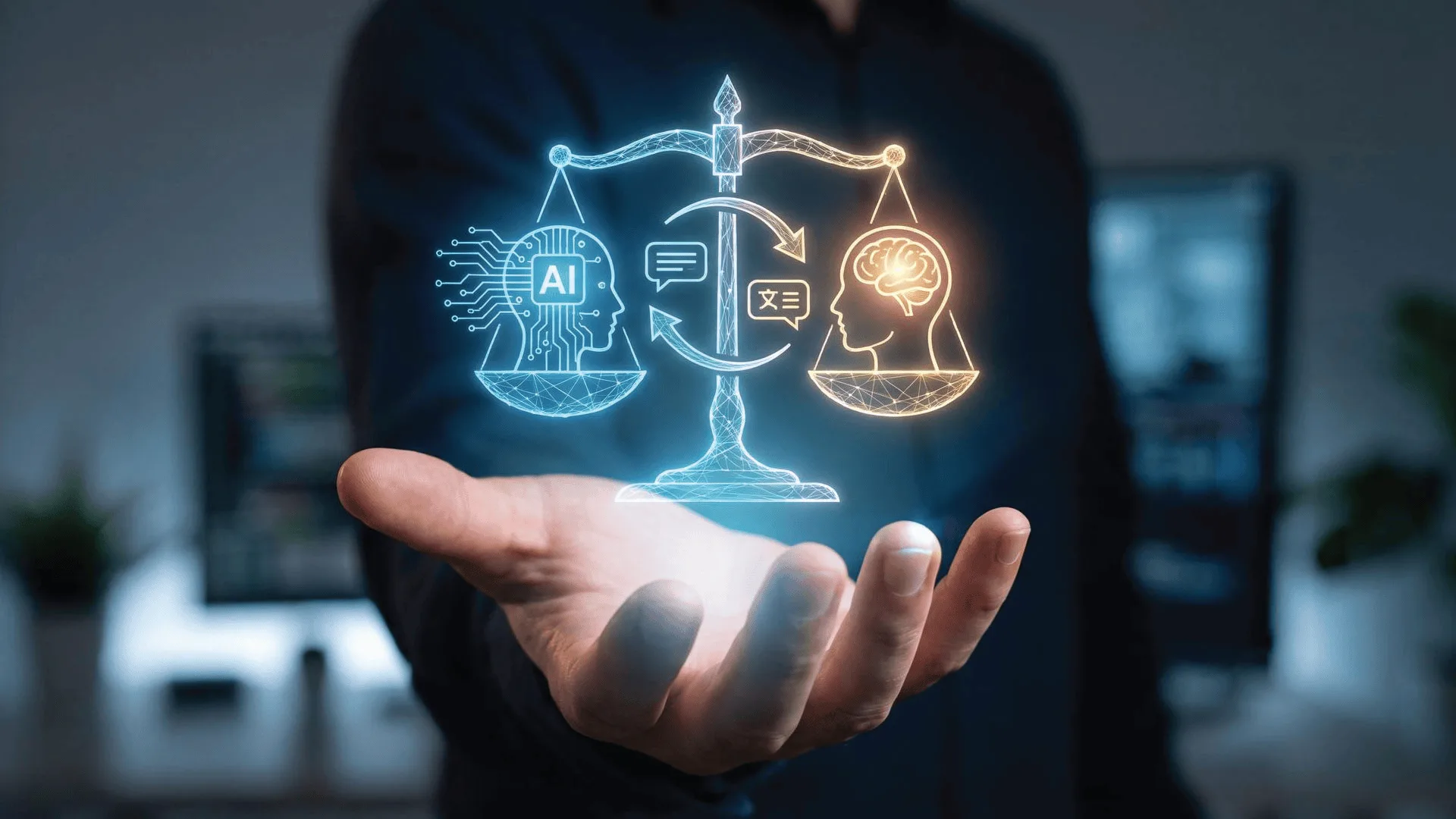
Ethical human AI interactions in modern enterprises are becoming essential as organizations increasingly integrate artificial intelligence into recruitment, workforce management, employee engagement, and business operations. While AI improves efficiency, decision-making, and productivity, enterprises must ensure that these technologies operate transparently, protect employee privacy, and maintain human accountability. Building responsible human-AI relationships requires organizations to balance technological innovation with fairness, trust, and human-centered workplace practices.
For more info https://hrtechcube.com/how-to-build-ethical-human-ai-interactions-in-modern-enterprises/
Understanding Ethical Human-AI Interactions in Modern Enterprises
Companies are using artificial intelligence to monitor and oversee workers, measure performance, manage communication, and make strategic decisions. Through the use of AI, automated processes, analysis of data from employees, and other information, can support the organization's development. But without human oversight, technology cannot deliver responsible results.
Ethical human-AI interactions workplaces in the future of work will necessitate the development of a working environment within which artificial intelligence augments human capabilities rather than substitutes for essential human judgment. Employees must be aware of how AI impacts decision making in the workplace and be able to challenge automated suggestions. Companies should define clear rules for how AI should be used and ensure that emerging technologies are consistent with the rights of employees, company values, and business purposes.
.
Why Ethical AI Matters in Today's Workplace
With the rise of enterprise-wide implementation of AI-powered solutions, concerns around the ethical implications of technology are arising among HRs and business leaders. Automated recruitment tools, employee tracking solutions, and appraisal platforms can make or break significant career milestones.
If not properly monitored, these tools can lead to unfair results, violate privacy of the workers or lead to ambiguities on how decisions are being made.
How using AI ethically can benefit your organization Helps build trust with employees and improves team dynamics. Encourages responsible innovation by allowing the team to innovate without harm. Reduces business operations risks.
HR news and Human Resource Current Updates are placing a higher focus on the role of responsible AI governance across workplace tools.
Building Transparency and Trust Between Employees and AI
Of all the principles, transparency is arguably the most fundamental: Employees need to know when their organization is deploying human-AI collaborations, what data they are feeding the tools and how the resulting outputs affect their work.
For instance, if a company employs recruitment software and uses it to process applications, applicants must be informed in advance of the nature of automated testing and the existence of human decision-makers in the recruitment process.
Likewise, workers need to be aware if AI is factored into their performance review, hiring decisions or productivity assessments.
Create greater transparency by clearly communicating AI policies, evidencing automated decisions, and providing transparent reasons for significant decisions.
Employees are more likely to embrace a new AI-driven work environment when they understand how AI is working behind the scenes at their organization
Protecting Employee Privacy and Personal Data
One of the most critical types of data organizations need to be concerned with protecting as they use AI technology is that of employee information. Employee data is often the most common information processed by AI applications.
Employees can be subject to privacy violations, unauthorized access, and misuse of information due to insufficient data management.
Organizations need to put in place tight data regulations that specify what information is permissible to be gathered by the AI systems, duration of storage and access restrictions to this data.
Technology providers should also be assessed before implementing any workplace AI solutions. Audits, access controls, encryption, data security audits can all prevent potential risk.
Effective data management is a sign that a business respects the privacy of its people and doesn't take digital change lightly
Reducing Bias in AI-Powered Workplace Decisions
AI systems are prone to learning from data upon which they were trained and subsequently operated. If such data is based on historical inequalities or results, automated recommendations may reinforce biases in the workplace.
It has an impact, especially in recruitment and promotions, wages, and employee assessment.
For instance, an AI recruiting system could use previous biased hiring decisions to unfairly target particular candidates at the expense of others who could also be very qualified.
The companies should also be able to perform ongoing evaluations of their model, assess and keep track of training data, and monitor the outcomes of decision-making for different employee groups.
Human reviewers would need to have the ability to challenge automated suggestions, too, and fix potentially biased outcomes.
Fairness should be an ongoing obligation rather than a one-time technical evaluation
Maintaining Human Oversight and Accountability
AI can help provide recommendations, but companies should avoid ceding the final word on every critical workplace decision to the automation.
Human review brings into the equations situations, not only individual management expertise, but also organizational values.
For instance, AI can assist in highlighting potential opportunities for employee growth but managers should weigh factors such as the employee's career aspirations, the circumstances in which their performance is delivered, and their personal situation.
They also need to put in place defined accountability mechanisms. HR, technology, and other managers, as well as senior leaders, need to know who is accountable should AI fail, leading to wrong or even damaging decisions.
While you are the person who builds the system, your users or the end.
The Role of HR Technology in Responsible AI Adoption
HR technology plays an important role in integrating ethical principles into everyday workforce operations. Modern HR platforms can help organizations manage employee information, automate administrative tasks, analyze workforce trends, and improve communication.
That's why choosing the appropriate technology is about much more than its automation potential. Companies should also look at how it handles data privacy, transparency, bias mitigation and human oversight.
By browsing HR Tech Articles about innovations, organizations can envision the changes solutions will bring to their employees and workforce management.
HrTech Cube offers news on the future of tools and technologies in the workplace for HRTech professionals to learn more about the latest in HRTech. Find out more with collection of HR technology articles.
By prioritizing ethical requirements during technology selection and implementation, enterprises can create more sustainable digital workplaces.
Developing an Ethical AI Culture Across Enterprises
The culture that supports ethical AI deployment is more than just policies on paper or security controls. In the workplace, people need to foster a culture that promotes understanding of ethical technology use and open dialogue.
Training courses should enable HR managers, managers, and employees to detect the limitations of AI, know who is responsible for the privacy of others, and identify biased results.
Leadership engagement is just as critical. Senior leaders need to set clear expectations around what constitutes appropriate use of AI and make sure the discussion about ethics is factored in when it comes to making technology investments.
Enterprises can create reporting mechanisms for employees to raise questions about or challenge automated decisions or workplace practices involving AI.
For instance, as with policies, organizations should review an employee's feedback regularly and be ready to adapt its approach in light of new technology or regulations.
The Future of Human-AI Collaboration
As technology matures, the connections people have with AI are likely to evolve as more sophisticated automation and smart systems are deployed by enterprises.
The future of the workplace will probably blend recommend-ations driven by AI, employee experiences, workforce planning automation and intelligent workplace productivity tools.
Still, adoption success will come down to whether organizations strike a good balance between human and technological resources.
Enterprises that put these principles at the heart of their businesses – namely transparency, fairness, privacy, and accountability – will be more capable of creating trusted employment environments with intelligent technology.
Ethical AI should be integrated into the company as part of overall strategic planning as opposed to a consideration made once the technology is already rolling out.
Building ethical human AI interactions in modern enterprises Demands responsible technology with people at its heart Responsible deployment of enterprise AI by organizations necessitates a human centered approach to technological innovation. Workplace adoption of AI should incorporate principles of transparency, employee privacy, fairness, human oversight and accountability. Alongside a responsible deployment of HR technology through clear policies and education for employees, the digital transformation journey of organizations can foster trust and promote better people experiences.
This news inspired by HR Techcube https://hrtechcube.com/
Article Summary
Ethical human AI interactions in modern enterprises depend on transparency, fairness, privacy, accountability, and human oversight. Learn how HR leaders can build trust, reduce bias, protect employee data, and use AI responsibly at work in practice