Today’s companies generate more information than they can realistically analyse without expert help. AI-driven data science consulting has gone from a nice-to-have to a must-have. Organisations in virtually every industry are finding that raw data alone does not generate value; it only becomes useful when it is converted into clear, actionable insight. And more and more, artificial intelligence is doing that conversion process, not the old manual analysis.
At its heart, this type of consulting is a blend of advanced machine learning algorithms, automated statistical methods, and seasoned human judgement. This means companies can make sense of complex, big data sets with a speed and accuracy that manual methods can’t come close to matching.
As competition heats up and customer expectations rise, organisations that continue to use old-fashioned analytics methods are at risk of being overtaken by competitors that have embraced intelligent, automated methods. This is not just a passing fad but a fundamental shift in how we make strategic decisions, assess risks, and spot opportunities. In the sections below we’ll talk about what this discipline looks like in practice, why it has become a must-have for progressive organisations, how artificial intelligence and machine learning are changing the field in real life, and what the future holds for companies that choose to invest in AI-powered data science consulting.
What Is AI-Powered Data Science Consulting?
The discipline is about providing consulting services that combine traditional data science approaches with artificial intelligence and machine learning tools to solve business problems more efficiently. Rather than simply conducting manual statistical analysis, the consultants in this space are using intelligent algorithms to detect patterns, predict outcomes and automate decision-making processes. This AI-enabled consulting model for data science moves organisations from reactive reporting to proactive, forward-looking strategy.
Data consulting used to be weeks of manual data cleaning, hypothesis testing and reporting. AI-Powered Data Science Consulting greatly reduces this time. Machine learning algorithms are applied to big data sets in minutes, not days. Today, consultants work with intelligent systems that find anomalies, suggest correlations, and even generate first-pass insights for a human analyst to review. This human-machine interaction is the basis of today’s AI-driven data science consulting.
But the point is not to take the place of human judgement. Skilled consultants still read context, validate model outputs, and align recommendations to business goals. What changes is the speed and depth of analysis that can be brought to bear to support those judgements, giving AI-powered data science consulting a distinct leg up over traditional methods. Clients need their advisors to speak the language of statistical rigour and algorithmic tools. If you can’t provide AI-powered consulting for data science, you’ll look out of place to future partners.
Why Businesses Need AI-Powered Data Science Consulting Today
The volume, velocity, and variety of modern data have outgrown the capabilities of manual analysis. Companies collect information from websites, mobile applications, transaction systems, sensors, and social platforms simultaneously, and sorting through this complexity without intelligent tools is nearly impossible at scale. This is precisely the reason why the demand for AI-powered data science consulting has erupted in industries such as finance, healthcare, retail, and manufacturing.
AI and data science consulting can deliver measurable benefits to businesses in a number of ways: For one thing, they shorten the lag between the collection of data and the insight that can be acted upon, so leadership can react more quickly to shifts in the market. Secondly, they are more accurate because they reduce the human error that is inherent in manual spreadsheet analysis. Third, they provide previously impossible predictive capabilities, allowing organisations to predict customer behaviour, supply chain failures or financial risks before they happen.
Cost efficiency is another key driver. Hiring a full-time data science and machine learning team can be cost-prohibitive, but smaller and mid-sized companies may utilise AI-powered consulting for data science on a project-by-project basis to access the same advanced capabilities as larger enterprises, without the overhead of building an internal department from scratch. This democratisation of advanced analytics is one of the most compelling reasons why organisations are turning to machine learning-driven data science consulting today.
Key Benefits Driving Adoption
There are several concrete benefits that have made data science consulting driven by AI a baseline expectation rather than a competitive advantage. Faster reporting cycles mean executives don’t wait weeks for insight that can come in hours. Better forecasting reduces the risk of costly over- and under-stocking in supply chains. Financial services benefit from better customer segmentation, leading to higher marketing ROI and better fraud detection to stop revenue loss. These findings help explain why so many organisations now view AI-powered analytics consulting as essential infrastructure—not optional add-ons.
How AI and Machine Learning Are Reshaping Data Science Consulting
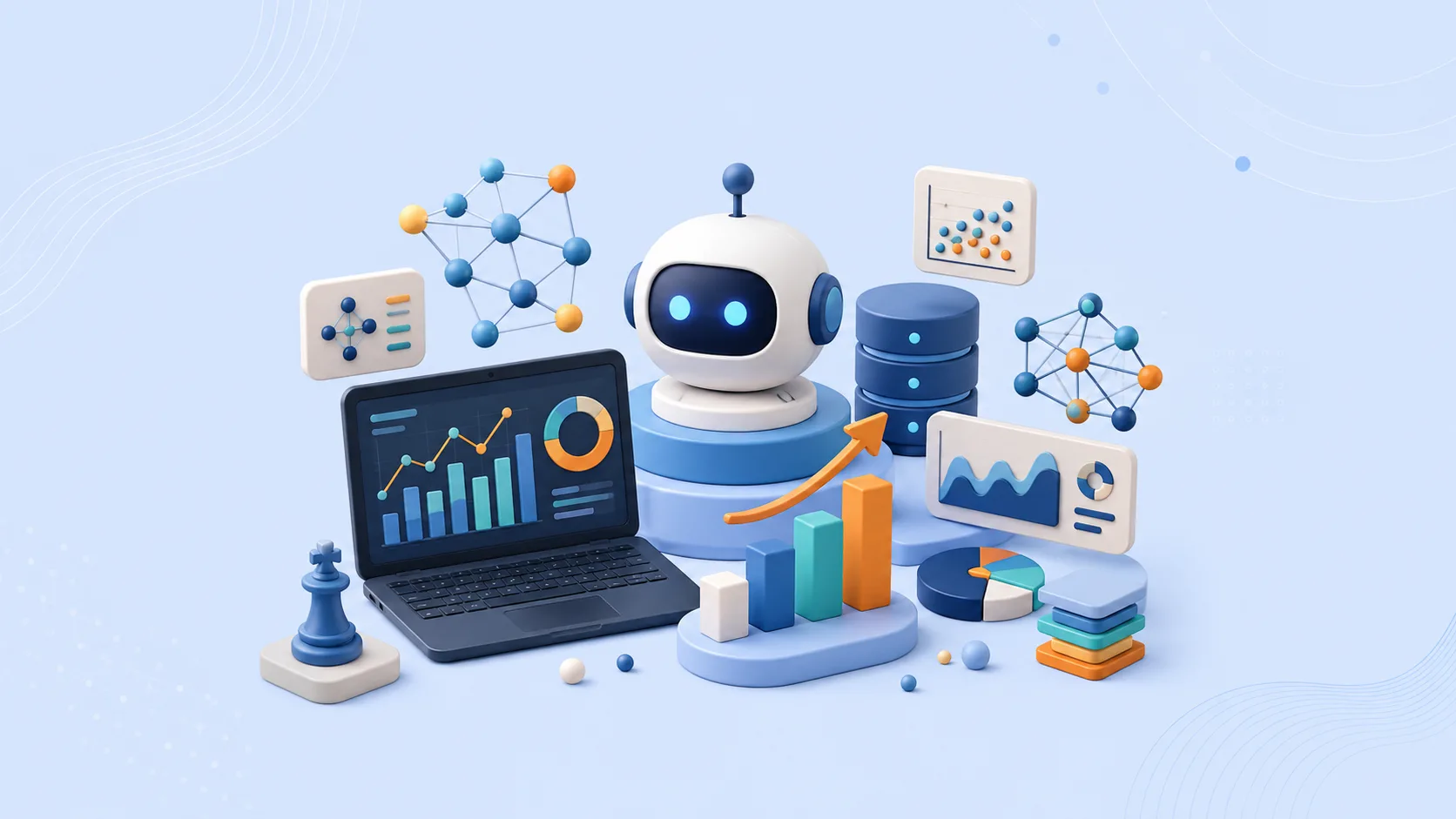
Machine learning and artificial intelligence are transforming data science consulting, enabling faster analysis, predictive insights, automation, real-time decision-making and more accurate business strategies across industries.
Predictive Analytics and Smarter Decision-Making
Predictive analytics is one of the most obvious benefits of AI-powered data science consulting. Machine learning algorithms can predict the future from the past data with accuracy that is hard to achieve by traditional statistical approaches. These forecasts help retailers manage inventory, banks to assess credit risk and healthcare providers to anticipate patient needs. Now, AI-based data science advisory services consultants develop customised predictive models for each client’s industry-specific challenges, rather than using generic templates.
Automation of Repetitive Data Tasks
In the past, most of a consultant’s time was spent cleaning data, formatting it and doing preliminary analysis. Today, this practice includes automation tools that perform these repetitive tasks in a fraction of the time, allowing consultants to focus on strategic interpretation and collaboration with clients. This move to AI-enhanced data science consulting has fundamentally changed how consulting teams spend their time and expertise, freeing up senior analysts to spend more hours on judgement-driven work rather than routine spreadsheet cleanup.
Enhanced Personalisation and Customer Insights
It is great for finding subtle patterns of customer behaviour that would otherwise be invisible. AI-driven data science consulting also helps businesses segment their audience to a very granular level. This way, they can adapt their marketing messages, product recommendations, and pricing strategies to each individual’s preferences. Today, data science consulting projects driven by AI enable companies of nearly any size to do what was once the sole province of the tech giants: provide such levels of personalisation.
Real-Time Data Processing and Insights
Perhaps the most transformative aspect of AI-powered data science consulting is the move from periodic reporting to continuous, real-time analysis. When organisations marry streaming data pipelines with machine learning algorithms, they can monitor operations in real-time (instead of waiting for weekly or monthly reports). This skill is useful in fields like logistics, cybersecurity and financial trading, in which AI-enabled analytics consulting can be the difference between capitalising on an opportunity and missing it.
Natural Language Processing and Unstructured Data
A growing share of business data exists in unstructured formats such as emails, support tickets, and social media comments. This form of consulting increasingly incorporates natural language processing to extract sentiment, intent, and emerging themes from unstructured information, turning previously unusable data into strategic insight. AI Consulting For Data-Driven Enterprises Consultants can glean value from sources that traditional analytics have had a hard time interpreting. As language models get better, this ability gets better.
Common Challenges in Adopting AI-Driven Consulting
Despite the advantages, AI-driven data science consulting has its own challenges. Data quality has been an issue for a long time, because no matter how good a machine learning model is, it will give unreliable results when given incomplete or inconsistent data. Organisational resistance can also slow things down, especially if employees aren’t used to algorithmic recommendations or are sceptical about automated decision-making.
Another challenge is the integration with legacy systems, as many organisations are still relying on legacy infrastructure that was not designed to support real-time machine learning pipelines. Most successful engagements address these issues early on, combining technical implementation with change management, staff training and clear governance on how to validate AI-generated recommendations before acting on them. Those consultants who are able to anticipate these points of friction are more likely to deliver sustainable results than those who only focus on the technology.
The Future of AI-Powered Data Science Consulting
This discipline is expected to grow in importance in the future far beyond its current applications. Generative AI tools are starting to help consultants write reports, summarise findings and even suggest new lines of analysis, further speeding up project timelines. As these tools mature, the future of AI-powered data science consulting will likely involve even closer collaboration between human strategists and autonomous analytical systems.
Ethical and regulatory issues are expected to be part of the future of AI-powered data science consulting as well. As governments tighten their grip on data privacy and algorithmic accountability, consultants will have to prove that their AI-enabled data science consulting is transparent, fair and compliant. As scrutiny increases, those who embed responsible AI governance into their consulting models today will be well positioned to build client trust, and this accountability will likely be a differentiator among competing providers.
Another emerging trend is the democratisation of advanced analytics via low-code and no-code AI platforms. This evolution will not make expert consultants obsolete but will move the role of AI-powered data science consulting to higher-value activities like strategic interpretation, custom model development, and cross-functional implementation. Companies that partner early with AI-powered data science consulting firms are more likely to be ready for this next phase of technological change, especially as talent shortages make in-house hiring increasingly difficult.
In the end, the organisations that will thrive are those that view this approach as a one-and-done project but rather a long-term strategic partnership that grows with their data, their industry and the larger technological landscape. Consultants who continue to invest today in machine learning–driven data science consulting capabilities will be best positioned to help clients navigate what comes next, and companies that are slow to adopt may find the gap between themselves and data-mature competitors increasingly difficult to close.
Conclusion
AI-Powered Data Science Consulting has gone from being a niche service to a core strategic need for organisations looking to stay competitive in a data-driven economy. The discipline combines machine learning, automation and human expertise to allow companies to make sense of complex information faster, more accurately and presciently than traditional methods. Practical benefits—from predictive analytics and real-time processing to personalised customer insights—are already reshaping the way companies do business in nearly every sector.
Looking forward, ongoing advances in generative AI, stronger regulations, and more accessible tools will further amplify the impact of AI-powered data science consulting on everyday business decisions. Companies investing in this partnership today are setting themselves up to adapt faster, compete harder and make smarter decisions tomorrow, while those that drag their feet risk falling behind competitors who have already modernised their analytics capabilities. For any company serious about making data a true competitive advantage, this is no longer an option. It’s the clearest, most reliable path to sustainable, long-term growth in an increasingly data-driven economy.