
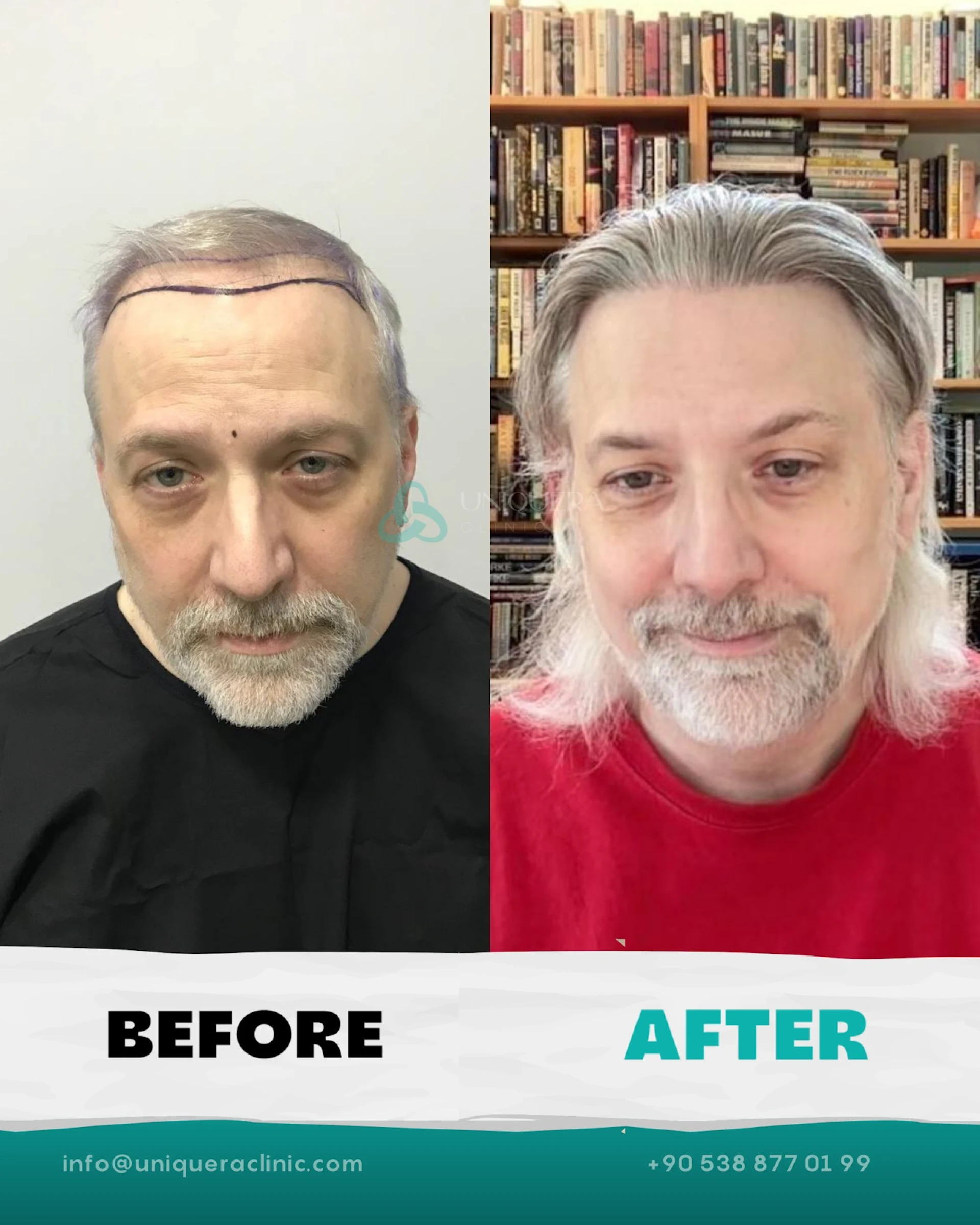
Age sneaks up on hair in quiet ways. You don’t always notice it happening. One year your hair feels thick, easy. Then suddenly you’re adjusting it differently in photos, avoiding overhead lighting, maybe zooming in on your crown a little too often.
It’s usually around that point people start looking into hair solutions for thinning hair and wondering something simple but important: does age actually affect hair transplant surgery success?
Short answer? Yes. And no.
It’s not as straightforward as people expect.
At UniquEra Clinic, age comes up in almost every consultation. Some patients worry they’re too young. Others think they’ve waited too long. Both concerns are valid. Neither is automatic disqualification.
Let’s unpack this without overcomplicating it.
Your 20s: Early Action or Early Mistake?
Hair loss in your early 20s feels unfair. You look around and most of your friends still have thick hairlines. So when yours starts creeping back, it hits harder.
Technically, younger patients heal quickly. Blood circulation is strong. Skin recovers fast. Graft survival rates are generally excellent.
The issue isn’t healing.
The issue is progression.
Hair loss patterns aren’t always stable at 22 or 23. If surgery is done too aggressively — lowering the hairline dramatically — and native hair keeps thinning behind it, you may need another procedure sooner than expected.
I’ve seen patients thrilled with results at 24… then concerned again by 29.
That doesn’t mean younger people shouldn’t consider surgery. It just means planning has to account for future thinning. Conservative hairline design usually works better long term.
Your 30s: Often a Balanced Phase
The 30s tend to be a common window for hair transplant surgery. By then, the hair loss pattern is clearer. You can see whether thinning is focused at the temples, crown, or diffused across the scalp.
This clarity helps surgeons map graft placement more realistically.
Patients seeking hair solutions for thinning hair during their 30s often want density rather than drastic change. They’re usually not chasing a teenage hairline anymore. They just want proportion back.
From a healing perspective, the body still responds well. Swelling resolves predictably. Redness fades within weeks. Growth timeline remains similar to younger patients — shedding first, new growth around month three or four, fuller density by month ten or twelve.
Patience still required. Always.
Your 40s and 50s: Stability Can Be an Advantage
There’s a common myth that hair transplants don’t work well after 50. Not true.
In fact, many patients in their 40s and 50s benefit from stable hair loss patterns. The surgeon can design around what’s already happened rather than guessing future progression.
Healing may be slightly slower. Redness might linger a bit longer. But graft survival doesn’t suddenly drop because you turned 48.
What changes is expectation.
Most patients in this age group aren’t aiming for extreme density. They want refinement. A fuller crown. A softer frontal frame. Something natural that fits their age.
And honestly, subtle often looks better.
At UniquEra Clinic, planning for patients in this range often focuses on blending — not dramatic shifts.
Over 60: Still Possible?
Yes. Age alone doesn’t cancel eligibility.
The deciding factors are donor hair quality, scalp elasticity, and overall health. If the donor area remains dense and the patient is medically fit, surgery can still produce satisfying results.
One difference though — density expectations should match donor capacity. Attempting to recreate youthful density in a 65-year-old scalp may look unnatural against facial aging.
Less can look more realistic.
Does Age Affect Graft Survival Rates?
This is where people get curious.
From a biological standpoint, transplanted follicles behave similarly across age groups if handled properly. The success of graft survival depends more on surgical technique, blood supply, and aftercare than age alone.
Younger skin heals faster. That’s true. But the survival of follicles doesn’t drop dramatically just because someone is older.
What matters more is how healthy the donor area is. Strong donor density at 55 is more important than age 28 with weak donor hair.
Female Hair Restoration Turkey and Age
Women experience hair loss differently. Diffuse thinning is more common than sharp recession. Hormonal shifts — pregnancy, menopause, thyroid changes — often play a role.
Female hair restoration Turkey procedures require careful diagnosis. Age impacts the decision slightly differently for women.
Younger women with active diffuse thinning may need medical therapy before surgery is considered. If thinning is ongoing across the entire scalp, transplanting into unstable zones can be unpredictable.
In women over 40 with stable thinning and strong donor areas, surgical results can be very natural.
The key is stability again. Not just age.
Emotional Readiness Changes With Age
This isn’t talked about enough.
Younger patients sometimes expect surgery to instantly fix confidence. They may struggle during the shedding phase because it feels like things got worse before they got better.
Older patients often approach it more calmly. They understand growth takes time. They see it as an enhancement, not a total reinvention.
Neither mindset is wrong. But emotional readiness affects satisfaction.
Hair transplantation is slow progress disguised as quick surgery.
The Bigger Picture: Stability Over Birth Year
Age influences planning. It influences hairline design. It influences expectation.
But the real deciding factor? Stability of hair loss and donor strength.
A 26-year-old with stable, mild recession might be a better candidate than a 38-year-old with aggressive ongoing thinning. A 58-year-old with thick donor hair could have stronger results than a 30-year-old with weak density at the back.
Hair doesn’t follow neat age rules.
At UniquEra Clinic, assessments focus on long-term planning. Where will your hair likely be in five or ten years? How much donor reserve should be preserved? Is medical therapy needed alongside surgery?
Those questions matter more than candles on a birthday cake.
So if you’re wondering whether you’re too young or too old for hair transplant surgery success… maybe shift the question slightly.
Is your hair loss stable? Is your donor area strong? Are your expectations realistic?
That’s usually where the real answer lives.
And hair, well… it tends to reward patience more than urgency.