
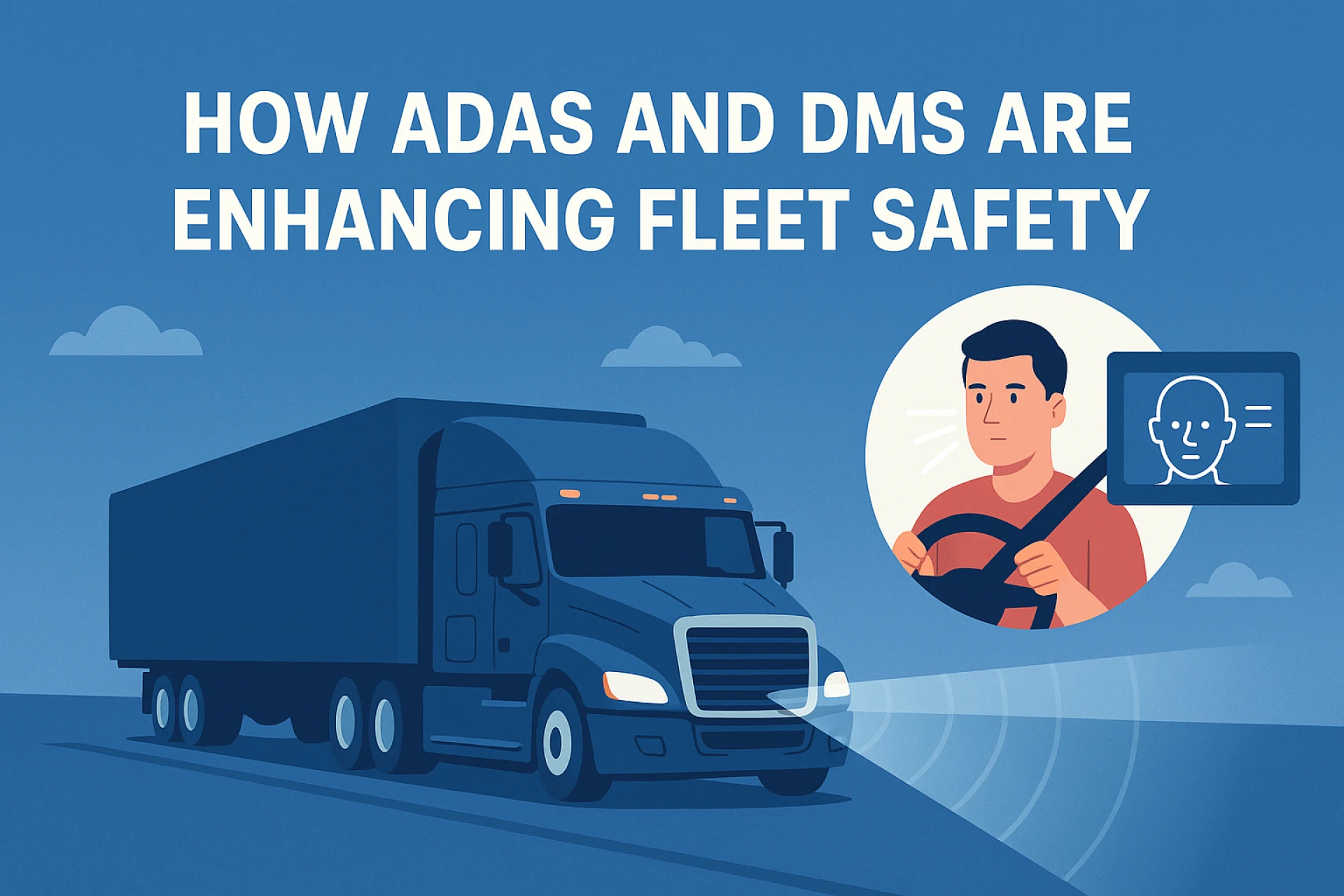
How often do you worry about your fleet's safety on busy roads?
With increasing traffic, unpredictable weather, and distracted driving, fleet safety has never been more critical. Transportation companies are under constant pressure to ensure their drivers and vehicles stay safe.
So, how can you keep your fleet protected without micromanaging every movement?
The answer lies in smart technology—specifically, Advanced Driver Assistance Systems (ADAS) and Driver Monitoring Systems (DMS).
These innovative tools are changing the game. ADAS helps your drivers avoid collisions, while DMS keeps an eye on their focus and alertness. Together, they reduce human error and promote safer driving habits.
If you're in fleet management or logistics, learning about ADAS and DMS can help you prevent accidents, lower costs, and increase efficiency.
Ready to find out how? Let’s dive into what makes ADAS and DMS essential for modern fleet safety.
What Is Advanced Driver Assistance Systems (ADAS)?
Advanced Driver Assistance Systems (ADAS) use sensors, cameras, and software to support drivers in real-time. These systems monitor the vehicle’s environment and assist the driver with actions that can prevent accidents.
Key features of ADAS include:
- Lane departure warning
- Forward collision warning
- Automatic emergency braking
- Adaptive cruise control
- Blind spot detection
ADAS in Fleet Management acts as a second set of eyes. It helps drivers stay alert and avoid mistakes that could lead to crashes.
What Is Driver Monitoring Systems (DMS)?
Driver Monitoring Systems (DMS) focus on the driver’s behavior inside the vehicle. These systems use cameras and sensors to track head position, eye movement, and facial expressions.
DMS detects signs of drowsiness, distraction, and inattention. When risky behavior is spotted, it sends alerts or triggers warnings to keep the driver focused.
This real-time feedback helps reduce risky driving and encourages drivers to stay alert and responsible.
The Impact of ADAS on Fleet Safety
ADAS plays a huge role in preventing accidents before they happen. For example, forward collision warning and emergency braking systems can prevent rear-end collisions. Lane-keeping assistance ensures the vehicle stays centered in the lane.
When fleets are equipped with ADAS, accident rates drop significantly. According to the Insurance Institute for Highway Safety, vehicles with ADAS see 27% fewer injury-causing crashes.
ADAS also reduces insurance claims and vehicle damage, saving companies both time and money. Enhanced visibility and warning systems improve confidence among drivers, particularly in low-visibility conditions such as fog or nighttime driving.
Some advanced ADAS features even predict pedestrian movements and provide 360-degree camera views, offering additional security in crowded urban areas.
The Role of DMS in Preventing Driver Fatigue and Distraction
Driver fatigue is a major cause of road accidents, especially in long-haul transportation. DMS helps solve this issue by identifying early signs of drowsiness and distraction.
For instance, if a driver frequently looks away from the road or shows signs of nodding off, DMS sends real-time alerts. This prompts the driver to take a break or regain focus.
Some DMS systems also generate performance reports for fleet managers. These insights can be used to offer targeted driver training and encourage safer habits.
Fleets that use DMS report lower accident rates, improved driver accountability, and better overall safety. It creates a culture of safety by reinforcing attentive and responsible driving behaviors.
Real-World Example: Logistics Fleet Using ADAS and DMS
A large logistics company in India equipped its trucks with ADAS and DMS technologies. According to a case study shared by MarketsandMarkets, the company witnessed a 40% reduction in road incidents within six months. This improvement was credited to real-time alerts, enhanced driver awareness, and immediate intervention enabled by these technologies.
Drivers became more aware of their surroundings, and risky behaviors like speeding or distracted driving dropped. The company also noticed fewer vehicle repair costs and lower insurance premiums.
This real-world example proves how impactful these systems can be for fleet safety and business performance. The return on investment came not just in reduced costs, but also in enhanced reputation for reliability and responsibility.
Combining ADAS and DMS for Maximum Safety
ADAS and DMS work best when used together. While ADAS focuses on external hazards, DMS monitors the driver’s condition.
Together, they create a 360-degree safety net. This combination improves reaction times, reduces risky behavior, and prevents collisions from both internal and external factors.
Fleet managers can also use the data from these systems to coach drivers, reward safe behavior, and build a safety-first culture. Over time, this approach enhances operational efficiency and helps companies meet safety compliance standards more easily.
Conclusion
ADAS and DMS are revolutionizing fleet safety. They offer real-time alerts, prevent accidents, and promote responsible driving.
If you're managing a fleet, investing in these technologies is a smart step toward protecting your drivers, vehicles, and business.
As road safety becomes more important, tools like ADAS and DMS are no longer optional—they are essential.
At Binary Semantics, our advanced video telematics solutions integrate both ADAS solution and driver monitoring software to offer comprehensive fleet safety support. With real-time video, AI-powered insights, and cloud-based reporting, our solutions help you reduce risk, improve driver behavior, and boost your ROI.