In the age of the internet, it is easier than ever to take an IQ test. A quick search gives you dozens of options claiming to measure your intelligence in minutes. Many promise accurate results, instant scoring, and even comparisons with geniuses. This raises an important question: how accurate are online IQ tests, and should you actually trust them?
The truth is more complicated than most websites suggest. While some online IQ tests can be entertaining or loosely informative, they are often very different from professionally administered psychological assessments. Understanding the difference is key to interpreting your results correctly and avoiding misleading conclusions about your intelligence.
This article explores how IQ tests work, what makes professional tests reliable, the limitations of online versions, and whether you should take them seriously.
What IQ Tests Are Designed to Measure
IQ stands for Intelligence Quotient. It is a standardized measure of cognitive abilities relative to a population. Traditional IQ tests are designed to evaluate skills such as:
- Logical reasoning
- Pattern recognition
- Verbal comprehension
- Working memory
- Spatial reasoning
- Problem-solving ability
A properly designed IQ test compares your performance to a large, standardized group of people. The average score is set at 100, and most people fall within the range of 85 to 115.
Professional IQ tests are not just quizzes. They are carefully structured psychological instruments developed over years of research.
How Professional IQ Tests Work
To understand how accurate online IQ tests are, it helps to first understand how official IQ testing is done.
Professional IQ tests, such as the Wechsler Adult Intelligence Scale or Stanford Binet test, are:
- Administered by trained psychologists
- Conducted in controlled environments
- Based on large standardized sample groups
- Statistically validated for accuracy
- Regularly updated and normed
These tests are designed to minimize bias and ensure consistent results. They also include multiple subtests that measure different types of cognitive ability rather than just one type of question.
Because of this rigorous process, professional IQ tests are considered reliable psychological tools.
What Are Online IQ Tests?
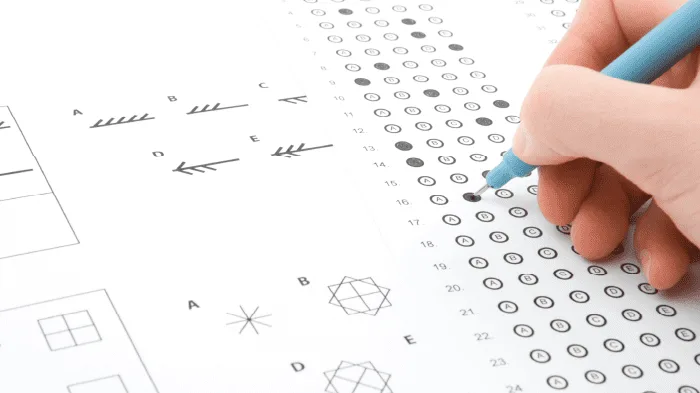
Online IQ tests are digital quizzes that claim to estimate your intelligence. They are widely available and often free or inexpensive. Many of them include questions such as:
- Pattern recognition puzzles
- Number sequences
- Logical reasoning problems
- Basic verbal questions
At first glance, they may look similar to real IQ tests. However, the key difference lies in how they are designed, validated, and interpreted.
This is where the question how accurate are online iq tests becomes important.
How Accurate Are Online IQ Tests Really?
The short answer is that most how accurate are online iq tests While they may provide a rough estimate of certain cognitive skills, they are not reliable measures of true intelligence.
There are several reasons for this:
Lack of Standardization
Professional IQ tests are standardized using large populations. Online tests usually are not. This means there is no consistent benchmark to compare your score against.
Without proper standardization, results can vary widely between different websites.
Small or Biased Sample Groups
Reliable IQ tests are based on thousands of participants. Online tests often use small or unverified samples, which can distort scoring accuracy.
No Professional Oversight
Online IQ tests are rarely designed or reviewed by licensed psychologists. This increases the risk of flawed questions or misleading scoring methods.
Variability Between Tests
If you take multiple online IQ tests, you will likely get different scores each time. This inconsistency shows a lack of reliability.
Simplified Question Design
Many online tests rely on simple puzzles or patterns that do not fully capture the complexity of human intelligence.
Real IQ tests measure multiple cognitive domains, not just logic puzzles.
Why People Still Use Online IQ Tests
Despite their limitations, online IQ tests remain extremely popular. There are several reasons for this.
Curiosity About Intelligence
Many people are simply curious about their cognitive abilities and want a quick estimate.
Entertainment Value
Online IQ tests are often fun and engaging, similar to solving puzzles or brain teasers.
Instant Feedback
Unlike professional assessments, online tests provide immediate results.
No Cost or Accessibility Barriers
Professional IQ testing can be expensive and time-consuming. Online versions are free and easy to access.
While these benefits explain their popularity, they do not necessarily make the results accurate.
Common Misconceptions About Online IQ Tests
Many people misunderstand what online IQ scores actually represent.
Myth 1: Online IQ Tests Measure True Intelligence
In reality, most online tests measure only a narrow set of skills, such as pattern recognition or logical reasoning.
Myth 2: High Scores Mean High Intelligence
A high score on an online test does not guarantee high cognitive ability. It may simply reflect familiarity with puzzle types.
Myth 3: Results Are Scientifically Valid
Most online tests are not scientifically validated or peer reviewed.
Factors That Affect Online IQ Test Results
Several external factors can influence your performance on an online IQ test.
Test Environment
Distractions, noise, or multitasking can affect your score.
Familiarity With Question Types
People who regularly solve puzzles or brain teasers may perform better regardless of general intelligence.
Internet-Based Timing Issues
Some tests rely on timing, but delays or technical issues can impact results.
Mood and Fatigue
Your mental state can influence focus and performance.
These variables make online IQ results less stable and less reliable.
Are Any Online IQ Tests Reliable?
Not all online IQ tests are equally poor. Some are developed by psychologists or based on simplified versions of validated assessments.
However, even the better ones should be seen as:
- Informational tools
- Cognitive exercises
- Approximate indicators
Not as definitive measures of intelligence.
A well-designed online test may give you a general idea of your strengths in logical reasoning or pattern recognition, but it cannot replace professional evaluation.
When Should You Trust an IQ Test?
The key difference is purpose.
Trust Professional IQ Tests When:
- You need an official cognitive assessment
- You are undergoing educational or clinical evaluation
- You require standardized results for research or diagnosis
Use Online IQ Tests When:
- You want entertainment
- You are exploring brain exercises
- You want a rough estimate of cognitive skills
- You are curious about puzzle-based performance
Understanding this distinction is essential when interpreting results.
The Limits of IQ as a Measure of Intelligence
Even professional IQ tests do not measure everything about intelligence. They focus mainly on analytical and logical thinking.
However, intelligence also includes:
- Creativity
- Emotional intelligence
- Practical problem solving
- Social understanding
- Adaptability
- Critical thinking
This means that even a perfectly accurate IQ test does not fully define human intelligence.
Why Online IQ Scores Can Be Misleading
One of the biggest risks of online IQ tests is overinterpretation.
Some people may:
- Overestimate their abilities based on high scores
- Underestimate themselves after low scores
- Compare themselves inaccurately to others
- Use results for self-judgment rather than growth
This can lead to confusion or unnecessary self-doubt.
It is important to remember that online IQ scores are not definitive psychological evaluations.
How to Think About Online IQ Tests Responsibly
If you choose to take an online IQ test, it helps to approach it with the right mindset.
Treat it as:
- A puzzle challenge
- A fun mental exercise
- A rough indicator of reasoning skills
Do not treat it as:
- A medical or psychological diagnosis
- A fixed measure of intelligence
- A comparison tool for self-worth
This perspective helps prevent misunderstanding and misinterpretation.
Final Thoughts
So, how accurate are online IQ tests? The answer is that most of them are not highly accurate in a scientific sense. While they can be entertaining and sometimes offer a general sense of logical reasoning ability, they lack the standardization, validation, and professional oversight required for true psychological assessment.
Online IQ tests can be fun and interesting, but they should not be taken as definitive measures of intelligence. Real intelligence is complex and includes far more than what any quick online quiz can measure.
If you are curious about your cognitive abilities, online IQ tests can be a starting point. However, for accurate and meaningful results, professionally administered assessments remain the gold standard.
Ultimately, intelligence is not just about numbers or scores. It is about how you think, solve problems, adapt, and understand the world around you.