
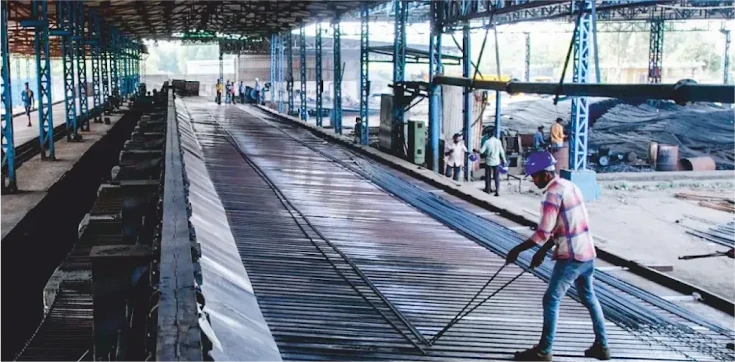
The strength and durability of any construction project depend heavily on the quality of reinforcement steel used in its structure. Thermo-mechanically treated (TMT) bars are widely used in modern construction because of their superior tensile strength, flexibility, and long-term durability. Behind the production of these high-quality reinforcement bars is an important industrial facility known as a TMT rolling mill.
A modern tmt rolling mill plays a vital role in ensuring that steel bars meet the structural requirements of residential, commercial, and infrastructure projects. From shaping raw steel billets to applying advanced thermo-mechanical treatment processes, rolling mills ensure that reinforcement steel performs reliably under heavy loads and environmental stress.
Understanding the Role of a TMT Rolling Mill
A tmt rolling mill is a specialized manufacturing unit where steel billets are heated, rolled, and processed to produce TMT bars of various diameters. These mills use advanced machinery and controlled processes to convert raw steel into reinforcement bars that can safely support reinforced concrete structures.
The rolling mill process ensures that each TMT bar has:
- Accurate dimensions
- Uniform strength
- Proper rib patterns for bonding with concrete
- High durability and flexibility
This precision manufacturing process is essential for producing reinforcement steel suitable for long-lasting construction.
Advanced Manufacturing Technology
Modern tmt rolling mills use advanced technology to improve the quality of reinforcement steel. Automated temperature control systems, high-speed rolling stands, and precision cutting equipment help maintain consistent product quality throughout the manufacturing process.
Thermo-mechanical treatment is a key step in this process. It involves rapid cooling of the outer surface of the bar while maintaining a softer inner core. This process creates a strong outer layer with a ductile inner core, providing both strength and flexibility.
These properties are critical for structures that must withstand heavy loads and environmental stress.
Ensuring Uniform Strength and Quality
One of the main advantages of a modern tmt rolling mill is its ability to produce steel bars with uniform mechanical properties. Controlled rolling and cooling processes ensure that each bar meets strict quality standards.
Quality control measures in rolling mills often include:
- Tensile strength testing
- Bend and rebend tests
- Dimensional accuracy checks
- Surface inspection for rib patterns
These tests ensure that the reinforcement steel used in construction meets the safety and durability requirements of modern buildings.
Improving Structural Durability
Durability is a key requirement in construction, especially for structures exposed to environmental stress such as moisture, temperature changes, and heavy loads.
High-quality TMT bars produced in a tmt rolling mill provide several benefits that improve structural durability, including:
- High resistance to corrosion
- Strong bonding with concrete
- Enhanced earthquake resistance
- Improved load-bearing capacity
These features help buildings and infrastructure remain safe and stable for many years.
Supporting Large-Scale Infrastructure Projects
Infrastructure projects such as bridges, highways, industrial buildings, and high-rise structures require reinforcement steel that can handle extreme stress and long-term usage.
A modern tmt rolling mill ensures the large-scale production of high-quality reinforcement bars required for such projects. By maintaining consistent manufacturing standards, rolling mills support the development of durable infrastructure that can withstand heavy operational loads.
Contribution to Efficient Construction
Reliable reinforcement steel helps builders and contractors complete projects efficiently. Steel bars produced in advanced tmt rolling mills have precise dimensions and consistent quality, making them easier to handle, bend, and install during construction.
This efficiency helps:
- Reduce material wastage
- Improve construction speed
- Maintain structural accuracy
- Ensure reliable reinforcement performance
These factors contribute to more efficient and cost-effective construction processes.
Example of a Modern Rolling Mill
Manufacturers such as Shivangi TMT Bars operate modern rolling mills designed to produce high-quality reinforcement steel. With advanced manufacturing technology and strict quality control practices, such facilities help deliver TMT bars that meet the demands of modern construction.
By maintaining consistent production standards, reliable rolling mills ensure that builders receive strong and dependable reinforcement steel for their projects.
Conclusion
A tmt rolling mill plays a crucial role in the construction industry by producing high-quality reinforcement steel that supports safe and durable structures. Through advanced manufacturing processes, strict quality control, and precision engineering, rolling mills ensure that TMT bars meet the strength and reliability required for modern construction.