Restoration contractor maintain transparency through a structured system of daily updates, digital documentation, and assigned project managers, ensuring homeowners understand every step of the recovery process. Unlike standard renovations, where timelines can remain vague, emergency restoration requires precise communication regarding moisture levels, containment safety, and insurance approvals. By applying modern restoration solutions, this steady flow of information transforms a chaotic disaster site into a managed project, giving property owners greater control over their living situation.
Uncertainty often causes more stress than the physical damage itself during a property crisis. When a contractor provides a clear roadmap and adheres to a predictable communication schedule, they eliminate the anxiety of the unknown. Established restoration firms use industry-specific protocols to ensure clients never have to guess the status of their home or the safety of their family.
Establishing the Communication Framework
The foundation of a successful restoration project relies on setting clear expectations before the first piece of equipment enters the property. A professional team defines precisely who will communicate, how often updates will occur, and which channels, phone, email, or text, will serve as the primary method of contact. This initial alignment prevents missed messages and ensures that urgent decisions receive immediate attention.

The Initial Assessment and Scope of Work
During the first visit, the lead technician conducts a thorough inspection to draft a preliminary scope of work. This document acts as the baseline for all future communication, outlining the extent of the damage and the proposed remedy. By walking the homeowner through the affected areas, the contractor explains the technical reasoning behind each step, such as why drywall must be removed or why flooring cannot be salvaged.
Setting Timeline Expectations
Restoration schedules often shift based on drying progress or material availability. Experienced contractors provide a range of dates rather than a fixed deadline to account for these variables. They update this timeline regularly as the project advances through its critical phases.
- Drying Phase: Estimated at 3-5 days, depending on humidity.
- Demolition Phase: Typically 1 to 2 days for standard residential rooms.
- Reconstruction Phase: Variable based on material delivery and trade scheduling.
The Role of the Project Manager
A dedicated project manager serves as the central hub for all information regarding the restoration effort. Instead of the homeowner chasing down individual plumbers, drywallers, or painters, they have a single point of contact responsible for the entire operation. This manager filters technical data from the field crew and translates it into clear, actionable updates for the client.
Industry data indicates that projects with a designated manager resolve unexpected issues 40% faster than those without centralized leadership. The manager monitors the budget, schedules crews, and handles the intricate negotiations with insurance adjusters.
Bonus Tip: Verification of AuthorityAsk the project manager early in the process if they have the authority to approve changes on the spot. Knowing who holds the decision-making power prevents delays when you need to adjust the scope or select different materials.
Digital Documentation and Daily Logs
Modern restoration relies heavily on digital tools to track progress and validate insurance claims. Technicians capture photos, record moisture readings, and log equipment usage during every site visit. Many companies provide homeowners with access to these records, offering real-time proof that the work is being performed in accordance with industry standards.
Monitoring Moisture Levels
In the Pacific Northwest, where high ambient humidity can slow down drying, daily moisture logs are essential. Contractors share these readings to explain why the equipment must remain running. Showing the homeowner the data, specifically the drop in moisture content percentages, helps justify the continued noise and electricity usage required to prevent mold growth.
Transparency in Billing and Insurance
Financial communication is often the most sensitive aspect of restoration. Contractors keep homeowners informed by submitting detailed estimates directly to the insurance carrier while keeping the client copied on all correspondence. This three-way communication loop ensures the homeowner knows exactly which coverage has been approved and what out-of-pocket costs may arise.
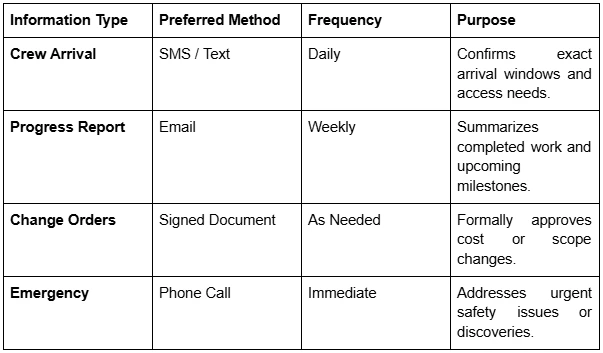
Communication Methods Comparison
Different stages of the project require different communication styles. A professional contractor adapts their method to suit the urgency of the information.
Things to Consider Before Making a Decision
Evaluating a contractor's communication style during the initial call often predicts their performance during the job. Homeowners should prioritize companies that answer the phone professionally and provide clear, prompt answers. If a contractor is difficult to reach when trying to win the business, they will likely be impossible to contact once the contract is signed.
- Response Time: A prompt return of initial calls suggests a well-organized office.
- Clarity of Explanation: The contractor should explain technical terms in plain language.
- Written Guarantees: Look for companies that put their promises and schedules in writing.

Challenges in Regional Communication
Restoration projects in regions like Western Washington face specific environmental challenges that require frequent updates. The weather in areas like Longview often dictates the pace of exterior repairs and structural drying.
Weather-Related Delays
When heavy rains or freezing temperatures occur, contractors must pause specific exterior tasks to protect the property's integrity. A reliable contractor communicates these delays proactively, explaining how they are securing the home against the elements in the interim. They monitor forecasts closely and inform homeowners immediately if the schedule must slide due to an atmospheric river or snow event.
Managing Mold ConcernsIn damp climates, the fear of mold is prevalent among homeowners. Contractors address this by providing specific updates on antimicrobial treatments and humidity control measures. Regular reassurance backed by scientific data helps alleviate concerns about long-term air quality issues.
Questions People Ask About Restoration Communication
How often should I hear from my restoration contractor?
During the active mitigation phase, you should receive daily updates on crew arrival times and drying progress. Once the project moves to reconstruction, communication typically shifts to a weekly summary unless urgent decisions are required.
Will the contractor talk to my insurance company for me?
Yes, most professional restoration contractors handle the direct communication with insurance adjusters regarding the scope of damage and technical requirements. However, the policyholder must remain involved to make final decisions on coverage limits and deductibles.
Do I get a schedule of when workers will be at my house?
A reputable contractor provides a schedule, usually the evening before or the morning of service. They understand that you need to manage your own daily routine and should respect your time by providing accurate arrival windows.
What happens if I am not happy with the quality of the work?
You should report any concerns to the project manager immediately. Professional companies have quality control processes and will inspect the issue to determine the necessary corrective action. Documenting your fears in an email ensures there is a record of the request.
Can I communicate with the crew via text message?
While text messages are convenient for simple updates like gate codes or arrival times, official changes to the scope or cost should always be communicated via email or in writing. This protects both parties by creating a permanent record of the agreement.
Conclusion
Effective communication serves as the backbone of any successful restoration project. By utilizing assigned project managers, digital logs, and clear protocols, professional contractors ensure that homeowners remain informed and confident throughout the recovery process. This level of transparency builds trust, minimizes stress, and ultimately leads to a smoother restoration experience. Homeowners who insist on these communication standards protect themselves from misunderstandings and ensure their property is restored efficiently.
Professional Restoration Communication
Prestige NW Restoration prioritizes clear and consistent communication on every project. Their team understands that a damaged home is a stressful experience, and they counter that stress with reliable information and accessible project managers. From the initial assessment to the final walkthrough, they keep clients updated on timelines, insurance approvals, and technical progress.
For a restoration partner who values transparency, homeowners can contact the dispatch team at [email protected].
Author: Kelly Kerns, owner of Prestige NW, utilizes her background in restoration and customer service to advocate for transparent communication that empowers homeowners during the recovery process.
Reviewer: Matthew Moore brings over 15 years of experience in residential renovation marketing, ensuring content connects effectively with homeowners seeking reliable, high-quality restoration and home improvement services.