Tiny hands often learn best through movement, sound, and visual play. That is why bubbles captivate children so quickly. They float, wobble, stretch, and pop in ways that feel magical, yet each moment is rooted in real science. When early learners engage with bubbles, they connect naturally with concepts that shape the foundation of STEM understanding. An immersive bubble show for preschools in Los Angeles brings this type of learning to life in a way that is playful, hands-on, and developmentally aligned with how young minds grow.
Why Bubbles Are Perfect Tools for Early STEM Concepts
Early childhood educators know that STEM ideas must be introduced in simple, visual ways. Bubbles accomplish this effortlessly. They rise through the air because of density differences. They shimmer due to light reflection. Their shapes follow predictable patterns that even four-year-olds can observe.
In addition, bubbles create an environment where learning feels like play. Young children absorb concepts more easily when they are entertained, relaxed, and engaged with movement. As a result, the experience becomes both memorable and meaningful. This type of learning aligns closely with sensory development and helps children build curiosity before they enter more structured grade-school programs.
Connecting Bubble Play With Science
Bubbles act as tiny science lessons floating through the room. They allow educators and performers to introduce early concepts without overwhelming the audience. For example, the idea of “surface tension” can be shown visually when a bubble stretches before it bursts. Children can also notice how air changes the size of a bubble or how different tools create different shapes.
Although these ideas seem simple, they remain essential STEM building blocks. As children watch the floating spheres move around them, they begin to link actions with scientific outcomes. Over time, that connection leads to better pattern recognition and stronger problem-solving skills.
Hands-On Interaction Builds Stronger Curiosity
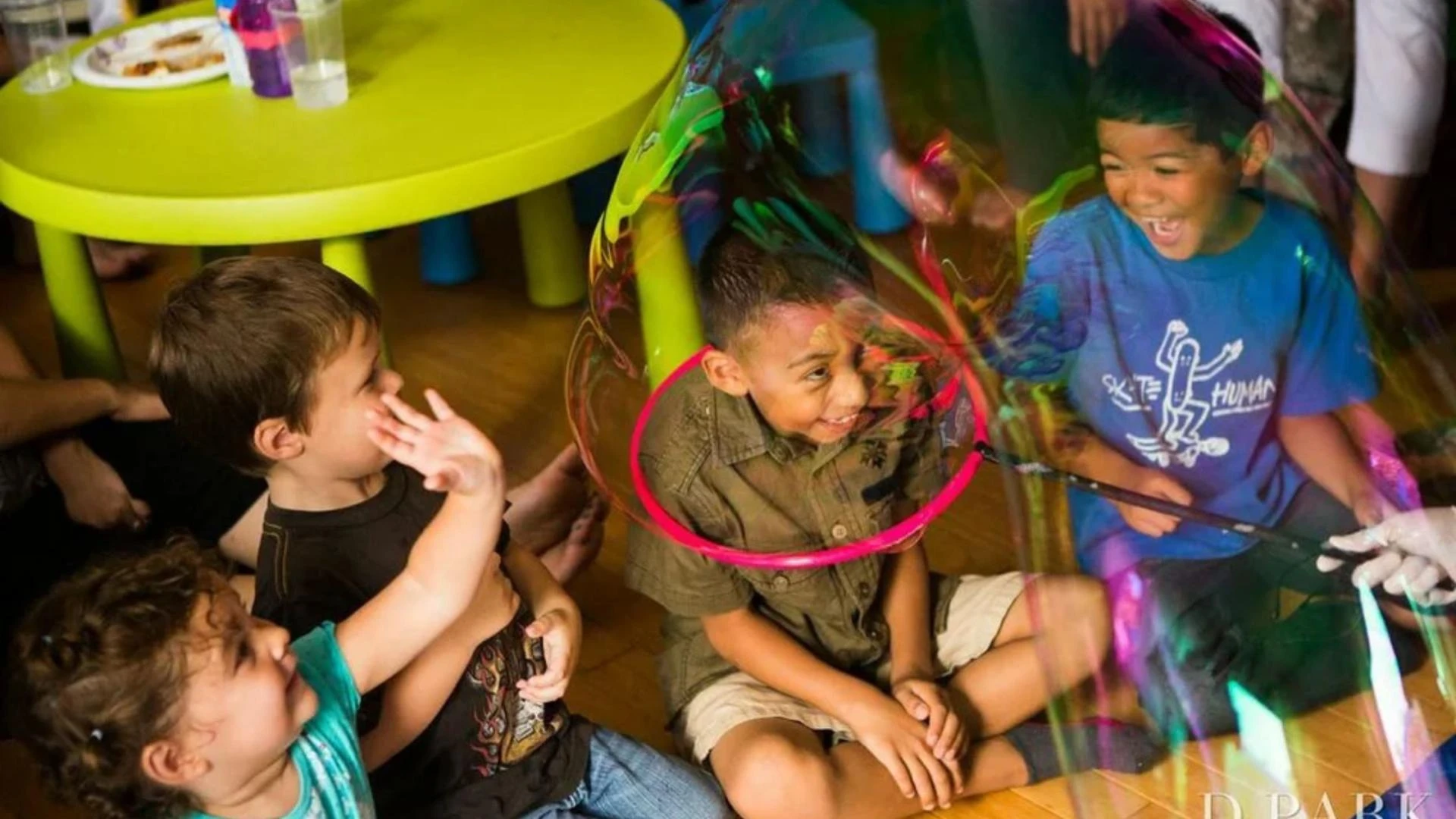
Young children learn more effectively when they take part in an activity instead of just watching it. Therefore, interactive bubble show entertainment in Los Angeles helps them remember concepts long after the event ends. Depending on the structure of the performance, children may have the chance to try bubble wands, observe giant bubbles, or see how air flow affects movement.
Furthermore, this type of interaction builds confidence. Kids feel excited when they bend down to blow a bubble and see it grow successfully. In addition, the instant feedback they receive helps reinforce early engineering principles, even though they playfully experience them.
Visual Learning Enhances Early STEM Retention
Because preschoolers respond strongly to colour, movement, and motion, bubble performances support visual learning styles. The more visually rich the activity, the more likely children are to retain what they see. During a STEM-aligned bubble show, the performer can point out how bubbles take on spherical shapes or how combining water with soap creates a stretchy film.
Also, these moments help children think like scientists. They watch, predict, and notice what happens next. Even though the concepts are simple, they mirror the scientific method in an age-appropriate way.
How a Bubble Show Supports Classroom Goals
Preschool programs often look for activities that blend fun with learning. A structured bubble show offers a controlled indoor experience that keeps children focused for the full duration. In addition, performers highlight different bubble types, explain how they form, and use safe materials suitable for young audiences. Because the performance maintains a steady pace, children stay interested from start to finish.
Teachers appreciate this format because it supports multiple learning domains. Fine motor skills develop when children reach, clap, or move with bubbles. Language skills grow as they repeat STEM vocabulary introduced during the performance. Social skills also expand because the activity encourages teamwork and shared excitement.
Building Early STEM Language Through Play
Preschool children absorb vocabulary quickly when connected to something fun. Therefore, bubble shows give educators the perfect moment to introduce words like “float,” “surface,” “air,” and “film.” When kids hear these terms during a bubble activity, they match the word with a real example in front of them.
As a result, this type of vocabulary exposure supports stronger comprehension later in elementary school. It also prepares them for future science discussions, even in subjects they have not yet encountered.
The Role of Artistic Bubble Techniques in STEM Learning
Bubble artistry may appear like entertainment, but it actually demonstrates advanced STEM concepts in simple form. For example, geometric bubbles, smoke-filled bubbles, or connected bubbles show how shapes behave under different conditions. In addition, performers can highlight how angles, air flow, and pressure influence each result.
These visual demonstrations give children a chance to learn without formal instruction. They simply watch, react, and absorb. Over time, these impressions strengthen their understanding of how science interacts with the world around them.
A Look at Bubble Shows Beyond the Classroom
School events, library programs, and community gatherings often seek entertainment that feels enriching. A professional bubble show entertainment in Los Angeles provides that balance. It delivers active engagement while keeping the atmosphere calm and controlled. Also, bubbles appeal to a wide age range, making them ideal for mixed-group events like family nights or early-learning fairs.
Furthermore, events that combine fun with learning tend to leave longer-lasting impressions on children. These shared moments can spark at-home curiosity, encouraging families to continue simple science play long after the event ends.
Conclusion
STEM education thrives when children experience science through fun, movement, and hands-on interaction. A well-designed bubble show for preschools in Los Angeles gives young learners a chance to explore shapes, air, light, and motion in ways they truly enjoy. Because the activity blends entertainment with meaningful visuals, it supports early comprehension while keeping the experience playful and joyful.