
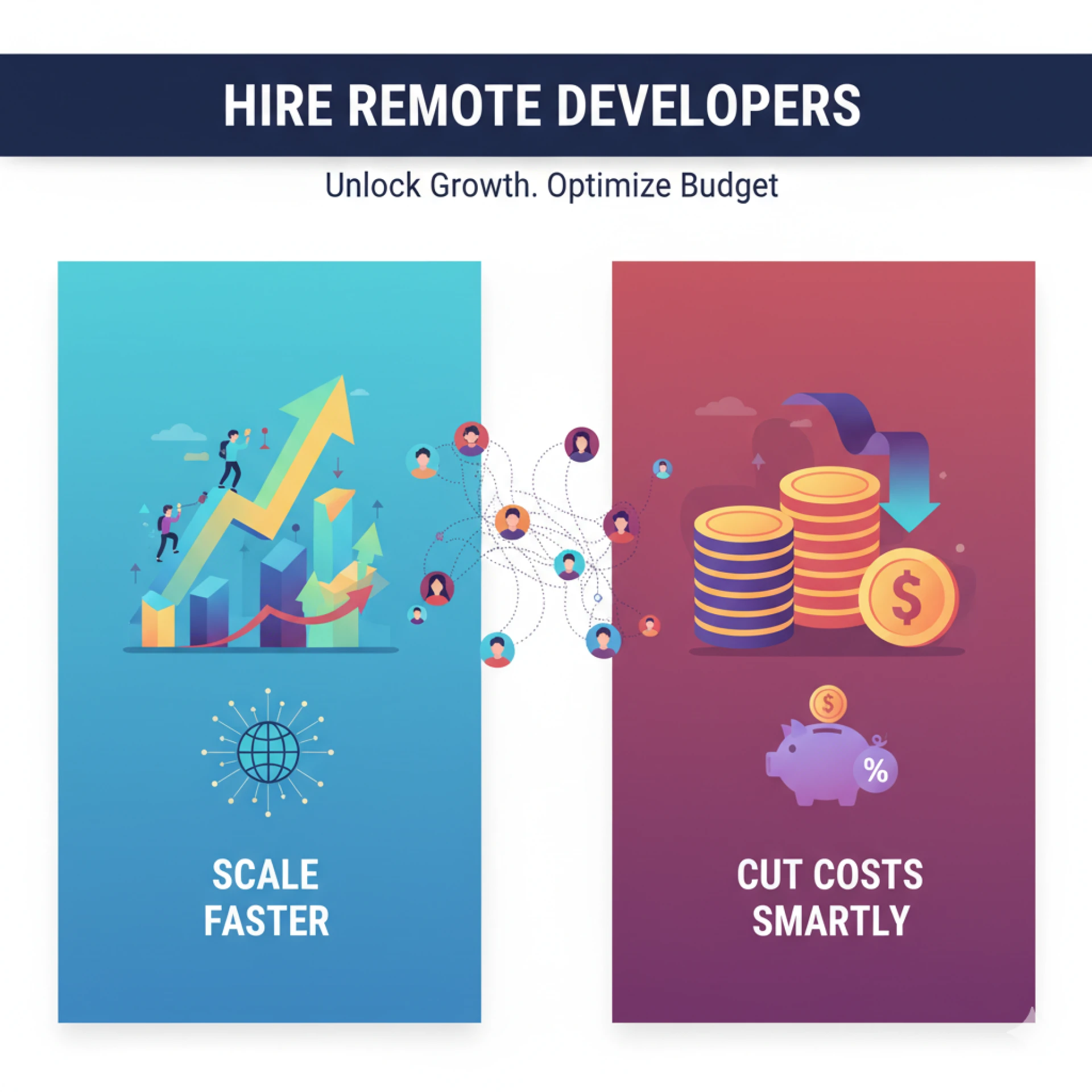
In today’s fast-paced digital world, businesses are under constant pressure to innovate, scale, and deliver products faster than ever. But for many startups and growing companies, managing an in-house development team can be both time-consuming and expensive. That’s where the smarter move comes in — choosing to hire remote developers.
This modern approach to building tech teams has changed the way companies operate. It’s not just about saving money — it’s about scaling efficiently and gaining access to the best talent, regardless of location.
1. The Rise of Remote Work in Tech
Remote work has become more than a trend — it’s the new standard. Developers across the globe are now working remotely for top companies, offering their expertise without the need for relocation. This shift has opened doors for businesses to connect with world-class developers at a fraction of the traditional cost.
Startups, in particular, have embraced this model. They value speed, flexibility, and talent diversity — all of which remote hiring delivers seamlessly.
2. Scale Without the Overhead
Hiring locally often comes with heavy expenses — office rent, equipment, insurance, and other operational costs. By going remote, businesses can cut down these overheads instantly. Instead of spending on infrastructure, they can channel those funds into innovation, marketing, or expanding their core team.
The ability to scale up or down based on project needs makes remote hiring even more appealing. You can expand your tech capacity when required — and scale back once the project wraps up — without long-term commitments.
3. Access to a Global Talent Pool
When you limit hiring to your local market, you might miss out on incredible talent. Remote hiring removes those boundaries. Whether it’s a full-stack developer in India, a mobile app expert in Ukraine, or a cloud architect in Brazil, you can build a diverse team with top-notch skills.
This access also gives companies the flexibility to choose talent that fits both their technical needs and budget — something that’s hard to achieve with only local hiring.
4. Faster Project Delivery
With teams spread across different time zones, work can literally happen around the clock. When one team finishes their day, another can pick up right where they left off. This continuous development cycle helps companies meet tight deadlines and release products faster than their competitors.
For startups aiming to capture market share quickly, this speed can make all the difference.
5. Cost Savings That Don’t Compromise Quality
While cost savings are a big advantage, it’s important to note that remote hiring doesn’t mean cutting corners. Many remote developers bring years of experience, strong communication skills, and proven track records of delivering quality work. Businesses can maintain high development standards while optimizing their budgets — a true win-win situation.
6. Building a Productive and Flexible Culture
Remote work promotes accountability, independence, and performance-driven results. Developers who work remotely tend to focus on output rather than hours logged, creating a culture built on trust and efficiency. For startups looking to grow, this mindset helps maintain agility without the burden of micromanagement.
Final Thoughts
For modern businesses, the choice is clear. If you want to grow fast, stay lean, and access top-tier talent, the answer lies in embracing remote collaboration. When you decide to hire remote developers, you’re not just cutting costs — you’re investing in a smarter, more scalable way to build your future.