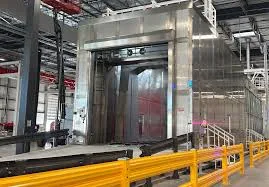
A pharmaceutical plant is a busy place where many activities happen at the same time. Raw ingredients arrive, materials move between production rooms, medicines are prepared and packaged, and finished products are transferred for storage or dispatch. Throughout this process, the building must help protect products from unwanted contamination while allowing employees and equipment to move efficiently.
One often overlooked part of this environment is the doorway. Every time a door opens, two areas become temporarily connected. Air can move between them, temperature conditions may change, and dust or other airborne particles can travel from one space to another. When this happens repeatedly throughout a working day, the effect can become significant.
High speed doors for pharmaceutical plants help manage this movement by opening and closing quickly. They reduce the amount of time an entrance remains open, which can support environmental control, improve workflow and help separate different operational areas.
These doors are not a replacement for proper ventilation, filtration or hygiene procedures. Instead, they are one part of a larger system designed to keep pharmaceutical production areas organised, controlled and efficient.
Why Door Performance Matters in Pharmaceutical Manufacturing
Pharmaceutical production involves much more than making tablets, capsules, syrups or injections. Different stages of the process may require different environmental conditions.
For example, a room where raw materials are handled may have different requirements from a packaging area or a space used for preparing sterile products. Some areas need carefully controlled temperatures, while others require specific airflow arrangements or restrictions on access.
A doorway connects these spaces. If it stays open for too long, it may allow conditions on one side to influence the other.
Consider a refrigerated room in a supermarket. When its door remains open, warm air enters and the cooling system has to work harder to restore the desired temperature. A similar principle applies in pharmaceutical facilities, although the requirements can be much more precise.
A high speed industrial door helps limit the time an opening remains exposed. Its rapid operation can support the building's efforts to maintain suitable conditions while allowing people, carts and materials to pass through.
What Are High Speed Doors?
A high speed door is a powered door system designed to open and close much faster than many conventional industrial doors. Many models use a flexible curtain that travels vertically or, in some designs, follows another guided path.
The curtain is commonly made from durable flexible material selected for the intended working environment. A motor moves it through a guided system, while controls determine when the door opens and closes.
The opening process can be triggered in several ways:
- Motion sensors that detect approaching people or vehicles
- Push buttons operated by staff
- Pull cords used by forklift or trolley operators
- Remote controls
- Access-control systems that allow authorised entry
Once the person or vehicle has passed, the door closes according to its programmed settings.
The main idea is simple: instead of leaving a doorway open while someone operates a heavy door manually, the system completes the movement quickly and automatically.
How High Speed Doors Support Pharmaceutical Plants
Fast operation offers several practical benefits in a pharmaceutical building. The exact results depend on the door's design, its location and the way the facility operates.
1. Limiting the Time an Entrance Remains Open
A door that stays open for several seconds longer than necessary can allow additional air movement between two rooms.
In a pharmaceutical plant, this may affect areas where temperature, humidity or pressure conditions are managed carefully. A fast-closing door helps reduce the period during which the spaces are directly connected.
This is particularly useful at entrances that experience frequent movement throughout the day. The door can open for a passing employee or vehicle and then close promptly, rather than remaining open while the next movement is organised.
2. Supporting Temperature Control
Some pharmaceutical materials and products need to be stored or handled within defined temperature ranges. Certain production areas may also need stable room conditions to support the process.
When a doorway remains open, air from the adjoining space can enter. This may make it harder for heating, ventilation or cooling equipment to maintain the desired conditions.
A suitable high speed door can help reduce unnecessary air exchange by shortening opening times.
For example, a door between a temperature-controlled storage area and a general warehouse can help limit the movement of warmer air into the cooler space. The door does not replace refrigeration or temperature monitoring, but it can support their operation.
3. Helping Separate Different Production Zones
Pharmaceutical plants often divide their buildings into areas with different functions. These may include raw material handling, manufacturing, cleaning, packaging, storage and dispatch.
Keeping these activities properly separated helps the facility manage people, materials and environmental conditions.
High speed doors can provide clear physical boundaries between these areas. When connected to suitable access controls, they can also form part of a planned movement route.
For example, employees may use a designated entrance to move from a warehouse into a production support area. The door can be configured to respond to authorised staff or approved equipment movements.
4. Improving Everyday Movement
A pharmaceutical facility may have employees walking between rooms, trolleys carrying supplies and forklifts transporting larger loads.
If each movement requires someone to stop and manually open a conventional door, delays can build up. Repeated stopping can also make busy routes more difficult to manage.
Automatic high speed doors reduce this interruption. They allow people and vehicles to pass through with less manual handling, provided the entrance is designed for the traffic using it.
This can make daily operations more organised, particularly at doorways connecting production, storage and logistics areas.
5. Reducing Unnecessary Airflow Disturbance
Opening a doorway changes the way air can move between adjoining spaces. The effect depends on the pressure difference, ventilation design, size of the opening and movement of people or equipment.
In some pharmaceutical environments, controlling this movement is important. A quickly operating door can help reduce the duration of an open doorway.
However, the door alone cannot maintain cleanroom conditions. Filtration, air handling, room pressure, cleaning practices and staff procedures must all work together.
Where Should High Speed Doors Be Used?
Not every doorway in a pharmaceutical plant needs a high speed system. The best locations are usually those where frequent movement takes place or where reducing the time an opening remains exposed offers a practical advantage.
Production Areas
Manufacturing rooms may require regular movement of ingredients, containers, tools and finished batches. A fast-operating door can make it easier to move these items between designated spaces.
The selected door must be suitable for the room's cleaning procedures and environmental conditions. If the area has strict cleanliness requirements, the materials and construction need to be assessed carefully.
Packaging Departments
Packaging areas often handle a steady flow of products, cartons and packaging supplies. Staff may need to move between production lines, inspection areas and storage spaces.
A high speed door can help keep these routes moving while limiting the time the entrance remains open.
Warehouses and Material Storage
Pharmaceutical warehouses may contain raw ingredients, packaging materials and finished products. Some storage areas have specific temperature or humidity requirements.
A high speed door at a warehouse entrance or between storage zones can help reduce the exchange of air during frequent transfers. The door should be selected according to the traffic, storage conditions and size of the loads being moved.
Temperature-Controlled Rooms
Some products and ingredients need to be kept within defined temperature limits. Open doors can make it harder to maintain these conditions, particularly when staff move materials frequently.
A suitable rapid-opening system can help reduce the duration of exposure between the controlled room and the surrounding area.
Waste and Service Routes
Pharmaceutical facilities also need to move waste, cleaning equipment and maintenance supplies. These movements should follow the site's hygiene and safety procedures.
A suitable door can help separate service routes from production areas and make regular movement more convenient.
Choosing the Right Type of High Speed Door
Different door designs are available because industrial environments do not all operate in the same way. The right choice depends on the location, required opening size, traffic and environmental conditions.
Flexible Fabric High Speed Doors
These doors use a flexible curtain that rolls or travels vertically when opened. They are commonly considered for industrial entrances where rapid operation and frequent movement are important.
The curtain material can be selected according to the working environment. Some options are designed for easy cleaning, while others may be intended for particular temperature or operational conditions.
For pharmaceutical use, the material must be compatible with the site's cleaning agents and procedures.
Insulated High Speed Doors
Insulated designs include materials intended to reduce heat transfer through the door. They may be considered for areas where temperature separation is an important requirement.
Their suitability depends on the required temperature range, the surrounding building conditions and how often the entrance is used.
An insulated door may be useful between a controlled storage area and a less temperature-sensitive space, provided its performance matches the application.
Cleanroom-Compatible High Speed Doors
Some doors are specifically designed for controlled environments. Their construction may include smooth surfaces, suitable sealing arrangements and materials chosen to support cleaning requirements.
These features can make them more appropriate for certain pharmaceutical production areas than a general-purpose industrial door.
It is important to check the manufacturer's specifications rather than assume that every high speed fabric door is suitable for cleanroom use.
Self-Repairing High Speed Doors
Some systems are designed so that the curtain can return to its guides after being accidentally displaced. This can reduce downtime following certain minor impacts.
Such a feature may be useful in busy areas where vehicles or carts pass through regularly. However, the system's recovery method, operating limits and maintenance requirements should be understood before installation.
Important Features to Look For
A pharmaceutical plant has specific operating needs, so door selection should be based on more than opening speed.
Suitable surface materials: The exposed parts of the door should be compatible with the cleaning chemicals and methods used at the site. Materials should not deteriorate easily under normal cleaning conditions.
Reliable sealing: Depending on the location, the door may need side, top or bottom sealing arrangements to help limit unwanted air movement when closed.
Appropriate opening speed: The door should operate quickly enough to support the workflow, but speed must be balanced with safe movement and the needs of people using the entrance.
Safety sensors: Sensors can help detect people, vehicles or objects in the doorway. The system should include appropriate protective features to reduce the risk of accidental contact.
Access control: Some areas may require authorised entry. The door can be connected to access systems where needed, subject to the facility's security procedures.
Emergency operation: Staff should understand how the door behaves during a power failure or other emergency. Manual release or backup arrangements should be suitable for the site's safety plan.
Maintenance access: The motor, controls, guides and curtain should be accessible for inspection and servicing without unnecessary disruption to production.
Hygiene and Cleaning Considerations
A pharmaceutical door must be able to withstand the cleaning routines used in its location.
The door curtain, frame, guides and other exposed parts may collect dust or residue over time. Their surfaces should be designed so that routine cleaning is practical and does not leave difficult-to-reach areas.
Cleaning products also matter. Some chemicals can damage certain plastics, coatings, seals or fabrics. The door manufacturer should provide guidance on compatible cleaning agents and methods.
Staff should follow the facility's approved cleaning procedures rather than use an unfamiliar chemical simply because it is available.
The condition of the door should be checked regularly. Tears in a curtain, damaged seals or worn surfaces may make cleaning more difficult and can affect the way the system operates.
Installation and Integration With the Facility
A high speed door needs to fit the building and the work carried out around it.
Before installation, the opening should be measured accurately. The team should also review ceiling clearance, nearby machinery, electrical connections and the movement of people and vehicles.
If the door is being installed between rooms with different pressure or temperature conditions, the relevant engineering teams should be involved. The door's operation needs to fit the ventilation and environmental-control arrangements.
Controls should be positioned where staff can use them safely. Sensors must be configured to detect the intended traffic without causing unnecessary opening or closing.
After installation, the system should be tested under realistic operating conditions. This includes checking its movement, closing position, safety features and response to the selected controls.
Maintenance and Long-Term Performance
A high speed door may complete hundreds or thousands of operating cycles over time. Regular inspection helps ensure that its moving parts continue to work correctly.
Maintenance should include checks of the curtain, guides, motor, control system, sensors and safety devices. The exact schedule depends on the manufacturer's recommendations and the amount of use.
Staff should report unusual noise, slow movement, repeated sensor problems or visible damage. A small issue can become a larger interruption if the door continues operating without attention.
Any repairs in or near a controlled production area should be planned in line with the facility's hygiene and maintenance procedures. This helps prevent repair work from introducing dust or debris into sensitive spaces.
Keeping service records is also useful. They provide a history of inspections, adjustments and replacement parts, helping the facility plan future maintenance.
Selecting a Supplier for Pharmaceutical Door Systems
The supplier should understand that a pharmaceutical plant is not the same as a general warehouse. The door needs to suit the location, cleaning requirements, traffic patterns and environmental conditions.
Before choosing a system, discuss the intended use, the dimensions of the opening, the type of traffic and any temperature or pressure-control requirements. Ask for clear information about materials, operating limits, cleaning compatibility, safety features and maintenance.
Newport Company offers specialist door solutions for industrial environments where reliable access and practical performance are important. For a pharmaceutical project, discussing the site's requirements with an experienced supplier can help identify a suitable arrangement.
The goal is not simply to install the fastest door available. It is to choose a system that performs consistently and supports the wider needs of the facility.
Conclusion
High speed doors for pharmaceutical plants can make a valuable contribution to efficient movement and environmental control. By opening and closing quickly, they reduce the time doorways remain exposed and can help limit unnecessary air exchange between adjoining areas.
They are useful in selected production, packaging, storage and logistics locations, particularly where people and materials move frequently. However, the right design must also meet the site's requirements for hygiene, temperature management, access and safety.
Careful product selection, proper installation and planned maintenance are essential. When the door is chosen as part of the facility's overall design, it can support smoother daily operations while helping the plant maintain the conditions its pharmaceutical processes require.