
Introduction
One small device that is significant in saving lives in all hospitals or clinics is the IV cannula. An IV cannula is able to provide a patient with fluids, medicines, and an emergency transfusion. It is one of those medical devices that seems simple but is extremely important in day-to-day care. To the healthcare professionals and to the procurement teams, choosing the right cannula matters. The quality products of reputed IV cannula manufacturers and IV cannula exporters are also safe, comfortable, and painless for patients of any age. This article is designed to help healthcare professionals better understand IV cannulas, their applications, advantages, what they are, how they work, and why they are essential in medical practice.
An IV cannula is a small, flexible tube inserted into a vein with the help of a needle. Once the catheter is inside the vein, the needle is removed, leaving the tube in place. This tube allows medicines, fluids, or blood products to reach the bloodstream directly. An IV Cannula helps doctors give treatment without repeatedly pricking the patient with a needle. It is widely used in emergency rooms, hospitals, ambulances, hospitals, surgical wards, and even in home care when IV therapy is required.
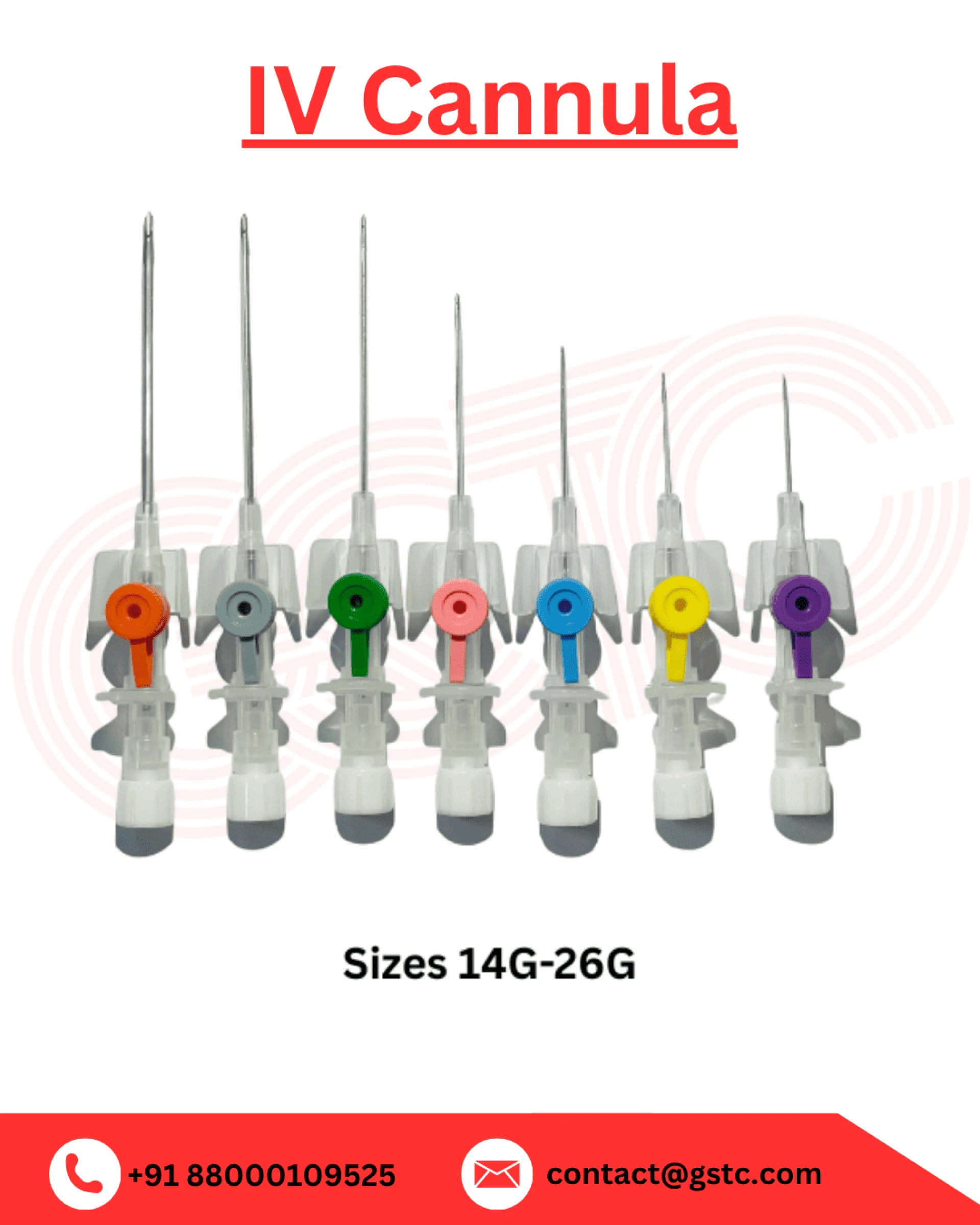
Sizes of IV Cannula
Available sizes of IV cannula are related to size, commonly described by the gauge (G) system. This is the diameter of a cannula for IV, with lower gauge numbers meaning larger diameters. Choosing the right size is also one of the most important requirements that would guarantee proper treatment and patient comfort.
- 14G (Orange) – Used in trauma cases or when fluids need to be given very quickly.
- 16G (Grey) – Useful for surgery or rapid infusions.
- 18G (Green) – A common size for blood transfusions and general adult IV therapy.
- 20G (Pink) – The most widely used cannula for adults; comfortable and versatile.
- 22G (Blue) – Ideal for children, elderly patients, or those with narrow veins.
- 24G–26G (Yellow/Purple) – Used for newborns, infants, or patients needing delicate insertion.
Choosing the right size helps in managing flow rate and reduces discomfort.
Features of IV Cannula
- Gauge Size
The size or gauge of the cannula is the key determinant of the fluid flow rate and type of IV.
- Pointiguide Sharpness
Less painful at the time of insertion, a sharp, engineered cannula is associated with less tissue trauma.
- Flashback Chamber
It makes sure that due penetration of the vein is established. It demonstrates the blood returning just after the vein has been punctured.
- Safety Feature
The safety features, including the needles that retract or the safety caps, minimise the chances of a healthcare worker sustaining a needle-stick injury.
- Materials
The catheter compound is to be biocompatible and less irritating or allergic.
Recommended Materials:
Polyurethane: Less kink-resistant and more flexible.
Teflon (PTFE): Teflon is all-purpose when it comes to temporary cannulation since it is affordable.
Advantages of IV Cannula
Using a high-quality IV cannula brings many benefits:
1. Quality Assurance:
GSTC products are probably quality products and safe to use. Our IV cannulas meet with ISO, CE or FDA standards, i.e. they would be reliable. We normally package our cannulas in sterile containers so as to reduce the chances of infection.
2. Wide Product Lineup:
Our cannulas to use in infusion have a large selection of sizes and materials, which will be applied in various clinical needs, such as pediatric and adult applications.
3. Competitive Price
GSTC is decently priced, thus making it economically viable, especially when the purchase is in bulk. This implies that the hospitals and health centres will not lose out as they will be saving without necessarily compromising the quality of products they need.
4. Customization Options
We also provide customization of bulk orders, be it packaging or labelling or personal customization, according to the requirements in health care facilities.
l Private Labelling. In case you are interested in sourcing cannulas under your brand, we are offering you the same.
l Availability at any Time: We have the right logistics at GSTC. The cannulas would be present and provided at the right time, which is very critical in health care operations.
5. Worldwide Network
We are also globally represented in the world, hence making it easy and efficient to ship goods to various regions.
Application of IV Cannula
The common use of an IV cannula in a hospital, clinic and emergency care is that it provides a quick and efficient method of administering fluids and drugs directly into the bloodstream of a patient. The key applications below are elaborated in an easy and normal manner:
2. IV Fluids & Hydration
In case a patient is dehydrated, weak, or cannot drink water, the doctors apply IV cannulas to supply fluids. It assists in regaining the level of hydration in the body, electrolyte balance and aids the healing of the patient.
3. Blood Transfusion
IV cannulas allow safe transfusion of blood, including plasma and platelets. The size of the IV Cannula is determined by the hospital, depending on the speed of the required delivery of the blood.
4. Nutritional Support (IV Nutrition)
In case a patient is not able to eat or absorb food, then using IV cannulas, vital nutrition, vitamins and glucose are introduced directly into the blood. This is usually seen in patients of critical care, post-surgery patients, or premature babies.
Conclusion
The IV cannula may look like a simple device, but it is truly a lifeline in modern healthcare. It helps deliver essential treatments quickly and safely, making patient care smoother and more effective. Choosing the right type, especially the IV cannula with a wing with port, improves comfort, reduces complications, and supports efficient workflow for medical staff. As one of India’s leading IV Cannula manufacturers and exporters, GST Corporation delivers high-quality, medically tested, and globally trusted airway management solutions for healthcare professionals and distributors.