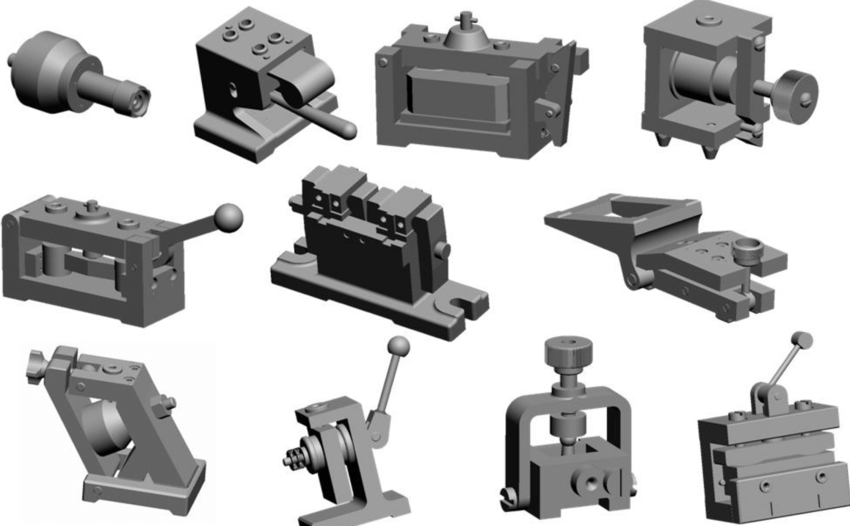
In today’s competitive CNC manufacturing environment, precision and consistency are non-negotiable. Machines provide motion and control, but achieving repeatable results depends on how workpieces are positioned and supported. Jigs and fixtures tooling plays a critical role in maintaining stability, improving accuracy, and ensuring efficient production. Well-designed tooling allows CNC operators to focus on machining rather than repeated adjustments, reducing scrap and maintaining high-quality output across all production runs.
With the growing demand for complex parts and tight tolerances, CNC workshops require reliable workholding that supports both speed and precision. Effective tooling not only improves positioning but also enhances workflow efficiency, reduces setup time, and integrates seamlessly with automated production systems. The combination of advanced CNC machines and properly engineered jigs and fixtures tooling ensures that manufacturers can meet quality standards consistently while optimizing costs.
Importance of Jigs and Fixtures Tooling in CNC Manufacturing
Enhancing Positional Accuracy
Positional accuracy is the foundation of high-quality CNC production. Jigs guide cutting tools along precise paths, while fixtures hold the workpiece firmly against defined reference points. Together, they prevent misalignment and ensure each part is machined consistently to specification.
Accurate workholding reduces dimensional variation, minimizes rework, and accelerates inspection processes. When tooling ensures repeatable positioning, operators can produce parts reliably, even during high-volume production cycles.
Streamlining Production Efficiency
Efficiency in CNC operations depends on minimizing non-cutting time. Jigs and fixtures tooling enables fast loading and unloading of components without the need for constant recalibration. Machines can maintain high throughput, while operators focus on productivity rather than alignment adjustments.
Optimized production workflows supported by effective tooling improve cycle times and reduce operational costs. This is particularly valuable in mixed-volume manufacturing, where frequent changeovers can otherwise slow down production.
Core Principles of Jig and Fixture Design
Structural Rigidity and Stability
Machining operations generate forces that challenge part stability. A key design requirement for jigs and fixtures tooling is structural rigidity. Properly engineered systems distribute cutting forces evenly, preventing part deformation and vibration during machining.
Stability directly affects surface finish and tool longevity. Reducing chatter improves precision, ensures uniform machining, and protects the investment in cutting tools.
Accurate Datum and Locating Systems
Precise locating ensures repeatability. Datum points establish fixed references for positioning the workpiece relative to the machine. Locating elements like pins, stops, and surfaces guarantee consistent orientation for every cycle.
Reliable datum systems reduce setup complexity and operator dependency. By creating a predictable reference framework, they support consistent quality and streamline workflow processes.
Jigs and Fixtures Tooling Materials and Selection
Material Selection for Durability
The performance of jigs and fixtures tooling relies heavily on material choice. Hardened steel provides high wear resistance for heavy-duty operations, while aluminum offers lightweight handling and corrosion resistance for frequent adjustments. Specialty alloys or composites can be employed for vibration damping in sensitive machining.
Choosing the right material ensures long service life, reduces maintenance frequency, and maintains accuracy under high-use conditions.
Modular and Flexible Tooling
Modular tooling systems provide adaptability for diverse production requirements. Adjustable plates, interchangeable locators, and standardized clamps allow one setup to accommodate multiple parts with minimal reconfiguration.
Flexibility reduces the need for dedicated fixtures, shortens lead times, and lowers overall tooling costs while maintaining high precision.
Jigs and Fixtures Locating Systems
Purpose of Locating Elements
Locating systems determine how a workpiece sits within the fixture. Accurate placement ensures that machining operations follow intended paths, preventing dimensional errors. Pins, stops, and reference surfaces are commonly used to constrain movement and establish repeatable positions.
Clear locating logic reduces operator errors and supports faster, more efficient production cycles. Parts can be loaded confidently, knowing alignment is automatic.
Maintaining Accuracy Through Wear Management
Continuous production causes wear, especially at high-contact points. Hardened or replaceable locating elements maintain accuracy over long production runs, preserving the integrity of the machining process.
Proper wear management ensures consistent part quality, extending fixture life and reducing the risk of scrap or rework.
Designing Jigs and Fixtures for Complex CNC Applications
Multi-Axis Machining Requirements
Multi-axis CNC machines require fixtures that allow access from multiple directions. Designers must balance rigidity, clearance, and accessibility to allow complex machining in a single setup.
Optimized designs reduce the need for repositioning, minimize cycle time, and fully utilize the capabilities of advanced CNC machines.
Practical Customization
Custom jig and fixture designs improve performance for specific components. The goal is to address functional requirements without overcomplicating the setup. Simple, well-engineered solutions are easier to maintain and more reliable in production environments.
Cost-effective customization ensures that fixtures deliver performance and durability while keeping production costs manageable.
Productivity Advantages of Optimized Jigs and Fixtures Tooling
Reducing Setup and Changeover Times
Optimized tooling employs standardized reference points and quick-acting clamps to accelerate setup. Reduced setup time keeps machines productive and supports tight delivery schedules.
Benefits of faster setup include:
- Improved machine utilization
- Shorter production cycles
- Reduced labor costs
These improvements enhance overall shop productivity significantly.
Consistent Quality Control
Consistency is key in CNC machining. Optimized jigs and fixtures tooling ensures each part follows the same machining process, reducing variation and simplifying quality inspections.
Consistent production enhances customer trust and supports long-term partnerships by delivering reliable quality across batches.
Maintenance and Long-Term Considerations
Designing for Durability
Durable jigs and fixtures tooling maintains accuracy despite repeated use. Reinforced contact points, fatigue-resistant materials, and robust design extend service life, reducing unplanned downtime.
Reliable tooling supports stable production planning and predictable operational costs.
Inspection and Preventive Maintenance
Fixtures designed for accessibility allow operators to inspect locating surfaces and clamping mechanisms quickly. Regular preventive maintenance identifies wear before it impacts part quality.
Routine care ensures continuous accuracy, reduces scrap, and protects the overall machining process.
Future Trends in Jig and Fixture Engineering
Automation and Smart Tooling
Automation integrates sensors into fixtures to monitor clamping force and part positioning in real-time. This data reduces scrap, improves process control, and enables lights-out operation.
Smart tooling becomes increasingly important as CNC shops adopt automated manufacturing cells for high-volume and high-precision production.
Digital Simulation and Design
Digital tools allow engineers to test fixture designs virtually before fabrication. Simulation predicts how cutting forces and machining conditions will interact with the fixture, reducing design errors and shortening development time.
Simulation-driven design ensures reliable fixture performance from the first production run.
Conclusion
Effective jigs and fixtures tooling is essential for CNC manufacturers seeking precision, efficiency, and scalability. Properly designed workholding ensures consistent positioning, reduces setup time, and maintains high-quality output across all production cycles. By investing in reliable and adaptable tooling solutions, manufacturers can optimize workflows, reduce costs, and fully leverage the capabilities of advanced CNC machines.