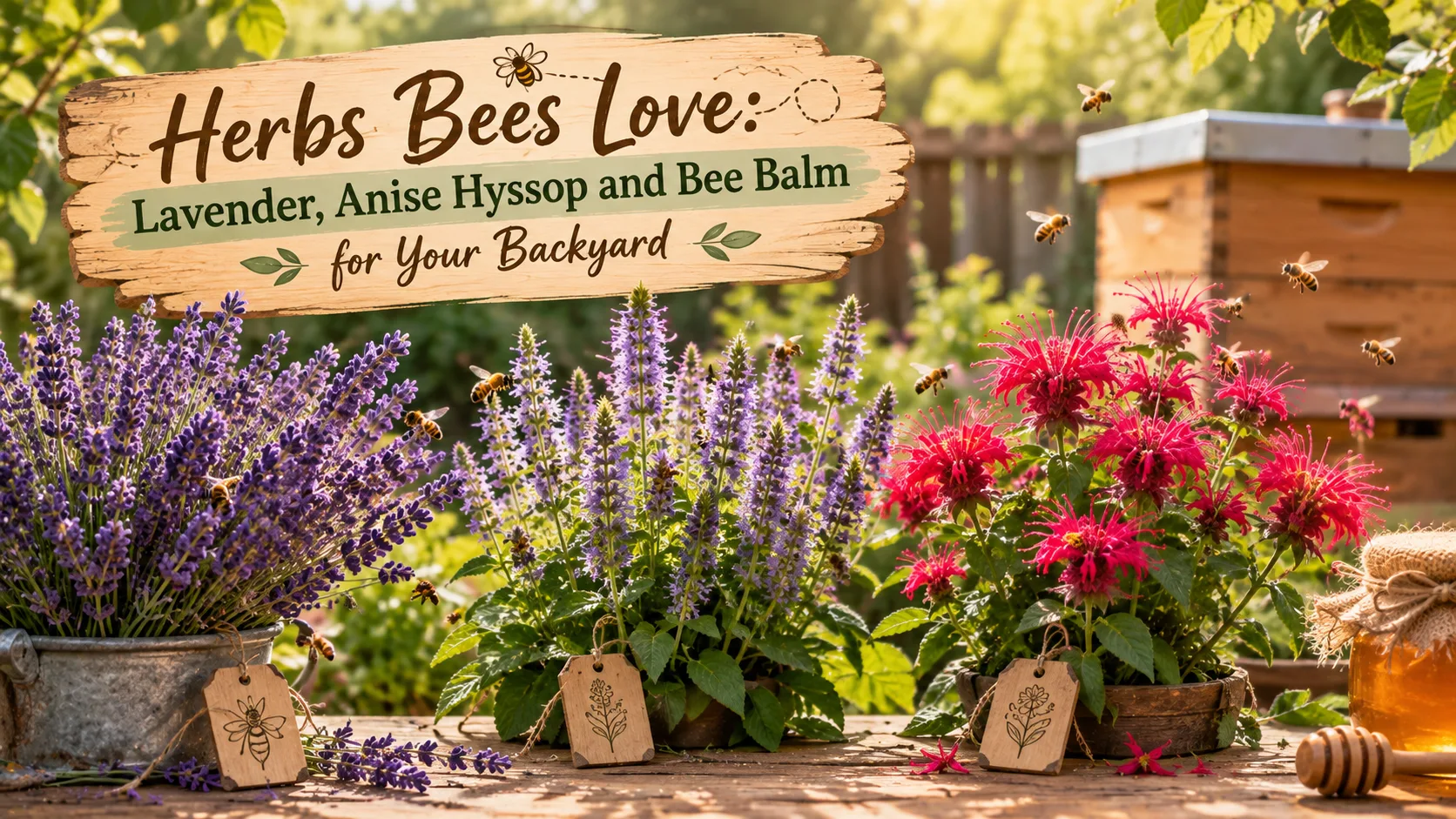
A backyard doesn't need to be large to support a hive, and Herbs bees love are some of the easiest, most fragrant, and lowest-maintenance plants you can add to attract them. Lavender, anise hyssop, and bee balm each offer long bloom windows and strong scent, making them reliable choices for experienced beekeepers and casual backyard gardeners alike.
At BeBees, we often point beekeepers toward herbs before flowers, simply because herbs tend to bloom longer, tolerate more neglect, and still pull in steady numbers of foragers throughout the season. A small, well-placed herb bed can end up doing more work for your hive than a much larger, higher-maintenance flower border.
Why Herbs Make Such Great Bee Forage
Compared to many showy garden flowers, herbs quietly outperform expectations when it comes to feeding a hive consistently. Herbs combine long bloom periods with strong scent, which makes them easy for bees to locate from a distance and keeps them producing nectar over many weeks rather than a single short, intense burst.
Long Bloom Windows Compared to Many Flowers
Many ornamental flowers bloom for only a few weeks, while herbs like lavender and bee balm can flower steadily for one to two months at a stretch, giving bees a dependable, extended food source without constant replanting.
Aromatic Oils and What They Mean for Pollinators
The essential oils in herbs create strong, lingering scent trails that help bees locate blooms from a distance, which is part of why herb gardens tend to draw such consistent, reliable pollinator traffic all season.
Lavender : The Classic Bee-Attracting Herb
Lavender is one of the most recognizable bee-attracting plants in any garden, prized both for its steady nectar output and its long-lasting, fragrant purple blooms.
Why Bees Are Drawn to Lavender
Lavender for bees works so well because its tall spikes offer easy landing platforms and a steady, reliable nectar supply throughout the entire flowering period.
Best Growing Conditions and Soil Type
Lavender prefers full sun and well-drained, slightly alkaline soil, and it tends to struggle in areas with heavy clay, standing water, or generally poor drainage.
When and How Lavender Blooms
Most lavender varieties bloom from early to late summer, with some types offering a light second flush if trimmed back promptly, keeping Lavender for bees productive for several weeks longer than expected.
Anise Hyssop — An Underrated Nectar Powerhouse

Anise hyssop is often overlooked compared to lavender or bee balm, despite quietly producing some of the most reliable, consistent nectar of any backyard herb.
Why This Herb Deserves More Attention
Its tall, dense flower spikes hold up remarkably well in heat and drought, often outlasting Lavender for bees during the driest stretches of summer when other plants slow down considerably.
Growing Conditions and Bloom Season
Anise hyssop grows easily in average, even poor soil with full to partial sun, typically blooming from mid-summer all the way through early fall.
Bonus Uses Beyond Beekeeping
The leaves have a mild licorice scent and are commonly used in teas and cooking, giving the plant real value beyond just attracting pollinators to the garden.
Bee Balm : Built for Bees (It's in the Name)
Bee balm earns its name honestly, reliably drawing bees, hummingbirds, and butterflies with its bright, tubular flowers throughout the growing season.
What Makes Bee Balm So Attractive to Pollinators
Its open, tubular blooms make nectar easy to access, and its bright, bold color helps bees spot it from a considerable distance across a garden.
Soil, Sun, and Spacing Tips
Bee balm prefers moist, well-drained soil and benefits from good air circulation between plants, which helps reduce the risk of powdery mildew later in the season.
Bloom Time and Repeat Flowering
Bee balm typically blooms through mid to late summer, and regularly deadheading spent flowers can encourage a noticeably longer overall flowering period.
How to Plan a Backyard Herb Garden for Bees
A thoughtfully arranged herb garden works far better for bees than a scattered collection of individual plants, since grouping and timing both play a real role in foraging efficiency.
Grouping Herbs for Maximum Visibility and Scent
Planting Herbs bees love in dense clusters rather than scattering single plants around the yard helps bees locate them faster and forage more efficiently once they arrive.
Pairing Herbs with Flowers for Continuous Bloom
Combining herbs with early and late-blooming flowers helps close any nectar gaps that might otherwise appear between each herb's individual flowering window.
Avoiding Pesticide-Treated Herb Starts
Always check with the nursery before buying herb starts, since pesticide-treated plants can do far more harm than good once planted near an active hive.
Other Bee-Friendly Herbs Worth Adding
Beyond the three main herbs above, several other kitchen and garden herbs quietly pull their weight when it comes to feeding local pollinators.
Thyme, Rosemary, and Oregano
These low-growing herbs bloom earlier in the season and offer a smaller but steady, reliable nectar source that complements taller, later-blooming plantings well.
Mint (With a Word of Caution on Spreading)
Mint attracts bees reliably and blooms for a long stretch, but it spreads aggressively, so it's best contained in pots rather than planted directly in open garden beds.
FAQs
Which herb do bees prefer most: lavender, anise hyssop, or bee balm?
Bees don't strongly favor one herb over the others, since all three offer genuinely reliable nectar, so planting a mix gives the widest, most consistent forage window across the season.
Can I grow bee-friendly herbs in containers or pots?
Yes, lavender, bee balm, and anise hyssop all grow well in large containers, making them well-suited for patios, balconies, and small backyard spaces alike.
Do herb gardens attract other pollinators besides honeybees?
Yes, herb gardens commonly attract bumblebees, butterflies, and hummingbirds in addition to honeybees, especially when nectar-rich bee balm is included in the overall mix.
How close should an herb garden be to a beehive?
There's no strict minimum distance required, but planting herbs within a short walking distance of the hive makes foraging noticeably easier and more energy-efficient for bees.
Are these herbs safe to plant if I also want to harvest them for cooking or tea?
Yes, lavender, anise hyssop, and many other bee-friendly herbs are commonly used in cooking and tea, as long as they haven't been treated with pesticides or other chemical sprays.
Conclusion
Building a backyard around Herbs bees love is one of the simplest, most rewarding ways to support a hive without dedicating a large amount of space, time, or ongoing effort throughout the year. Lavender, anise hyssop, and bee balm each bring long bloom windows and steady nectar, making them a strong starting point for any pollinator-friendly garden.
At BeBees, we've found that even a modest, well-placed herb bed can noticeably boost foraging activity around a hive within just a season or two. Start small, group your plantings thoughtfully, and let these reliable, low-maintenance herbs do the rest of the work.