Picture a classroom at 10 a.m. in winter. The windows are shut, 28 kids are breathing the same air, and someone near the back is sniffling. This is why more schools are looking at air purifiers for schools in 2026. Wildfire smoke, flu season, and asthma all push the same question: what is in the air students breathe all day?
Not every purifier works the same way. Some use filters, some use light, and some use electric charge. This guide explains the three main types in plain words so you can pick with confidence.
Why Classroom Air Is a Trending Topic in 2026
Many school buildings are old. Their ventilation systems were never built for full classrooms, and even newer buildings can have weak airflow in some rooms. A classroom air purifier adds cleaner air without major construction.
Health groups often talk about "air changes per hour," or ACH. It simply means how many times the air in a room gets cleaned in one hour. Guidance for classrooms commonly points to somewhere around 3 to 6 ACH, though the right number depends on the room and the goal.
HEPA: The Filter Most Schools Start With
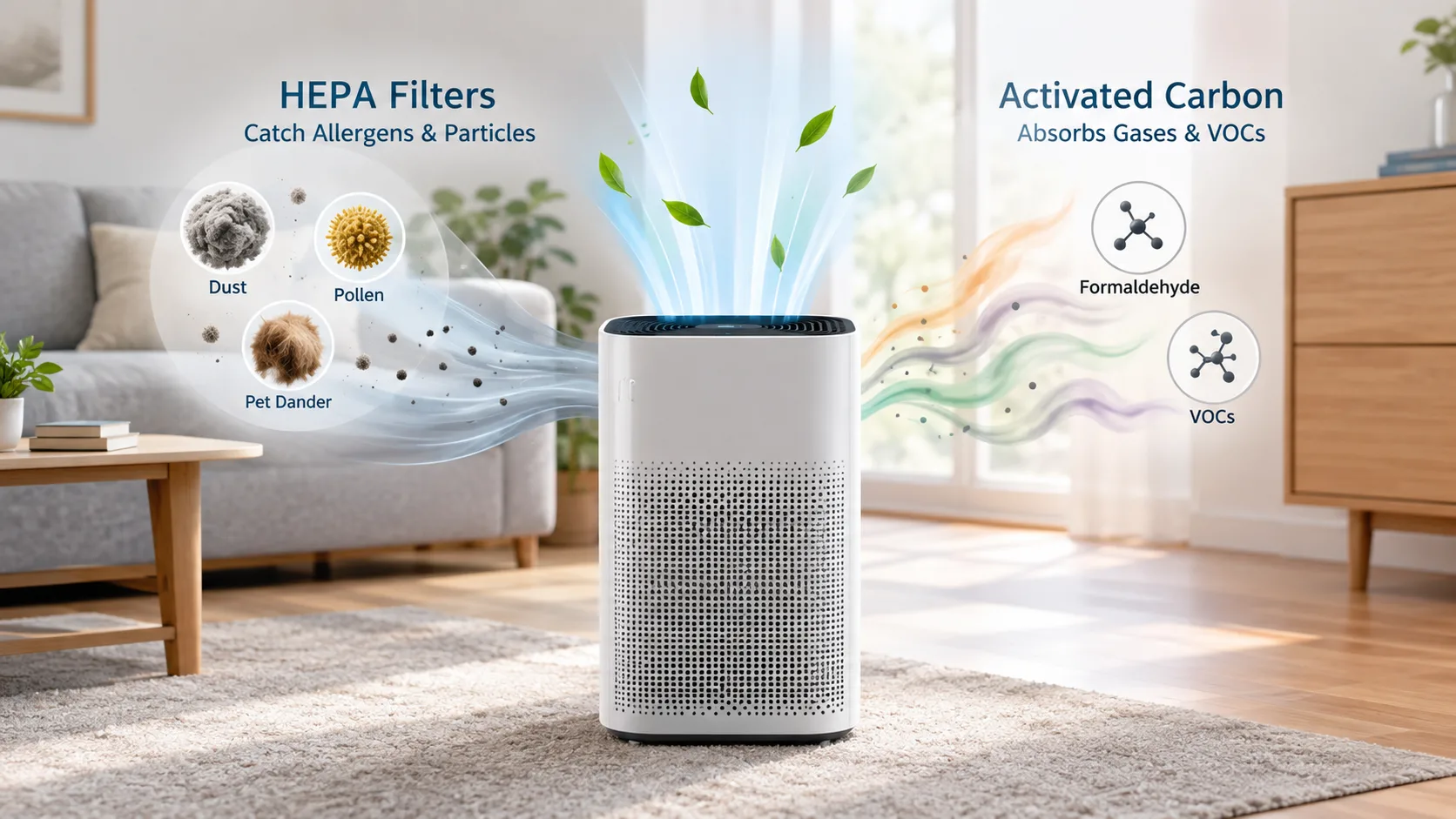
HEPA stands for High Efficiency Particulate Air. A True HEPA filter catches at least 99.97% of particles that are 0.3 microns wide. For comparison, a human hair is about 70 microns thick, so these particles are tiny. Dust, pollen, smoke, and many germs ride on particles in this size range.
HEPA works by trapping, not by guessing. Air is pulled through the filter, and the particles stay behind. There is no ozone and no chemical reaction. That is why many people consider it the safest base for air purifiers for classrooms.
The catch is upkeep. Filters wear out and need replacing, and a clogged one cleans less air.
UV Light: A Helpful Extra, Not a Replacement
UV-C light can damage the genetic material of germs, which stops them from spreading. Some purifiers add a UV bulb as an extra stage after the filters.
There is one big limit, though. UV needs time. Air that zips past the bulb too fast does not get a full dose. UV also does nothing to dust, pollen, or smoke. Think of it as a bonus layer on top of HEPA, not a stand-alone fix.
Ionizers: Handle With Care
Ionizers send out charged particles that make pollutants clump together and drop out of the air. It sounds smart, but there are two problems. First, the particles often land on desks and walls instead of leaving the room. Second, some ionizers create ozone, a gas that can irritate the lungs. That matters a lot for kids with asthma.
If a school considers an ionizer, it should look for proof that the unit makes no ozone. Many air purifiers schools buy today skip ionizers for this reason.
How the Three Compare
| Technology | What it does | Main strength | Main concern |
|---|---|---|---|
| HEPA | Traps particles | Proven, no ozone | Filters need replacing |
| UV-C | Disables germs | Extra germ control | Needs time, ignores dust |
| Ionizer | Charges particles | Low noise | Possible ozone |
What to Check Before You Pick a Purifier
Finding the best air purifier for classroom use is less about fancy features and more about fit. Check these five things:
- Room size. Match the unit to the classroom's square footage and ceiling height. Many classrooms fall between 500 and 1,000 square feet.
- Airflow (CFM). More airflow cleans faster, but it also adds noise. Air that moves through the filter too quickly can also get less thorough cleaning.
- Noise. If teachers must raise their voices, the unit will get turned off. Quiet matters.
- Ozone safety. Look for independent certification, such as California's CARB approval.
- Filter cost. Ask what replacements cost each year, not just the price of the unit.
Frequently Asked Questions
Is a classroom air purifier worth it?
For rooms with weak ventilation, allergies, or smoke events, it can help. It works best alongside open windows and regular HVAC maintenance.
How many purifiers does one classroom need?
Usually one properly sized unit. A large room may need two.
Does HEPA remove viruses?
Viruses travel inside larger droplets and particles, and HEPA captures those well.
Are ionizers safe in schools?
Only if they are tested and make no ozone. Filter-based units are the lower-risk choice.
Do air purifiers replace fresh air?
No. They clean the air already in the room, so ventilation still matters.
Conclusion
For most schools, HEPA is the dependable foundation. UV can add a little extra germ control, and ionizers need close checking before anyone buys one. When comparing air purifiers for schools, start with room size, noise, ozone safety, and long-term filter costs. A classroom air purifier only helps if it fits the space and stays quiet enough that teachers keep it running. The best air purifier for classroom use is the one that cleans the air well without getting in the way of learning. Whether you are a teacher choosing one unit or a principal planning air purifiers for classrooms across a building, the same rules apply. The air purifiers schools choose today can mean fewer sniffles and a calmer, clearer classroom tomorrow.