Covering greys involves more than choosing a shade. Your colouring routine also needs to fit the time you have, the ingredients you prefer and the results you want.
Henna and indigo offer a plant-based way to achieve brown-to-black tones. Conventional permanent black hair dye uses a different colouring system and usually involves mixing a colour formula with a developer. Both approaches require careful application, realistic expectations and attention to allergy precautions.
This guide compares henna and indigo with permanent oxidative black hair dye. Temporary and semi-permanent colours have different formulas and wear patterns.
How Henna and Indigo Colour Hair?
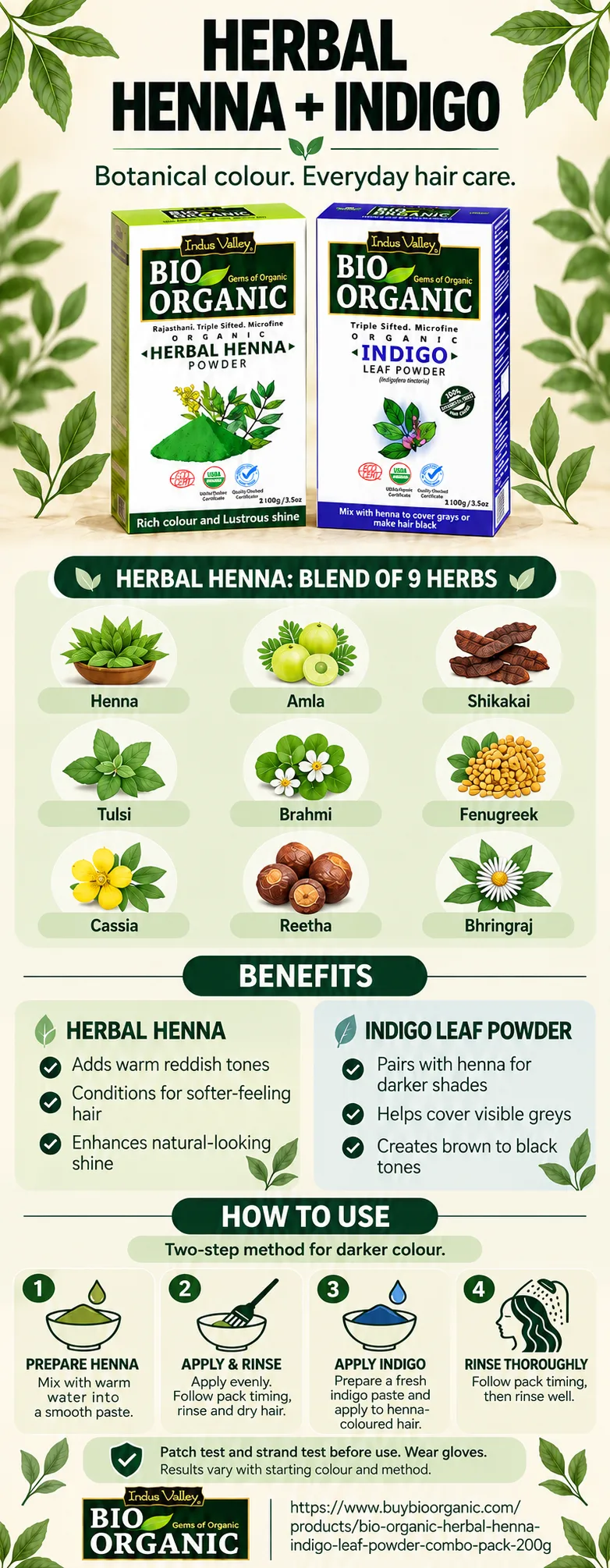
Herbal Henna produces warm reddish-orange tones, which are especially noticeable on grey or light hair. Indigo is used with henna to create deeper brown-to-black shades.
For darker grey coverage, a common approach is the two-step method: apply henna first, rinse, then apply freshly prepared indigo according to the product directions. Your starting colour, grey percentage and application method influence the result.
How Conventional Permanent Black Dye Works
Permanent oxidative colour generally combines dye ingredients with a developer containing hydrogen peroxide. Many formulas also use an alkalising ingredient, such as ammonia, to support the colouring process.
PPD, or paraphenylenediamine, is a commonly used dye ingredient associated with allergic reactions. Formulas vary, so check the full ingredient list even when the front of the pack says “ammonia-free.”
Henna and Indigo vs. Conventional Black Hair Dye
Compare herbal henna and indigo powder with conventional black hair dye for grey coverage, ingredients and application.
What MattersHenna and IndigoConventional Permanent black DyeColouring systemPlant pigments from henna and indigo. Check for any additional ingredients.Oxidative dye ingredients mixed with a developer. Formulas vary.Shade outcomeBrown-to-black tones depend on the starting colour and application method.Designed to produce a specified shade. Starting colour and hair condition still affect the result.Grey coverageA two-step application can help achieve deeper coverage.Coverage depends on the formula, application and resistance of the greys.PreparationPowders are mixed into paste, with separate stages for a two-step routine.Usually involves mixing the colour and developer supplied in the pack.Time commitmentA two-step routine requires time for two applications and rinsing stages.Often involves one application stage. Follow the stated processing time.MaintenanceNew grey roots need attention, and the colour may need refreshing.New grey roots need attention, even when the coloured lengths retain their shade.Allergy considerationsPlant-based ingredients can still cause reactions.PPD and other ingredients can cause reactions.
Choose using the instructions and ingredient list of the actual products you are considering. Neither category guarantees identical results for every head of hair.
Why Consider Bio Organic Herbal Henna and Indigo?
Bio Organic offers a Herbal Henna Powder with nine herbs, paired with a separate Indigo Leaf Powder. The herbal henna powder blend includes henna, amla, shikakai, tulsi, brahmi, fenugreek, cassia, reetha and bhringraj.
The brand describes the combo as formulated without added ammonia, PPD, peroxide, parabens or metallic salts. It positions the combination for grey coverage in brown-to-black tones, with results depending on your hair and application method. Check the current packaging for the complete ingredient list and directions.
Keeping the powders separate gives you a way to follow the brand’s two-step colouring routine. A strand test before a full application helps you assess the shade on your own hair.
Which Option Fits Your Routine?
Consider henna and indigo if you prefer plant-based colouring
Herbal Henna and indigo powder may suit you if you enjoy preparing powders and can allow time for a staged application. Be prepared for the final shade to reflect your starting colour and grey percentage.
Follow the instructions for your specific products rather than combining timings and recipes from different sources.
Consider permanent black dye if a single application suits you better
A conventional permanent colour may fit your routine if you prefer a prepared colour-and-developer system with a defined processing time.
Read the ingredient list and follow the mixing proportions exactly. Extending the processing time beyond the directions can increase irritation risk.
Allergy Precautions Matter With Both Options
Follow the manufacturer’s allergy-test instructions before colouring, even if you have used the product previously. If you have reacted to hair dye before, speak with a dermatologist before trying another formula. Clinical patch testing can help identify the ingredient responsible.
Henna and indigo can also cause allergic contact dermatitis. A “natural” or “herbal” label alone cannot establish whether a product suits your skin.
Also check products labelled “black henna.” Some contain added PPD, which can cause serious reactions. Pure henna combined with indigo and a product sold under the name “black henna” can have very different ingredient lists.
What should I do if colouring causes itching or burning?
Rinse the product off and stop the application. Seek medical advice if symptoms develop or persist. Facial or throat swelling, difficulty breathing or collapse require emergency care.
Explore the Bio Organic Herbal Henna and Indigo Combo, check its current ingredients, and follow the pack directions for your intended shade. View the Bio Organic Henna and Indigo Combo.
Frequently Asked Questions
Can henna and indigo turn grey hair black?
They can produce dark brown-to-black tones, particularly through a two-step application. The outcome depends on your hair, the products and how they are used. Test a small strand before committing to a full application.
Can henna alone give black hair colour?
Henna produces warm reddish-orange tones. Indigo is used alongside it to achieve deeper brown-to-black shades.
Is henna and indigo suitable if I have a PPD allergy?
A verified PPD-free formula may avoid that particular ingredient, but other ingredients can still cause reactions. Ask a dermatologist to help assess alternatives after a previous dye allergy.
Is ammonia-free black dye allergy-free?
Ammonia-free colour can still contain PPD or other potential allergens. Check the ingredient list and follow the product’s allergy-test instructions.
Can I mix henna and indigo together?
Some products provide a one-step method, while darker grey coverage may use separate applications. Follow the instructions supplied with your chosen powders because ratios and preparation affect the shade.
How long should I leave henna and indigo on my hair?
Use the timing stated on each pack. A two-step method has separate preparation and application instructions for henna and indigo, so plan enough time for the complete routine.