
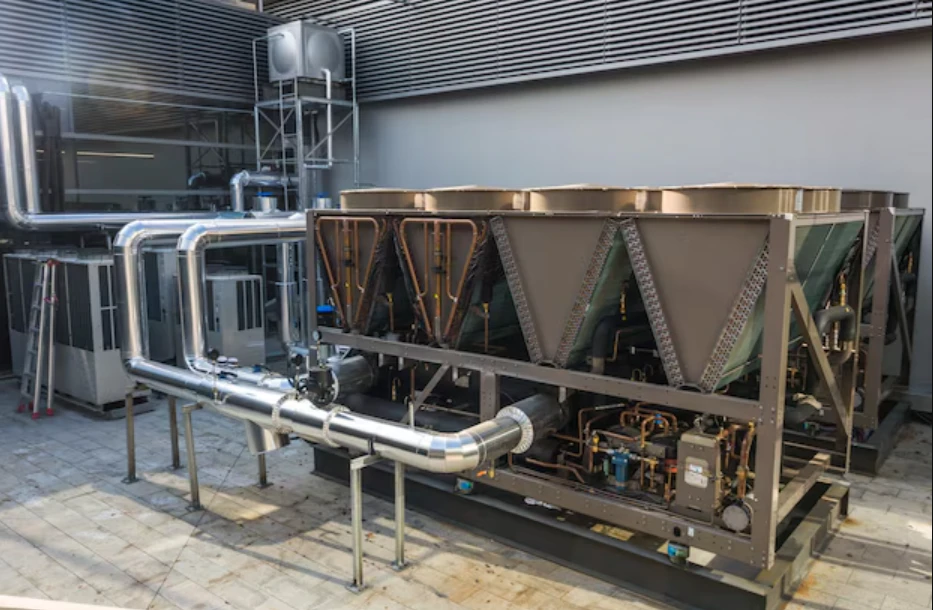
Heat exchangers are essential factors in a wide range of artificial, marketable, and laboratory operations. They're bias designed to transfer heat between two or further fluids — liquids, feasts, or a combination — without mixing them. Effective heat transfer is critical in processes similar as power generation, chemical processing, HVAC, refrigeration, and food product.
According to Courtney & Nye, the performance of a heat exchanger depends not only on its design but also on proper material selection, fluid inflow arrangements, and conservation practices. This blog explores the types of heat exchangers, their design principles, factors, advantages, artificial operations, and stylish practices for functional effectiveness.
What Is a Heat Exchanger?
A heat exchanger is a device that allows thermal energy to be transferred from one fluid to another efficiently. The two fluids can either be separated by a solid wall to help mixing or can be in direct contact, depending on the design.
- The primary purpose of a heat exchanger is to either cool a hot fluid or heat a cold fluid, optimizing energy use and maintaining process effectiveness.
Key Design Principles
Designing an effective heat exchanger involves several considerations:
1. Thermal Effectiveness
- The rate of heat transfer depends on the temperature difference between the fluids, the face area available for transfer, and the thermal conductivity of the material.
- Proper design maximizes heat exchange while minimizing energy loss.
2. Flow Arrangement
The inflow of fluids can follow different patterns:
- Counterflow: Fluids move in contrary directions; maximizes temperature difference and effectiveness.
- Resemblant Flow: Fluids move in the same direction; simpler but less effective.
- Crossflow: One fluid flows vertical to the other; balances effectiveness and conciseness.
Courtney & Nye emphasize that inflow configuration directly impacts the heat exchanger's performance and pressure drop.
3. Pressure Drop
- Minimizing pressure loss is critical for maintaining energy effectiveness.
- Inordinate pressure drop increases pumping costs and can impact system performance.
4. Material Selection
- Accoutrements must repel temperature, pressure, and chemical exposure.
- Common choices include pristine sword, carbon sword, bobby, and specialized blends for sharp surroundings.
Types of Heat Exchangers
Heat exchangers are classified grounded on design, inflow arrangement, and operation:
1. Shell and Tube Heat Exchangers
- Design: Pack of tubes enclosed within a spherical shell. One fluid flows through the tubes, and the other flows over the tubes in the shell.
- Operations: Power shops, chemical processing, oil painting and gas.
- Advantages: Durable, suitable for high pressure and temperature, easy conservation.
2. Plate Heat Exchangers
- Design: Thin plates piled together with gaskets in between. Fluids flow through alternate channels.
- Operations: HVAC systems, refrigeration, food and libation, and chemical diligence.
- Advantages: Compact, effective heat transfer, easy to clean.
3. Brazed Plate Heat Exchangers
- Design: Analogous to plate exchangers but with brazed joints rather of gaskets, furnishing a leak- evidence and compact design.
- Operations: Refrigeration, air exertion, high- pressure artificial processes.
- Advantages: High effectiveness, durable, minimum conservation.
4. Air- Cooled Heat Exchangers
- Design: Use ambient air to cool fluids flowing inside finned tubes.
- Applications: Power generation, chemical processing, petrochemical shops.
- Advantages: No water needed, suitable for remote locales, simple conservation.
5. Helical Heat Exchangers
- Design: Helical designs involve curled tubes or plates that promote turbulent inflow.
- Operations: Wastewater treatment, pulp and paper assiduity, chemical processing.
- Advantages: Compact, reduces fouling, effective heat transfer.
Factors of a Heat Exchanger
The main factors vary depending on the type, but generally include:
- Tubes or Plates: Give face area for heat transfer.
- Shell or Frame: Encases the tubes or plates and supports structural integrity.
- Baffles: Guide fluid inflow, increase turbulence, and ameliorate effectiveness.
- Heads and End Caps: Direct fluid into and out of the tube pack or plate channels.
- Seals and Gaskets: Help fluid leakage and maintain separation between fluids.
Advantages of Heat Exchangers
- High Effectiveness: Optimized designs allow for maximum thermal energy transfer while minimizing energy loss.
- Space- Saving: Ultramodern designs, similar as plate or helical heat exchangers, are compact and ideal for installations with limited space.
- Continuity: Duly designed heat exchangers can repel high pressures, temperatures, and sharp fluids, icing long functional life.
- Versatility: Suitable for feasts, liquids, and brume; applicable across a wide range of diligence.
- Low Conservation: Designs similar as plate and brazed heat exchangers are easy to clean and check, reducing time-out.
Industrial Applications
Heat exchangers are used in nearly every assiduity:
1. Power Generation
- Used in condensers, feedwater heaters, and cooling systems to maximize energy recovery and effectiveness.
2. Chemical Industry
- Essential for reactors, distillation columns, and process cooling.
- Proper heat exchange ensures safe and harmonious chemical responses.
3. Oil Painting and Gas
- Applied in refineries for crude preheating, cooling, and energy recovery.
4. HVAC and Refrigeration
- Critical for heating, cooling, and maintaining optimal inner conditions.
5. Food and Beverage Industry
- Used in pasteurization, sterilization, juice processing, and other operations taking precise temperature control.
Conservation and Functional Considerations
Proper conservation ensures long- term performance:
- Routine Examination: Check for leaks, erosion, fouling, and mechanical wear and tear.
- Drawing: Regular cleaning of tubes or plates prevents scaling and fouling, maintaining effectiveness.
- Monitoring Operating Conditions: Keep track of temperature, inflow rates, and pressure drops to help system stress and inefficiency.
- Preventative Conservation: Slated examinations, lubrication, and element relief help time-out and extend service life.
Performance Optimization
Optimizing heat exchanger performance includes:
- Opting applicable inflow arrangement for maximum effectiveness.
- Using compatible accoutrements to repel erosion and wear.
- Icing proper installation and alignment.
- Monitoring performance and conforming operating conditions to maintain optimal heat transfer.
Courtney & Nye emphasize that ongoing evaluation and adaptation are crucial to maintaining long- term effectiveness.
Unborn Developments
Heat exchanger technology continues to evolve:
- Enhanced accoutrements for advanced erosion and temperature resistance.
- Compact, modular designs for easier installation and conservation.
- Advanced inflow dynamics to reduce fouling and pressure drop.
- Integration with digital monitoring systems for prophetic conservation and energy optimization.
These inventions ameliorate effectiveness, continuity, and sustainability in artificial operations.
Conclusion
Heat exchangers are essential to modern industrial and commercial processes, providing efficient and reliable heat transfer between fluids. Their design, components, and flow arrangements play a critical role in energy efficiency, operational safety, and long-term reliability. For businesses seeking high-quality equipment and expert support, trusted heat exchanger suppliers offer a range of advanced units, installation guidance, and maintenance services to ensure optimal performance and durability in demanding applications.
Guided by the principles outlined in Courtney & Nye, diligence can elect and maintain heat exchangers that meet specific conditions, optimize energy use, and insure harmonious process performance. From shell and tube to plate, helical, and air- cooled designs, heat exchangers remain a foundation of artificial thermal operation and energy conservation.