The handmade Moroccan carpet is more than a floor covering — it is a living story of heritage, community, identity, and skilled artistry passed down through generations. These carpets are woven not only with wool, silk, or cotton but with symbolism and soul. In the high Atlas Mountains, remote Berber villages, and bustling souks of Marrakech and Fes, carpets are crafted by hand using techniques that date back centuries. Private Morocco Tours offers a rare opportunity to witness this process firsthand, tracing the roots of Morocco’s rich textile tradition.
From desert dunes to snow-capped peaks, each region has contributed a unique thread to the Moroccan carpet narrative. These weaves, full of history and emotion, reflect the rhythm of nomadic life, tribal memory, and the artisan’s personal voice. A handmade Moroccan carpet is never just decoration; it is a cultural heirloom that speaks of geography, gender, ritual, and design.
The Origins of Moroccan Carpet Weaving
Carpet weaving in Morocco can be traced to the indigenous Amazigh (Berber) communities, whose designs long predate written language. The earliest carpets were made for practical use — warmth in mountain homes, prayer mats, or dowry gifts — but even those functional pieces were adorned with protective motifs and ancestral symbols. Every pattern had purpose, from diamond shapes meant to protect from the evil eye to zigzag lines symbolizing rivers and fertility.
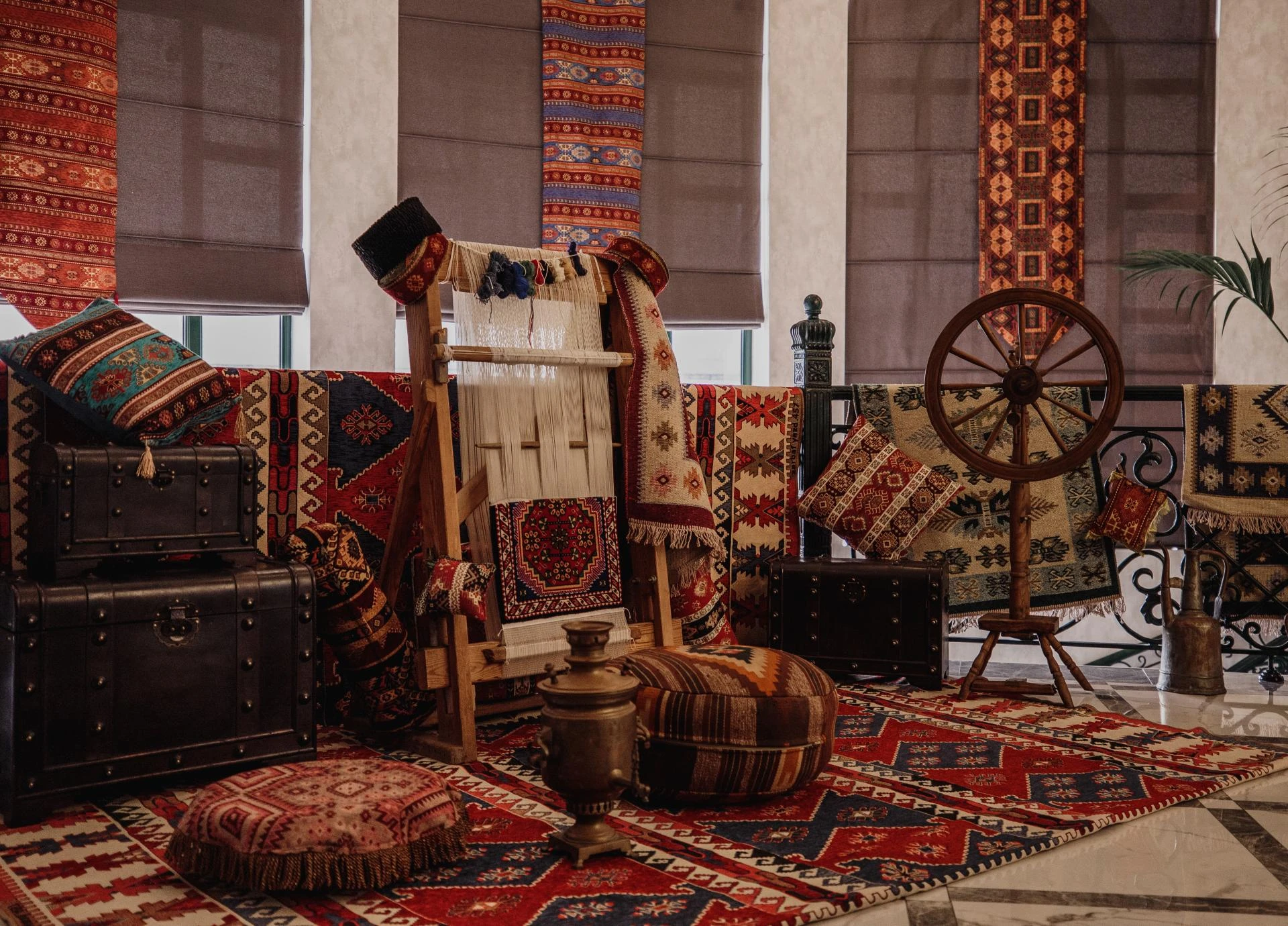
These traditions are still alive. Women weavers in the Middle and High Atlas continue to use vertical looms known as imzoun, weaving from memory, without stencils or sketches. Their looms echo with centuries of history, yet every rug remains utterly individual — no two pieces are ever alike.
Materials and Techniques Passed Down Generations
Most handmade Moroccan carpets are woven with sheep’s wool sourced from local flocks. The texture and sheen of the wool vary based on the region and breed of sheep. In the colder, mountainous zones, the wool is dense and rich. In drier, desert communities, it is often coarser. Some artisans incorporate camel hair, cotton, or even sabra (a silky thread made from agave) for specific textures or shine.
Dyeing the wool is another ritual deeply rooted in heritage. Natural dyes derived from plants, roots, flowers, and minerals give the carpets their characteristic earthy tones — saffron for yellow, pomegranate peel for golds, henna and madder root for reds, and indigo for blues. The process can take days, with precise timing and temperature being key to ensuring lasting color.
Knotting and weaving techniques differ between regions. The knotted pile style is commonly seen in Middle Atlas rugs like Beni Ourain, where plush textures make for luxurious floor pieces. In contrast, flatweave kilims or hanbels are lighter and favored in southern areas like Taznakht or the Anti-Atlas. Weavers blend looping, embroidery, and tapestry techniques to enrich the surface with texture and depth.
The Story in Every Design
One of the most fascinating aspects of Moroccan carpets is the storytelling embedded within the weave. Each rug is like a visual diary, a deeply personal expression of the weaver’s experience, tribe, and environment. While geometric patterns dominate, they are not mere aesthetics — they carry memory and metaphor.
Take, for instance, the lozenge (diamond) — a sacred feminine symbol in Berber design often associated with fertility and protection. Horizontal bands might signify the phases of a woman’s life: maiden, mother, elder. Repeated motifs serve as invocations, prayers woven into warp and weft. In tribal societies where oral storytelling is central, the carpet becomes both a medium and message.
The color scheme also contributes to the narrative. Bold reds may symbolize strength or celebration; blue can offer spiritual protection; green — used sparingly — is sacred in Islamic tradition. This depth of semiotics invites collectors, scholars, and travelers alike into the symbolic language of Moroccan women.
Regional Varieties: A Tapestry of Identity
Each region of Morocco gives rise to a distinct style of carpet that reflects its landscape, climate, and cultural lineage.
1. Beni Ourain (Middle Atlas):
Perhaps the most internationally recognized, Beni Ourain carpets are woven by semi-nomadic tribes in the Middle Atlas. Known for their thick ivory wool and minimalist black lines, these rugs carry elegance and serenity. Originally used as bedding during harsh winters, their soft texture and graphic appeal now grace modern interiors across continents.
2. Azilal Carpets (High Atlas):
Bright and eclectic, Azilal rugs burst with color and spontaneity. Unlike the neutral Beni Ourain styles, Azilal carpets are full of whimsical symbols, zigzags, and abstract forms. Their design mimics a kind of freestyle visual poetry — often joyful, occasionally chaotic, always expressive.
3. Boujad and Boucherouite (Central Plains):
Boujad rugs are warm, rose-toned, and tightly woven with symmetrical motifs, often reflecting stories of love, domestic life, or dreams. Boucherouite rugs, on the other hand, are made with scraps of fabric — a creative response to material scarcity. These recycled pieces are bold, contemporary, and eco-conscious while remaining deeply traditional.
4. Taznakht and Zanafi (Anti-Atlas):
Taznakht rugs are distinguished by their intricate knotting and bright saffron-yellow fields. Zanafi rugs often incorporate a braided texture and muted palette, blending nomadic practicality with aesthetic subtlety.
5. Rabat Carpets (Urban Influence):
Unlike the tribal carpets, Rabat rugs have an urban, Andalusian flavor. Their floral designs and structured borders are reminiscent of Ottoman or Persian influences. They are symmetrical, dense, and refined — often considered heirlooms in Moroccan households.
The Role of Women in Carpet Culture
In Morocco, the loom is often the domain of women. Carpet weaving is not just a craft but a rite of passage — one learned from mothers and grandmothers. It is a communal art, shared in rhythm and conversation. During the weaving process, women sing, exchange stories, and teach daughters both technique and symbolism.
This practice empowers generations of women economically and culturally. Many cooperatives across Morocco are led by women who preserve this heritage while gaining independence through their artistry. Their carpets are both economic goods and intimate artifacts of identity.
From Village Looms to Global Art Spaces
Moroccan carpets have long moved beyond their utilitarian beginnings. Collectors prize them as art objects. Interior designers use them to infuse warmth and texture into modern spaces. Museums, including the Musée du Tissage et du Tapis in Marrakech, display them as cultural treasures. Still, each piece remains a bridge — linking ancestral skill with global appreciation.
Despite increasing demand, the handmade Moroccan carpet retains its essence due to its slow process. Unlike machine-made reproductions, authentic carpets cannot be rushed. They demand time, attention, and emotional investment. Each rug is a statement of resistance against disposability — a durable good born from patience and precision.
Ethical Sourcing and Authenticity
For enthusiasts and collectors, buying an authentic handmade Moroccan carpet is more than a transaction — it is a relationship. It involves understanding provenance, trusting craftsmanship, and supporting fair trade. Mass production and tourist imitations have diluted the value of traditional weaving in many areas. That’s why sourcing directly from villages or artisan cooperatives is essential — ensuring that the weavers are fairly compensated and their cultural knowledge respected.
When traveling with purpose and awareness, visitors can do more than shop; they can connect with weavers, learn the story behind the rug, and leave with a piece that carries meaning beyond its aesthetic appeal.
Why Choose Private Morocco Tours?
Private Morocco Tours offers more than a glimpse into the Moroccan landscape — we open the door to its soul. For those who seek to experience the story behind the handmade Moroccan carpet, our journeys offer authentic encounters with local weavers in remote mountain villages, vibrant medinas, and hidden souks.
We believe in responsible, culturally-rooted travel. Our itineraries are crafted to connect travelers with the people behind the craft, not just the finished product. Whether you’re drawn to the bold lines of a Beni Ourain, the vivid storytelling of an Azilal, or the rich tapestry of a Taznakht, we’ll guide you to the source — where heritage is still woven by hand.
When you travel with Private Morocco Tours, you aren’t just collecting souvenirs — you’re participating in living culture. Our deep local relationships ensure that each visit is respectful, meaningful, and memorable.
Let us take you where the stories live — one thread at a time.