Hair loss can affect people differently.
For some, it begins with a gradually receding hairline. Others may notice thinning at the crown, widening of the parting, or a general reduction in hair density.
When hair loss becomes noticeable, people often explore different treatment options. One of those options is hair transplantation, a surgical procedure that moves existing hair follicles from one area of the scalp to another.
A hair transplant does not produce an immediate full head of hair. The transplanted follicles need time to heal, shed, and begin a new growth cycle.
Understanding the procedure and the recovery timeline can help set more realistic expectations.
What Is a Hair Transplant?
During a hair transplantation, hair follicles are taken from a donor area where hair growth is relatively stable and transferred to areas where hair has thinned or been lost.
The donor area is commonly located at the back or sides of the scalp.
The transplanted follicles are carefully positioned in the recipient area according to the planned hairline, distribution, and density.
Two commonly discussed techniques are:
- Follicular Unit Extraction (FUE)
- Follicular Unit Transplantation (FUT)
The choice between them depends on factors such as donor hair availability, scalp characteristics, the amount of hair restoration required, and the surgical plan.
Follicular Unit Extraction (FUE)
In FUE, individual follicular units are removed directly from the donor area.
Each graft may contain one or more hairs.
The extracted follicles are then prepared and placed into the areas where greater hair coverage is required.
Because follicles are removed individually, FUE does not involve removing a continuous strip of scalp.
Patients may discuss this technique when considering factors such as:
- Donor-area scarring
- Number of grafts required
- Hairstyle preferences
- Recovery
- Available donor hair
Suitability needs to be assessed individually.
Follicular Unit Transplantation (FUT)
FUT uses a different method.
A strip of scalp containing hair follicles is removed from the donor area.
The strip is then divided into individual follicular units before the grafts are transplanted into the recipient area.
Because a strip of tissue is removed, FUT produces a linear scar in the donor area.
The technique may still be considered in selected cases depending on the patient's scalp, donor area, and number of grafts required.
Neither FUE nor FUT should automatically be considered appropriate for every patient.
The choice depends on individual circumstances.
What Happens During Hair Transplant Planning?
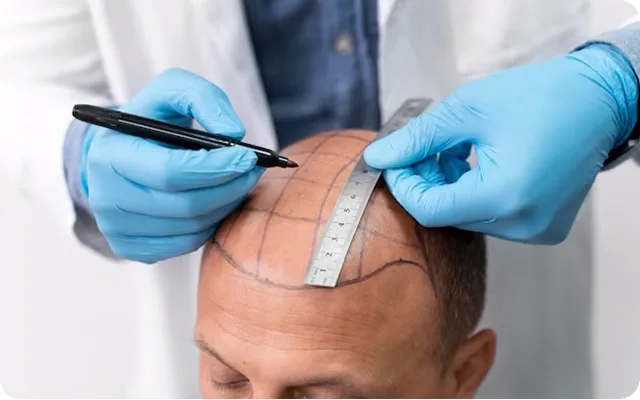
A hair transplant should begin with an assessment of the pattern and extent of hair loss.
Planning may include examining:
- Hair-loss pattern
- Donor hair density
- Hair thickness
- Scalp condition
- Existing hairline
- Age and progression of hair loss
- Medical history
- Treatment expectations
One important consideration is whether there is enough suitable donor hair available.
A transplant redistributes existing follicles. It does not create an unlimited supply of new hair.
This means donor-area planning is an important part of the procedure.
What Happens on the Day of Surgery?
Hair transplantation is generally performed using local anaesthesia.
The exact procedure depends on whether FUE, FUT, or another planned approach is being used.
The broad process may include:
- Preparing the donor and recipient areas
- Administering local anaesthesia
- Harvesting the required follicles
- Preparing the grafts
- Creating recipient sites
- Placing the follicles according to the planned distribution
The duration depends on the number of grafts and the technique being used.
What Can You Expect Immediately After a Hair Transplant?
The scalp will not look completely settled immediately after surgery.
During the early recovery period, patients may notice:
- Redness
- Mild swelling
- Tenderness
- Small crusts or scabs around transplanted grafts
- Temporary discomfort in the donor or recipient area
These changes are part of the early healing period.
The transplanted follicles also do not begin producing visible mature hair immediately.
Hair restoration takes place gradually.
The First Few Days After Surgery
The first few days are particularly important because the newly transplanted grafts are still settling into the scalp.
Patients should follow the post-operative instructions provided for their procedure.
These may include guidance around washing, sleeping position, exercise, and scalp care.
Avoid Scratching or Picking the Grafts
It may be tempting to touch the scalp because of itching or crust formation.
However, scratching or picking at the recipient area should be avoided during early healing.
The transplanted area needs to be left undisturbed while the grafts settle.
Washing the Hair
The source article notes that gentle washing may begin after approximately two to three days.
The exact timing should follow the instructions given after surgery.
When washing is permitted, patients may be advised to:
- Use a mild shampoo
- Avoid vigorous rubbing
- Avoid scratching
- Handle the recipient area gently
The aim is to keep the scalp clean without disturbing the grafts.
Sleeping Position
Temporary swelling can sometimes occur around the scalp and forehead.
Patients may be advised to sleep with the head elevated during the first few nights.
This can be discussed as part of the individual aftercare instructions.
Exercise and Sweating
Strenuous exercise can increase sweating and scalp irritation during the early recovery period.
The source article recommends avoiding vigorous physical activity during the first couple of weeks.
The exact timing for returning to exercise depends on healing and the surgeon's instructions.
Sun Exposure
Direct sunlight may also need to be limited while the scalp is healing.
Patients should ask when it is appropriate to resume normal outdoor exposure and whether head protection is recommended.
Why Follow-Up Appointments Matter
Hair-transplant recovery does not end when the procedure is completed.
Follow-up appointments allow healing to be reviewed and give patients an opportunity to ask questions.
During follow-up, the doctor may assess:
- Donor-area healing
- Recipient-area healing
- Scalp condition
- Hair shedding
- Early growth
- Any symptoms or concerns
Following the recommended review schedule can help monitor progress.
Hair Growth After a Transplant: What Happens Over Time?
One of the most important things to understand about hair transplantation is that the result develops slowly.
The transplanted hairs can pass through several phases before visible growth becomes established.
Weeks 1–2: Healing and Early Shedding
During the first couple of weeks, small crusts or scabs may form around the transplanted grafts.
The scalp gradually heals, and redness may begin to settle.
Some of the transplanted hair shafts may then fall out.
This is commonly described as shedding or shock loss.
The loss of these visible hairs does not necessarily mean the transplanted follicle itself has been lost.
The follicle may remain beneath the skin and later enter a new growth cycle.
Months 1–3: Limited Visible Change
This stage can sometimes feel slow.
There may be relatively little visible hair growth during the early months.
The transplanted follicles are going through their natural cycle before new hairs begin emerging.
Patients should avoid judging the outcome too early during this period.
Months 4–6: New Growth Becomes More Noticeable
New hairs may become increasingly visible during this stage.
Initially, the hairs can appear:
- Fine
- Thin
- Short
- Uneven in density
This can change as the growth process continues.
Months 7–12: Increasing Density
Hair growth may become more noticeable as transplanted hairs lengthen and mature.
The recipient area can gradually appear fuller during this period.
The texture and thickness of individual hairs may also continue to change.
12–18 Months: Longer-Term Result
The source article notes that the outcome may continue developing for approximately 12 to 18 months.
This is why hair transplantation requires patience.
The appearance in the first few weeks or months should not be treated as the final result.
What Can Influence Hair Transplant Results?
Several factors can affect the outcome.
These may include:
- Quality of donor hair
- Number of available grafts
- Pattern of hair loss
- Hair thickness
- Hair characteristics
- Surgical planning
- Healing
- Progression of existing hair loss
- Post-operative care
Because each person's hair and scalp are different, transplant density and coverage can also vary.
Dos After Hair Transplantation
Post-operative instructions should always take priority, but general recommendations may include:
Follow the Washing Instructions
Do not resume normal shampooing until advised.
When washing begins, handle the recipient area carefully.
Attend Follow-Up Appointments
Follow-up allows recovery and hair growth to be monitored.
Protect the Scalp
If headwear is permitted, it should fit loosely enough to avoid pressure or friction on the transplanted area.
Take Medication Only as Prescribed
Medications such as minoxidil or finasteride may be discussed in selected patients.
They should be used only when recommended by the treating doctor.
Someone consulting a Hair transplant surgeon in Bangalore can also discuss whether additional medical treatment may have a role in managing continuing hair loss.
Things to Avoid During Early Recovery
Don't Scratch the Recipient Area
Avoid picking at crusts or scratching the scalp.
Don't Resume Intense Exercise Too Early
Sweating and strenuous activity may need to be restricted temporarily.
Avoid Smoking and Alcohol if Advised
The source article advises avoiding smoking and alcohol during the early post-operative period.
Patients should follow the specific instructions provided for their procedure.
Avoid Extreme Heat or Cold
The healing scalp may temporarily be more sensitive.
Ask when it is appropriate to resume activities involving significant heat, cold, or direct sun exposure.
Hair Care After the Initial Recovery
The transplanted follicles need time to grow, but the rest of the scalp also deserves attention.
Hair care after transplantation may involve several areas.
Maintain a Balanced Diet
Nutrition supports general hair and scalp health.
A balanced diet can include sources of:
- Protein
- Iron
- Vitamin D
- Zinc
- Other essential nutrients
Supplements should not automatically be assumed to improve hair growth and should be used based on individual requirements.
Stay Hydrated
Adequate hydration supports general health and can form part of normal recovery habits.
Use Gentle Hair-Care Products
During recovery, harsh products or aggressive scalp treatments may need to be avoided.
Ask when normal styling products, colouring, or other chemical treatments can safely resume.
Avoid Excessive Traction
Very tight hairstyles can place repeated tension on hair.
Looser hairstyles may help reduce unnecessary traction on existing and transplanted hair.
Manage Ongoing Hair Loss
A transplant moves existing follicles into new locations, but it does not necessarily stop hair loss in other areas of the scalp.
This is particularly relevant when genetic hair loss is continuing.
Patients may therefore need a longer-term plan that considers both transplanted hair and remaining natural hair.
Hair Transplantation Is Not Immediate Hair Regrowth
This is one of the most important expectations to establish.
A hair transplant is not completed when the grafts are placed.
It begins a longer process involving:
- Healing
- Temporary shedding
- New growth
- Hair maturation
- Increasing density
Visible changes usually happen gradually over several months.
Patience during this process is part of hair-transplant recovery.
Who May Be Considered for Hair Transplantation?
Suitability cannot be determined from hair loss alone.
An assessment may consider:
- Pattern and stability of hair loss
- Donor hair availability
- Scalp health
- Age
- Medical history
- Expectations
- Likelihood of future hair loss
Someone with extensive hair loss but limited donor hair may have different options from someone with a smaller, well-defined area of thinning.
This is why donor-area assessment is important before treatment planning.
Questions Worth Asking Before a Hair Transplant
Before deciding on surgery, consider asking:
What is causing my hair loss?
Understanding the likely cause should come before choosing a treatment.
Am I suitable for hair transplantation?
Ask how your donor area and hair-loss pattern affect suitability.
How many grafts may be required?
The answer depends on the area being treated and available donor hair.
Would FUE or FUT be considered?
Ask why a particular harvesting technique is being suggested.
Where will the donor hair come from?
Understand which areas will be used and how they may look after healing.
What should I expect during recovery?
Discuss washing, sleeping, exercise, sun exposure, and return to work.
When will new hair start growing?
Understand that visible growth develops gradually rather than immediately.
Will my existing hair continue thinning?
This is especially important when hair loss is still progressing.
Could I need another procedure later?
Future hair loss or limitations in density may influence long-term planning.
Final Thoughts
Hair transplantation is a surgical method of relocating existing hair follicles from a donor area to areas affected by thinning or hair loss.
FUE and FUT are two established approaches for harvesting grafts, and the method considered depends on donor hair, scalp characteristics, treatment goals, and the overall surgical plan.
Recovery involves more than waiting for the scalp to heal.
Temporary shedding can occur before new growth begins, and visible changes may continue developing over many months.
Following post-operative instructions, protecting the transplanted area during early healing, attending follow-up appointments, and understanding the gradual hair-growth cycle can make the process easier to navigate.
Most importantly, hair transplantation should be planned around the individual's hair-loss pattern and available donor hair rather than expectations of immediate or unlimited regrowth.