The epidural needle is one of the most important medical tools used in anaesthesia today. This highly specialised instrument allows for a peaceful recovery, whether it is assisting a mother during labour or treating post-operative pain for a surgical patient.
A close relative was concerned about the pain following knee replacement surgery. The first day of recovery was better than anticipated because the medical team employed epidural anaesthesia to reduce pain. He needed strong painkillers and was able to start moving gently sooner. It served as a reminder that even a small medical tool, such as an epidural needle, can significantly improve patient comfort. Because they produce dependable, high-quality medical equipment, hospitals prefer trusted manufacturers like GSTC.
Clear product knowledge, in our opinion at GSTC, enables healthcare providers to make wise choices. This thorough reference explains the design, advantages, and uses of the epidural anaesthesia needle while emphasising the importance of purchasing from reliable production centers for international healthcare.
An epidural needle: what is it?
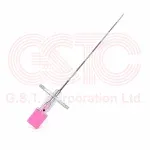
A, specialised medical needle called an epidural needle is used to administer painkillers or insert catheters into the epidural area. The small, sensitive area that surrounds the protective sleeve of the spinal cord is called the epidural space.
An epidural anaesthesia needle is specially designed to safely pass through delicate tissue layers without inflicting structural harm, in contrast to typical hypodermic needles that have a sharp, straight point to punch into veins or muscle.
Precision's Anatomy: How It Operates
A high-quality needle is made up of a few essential parts that operate together:
The most popular type, the Curved Tip (Tuohy Design), has a slightly curved tip. Without unintentionally puncturing the inner spinal membrane, this particular curve aids the anaesthesiologist in guiding the flexible catheter upward or downward into the epidural space.
A solid metal core that precisely fits within the hollow needle is called a stylet. It keeps tissue fragments or skin plugs from obstructing the needle tip as it is being inserted.
Depth Markings: Doctors can track the precise depth of the needle's passage in real time thanks to clearly engraved lines along its shaft.
The Hub: An ergonomic metal or plastic base that allows the clinician to feel for changes in tissue resistance and provides complete tactile control and feedback.
Important Advantages of a Superior Epidural Needle
The effectiveness of the equipment has a direct impact on patient outcomes in clinical settings. The tactile input that the needle provides is very important to medical professionals. Choosing quality engineering is important for the following reasons:
1. Unparalleled Structural Control and Safety
Anesthesia-related medical mistakes or complications can be hazardous or uncomfortable. By employing a slightly blunted bevel edge on the curve, premium needles reduce these dangers. This design lowers the possibility of unintentional spinal punctures (commonly referred to as a "dural puncture" or "wet tap") by pushing sensitive nerve fibres and membranes aside rather than cutting through them.
2. Accurate Touch Feedback
When performing blocks, anaesthesiologists mostly rely on their sense of touch. There is an abrupt "loss of resistance" as the needle moves past strong ligaments and into the low-pressure epidural area. The ultra-smooth interior and external walls of top-tier epidural needle manufacturers guarantee that the physician will notice this lowering in resistance right away.
Typical Clinical Uses
The Epidural Needle is a vital tool in several medical fields due to its versatility:
Obstetrics (Labour and Delivery): Maintaining the mother's consciousness and awareness throughout labour while delivering focused, ongoing pain treatment.
For lower abdominal, pelvic, or lower extremity procedures, surgical anaesthesia serves as the main anaesthetic.
Post-Operative Pain Management: By enabling patients to control their pain via an indwelling catheter following significant orthopaedic or cardiothoracic procedures, the systemic requirement for strong opioid drugs is decreased.
Chronic Pain Management: Giving medical professionals the ability to directly inject therapeutic steroids into the spine to relieve excruciating sciatica or disc herniation pain.
Selecting the Best Sourcing Partners: International Guidelines
Medical facilities cannot afford to sacrifice manufacturing quality since these devices are used in close proximity to the central nervous system. For this reason, verified medical device exporters and specialised engineering clusters play a major role in the global healthcare supply chain.
Indian Manufacturing Excellence's Role
India has quickly become a global hub for the production of high-precision medical equipment. Due to the unique mix of cutting-edge technology, strict regulatory compliance, and affordability, medical facilities in Europe, the Americas, and Africa actively obtain their equipment from Indian makers of epidural needles.
Conclusion: Have Faith in Accuracy
Although an epidural needle appears to be a straightforward piece of metal, it is actually a highly developed tool where therapeutic success is determined by tiny fractions of a millimetre. GSTC guarantees that healthcare providers have the resources necessary to carry out their responsibilities with ease by placing a high priority on sophisticated ergonomics, clear tactile feedback, and perfect safety profiles.
Aligning with reputable epidural needle manufacturers and seasoned international exporters when purchasing these essential equipment guarantees that your hospital or distribution network upholds the highest standards of medical care.