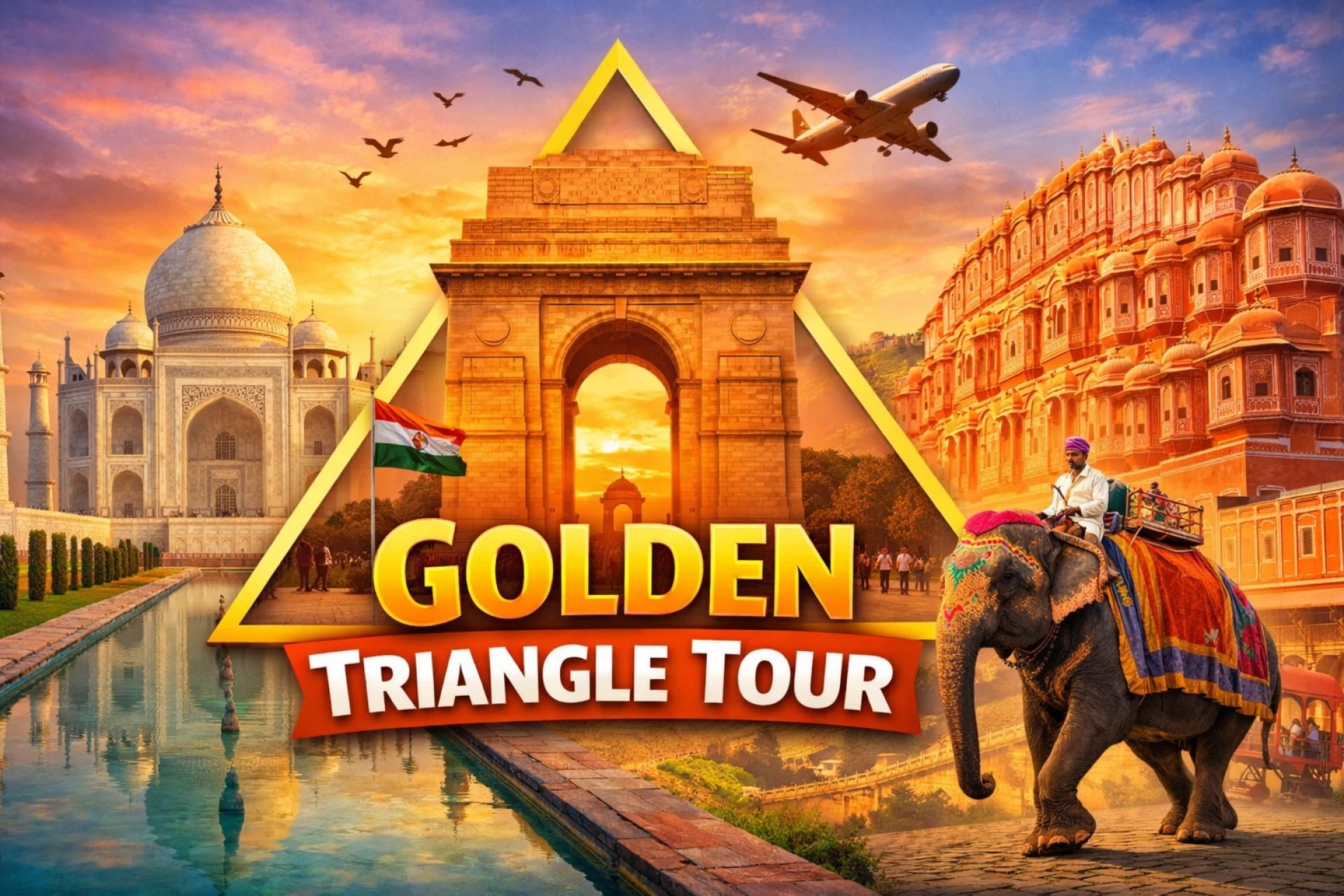
The Golden Triangle is India’s most iconic travel circuit, offering a breathtaking window into the nation’s royal past and vibrant present. Comprising the three historic cities of Delhi, Agra, and Jaipur, this route forms a geographical triangle that encapsulates the very essence of North India. For travelers seeking a blend of grand fortresses, intricate mausoleums, and bustling bazaars, this journey provides an immersive experience into the soul of the subcontinent.
The Historical Significance of the Golden Triangle
The history of the Golden Triangle is a saga of shifting empires, from the early Sultanates and the mighty Mughals to the valiant Rajput warriors. Each city served as a capital at various points in time, leaving behind a legacy that shaped modern India. Delhi represents the political heartbeat, Agra showcases the height of Mughal artistic expression, and Jaipur stands as a testament to Rajput chivalry and urban planning.
Exploring these destinations allows visitors to witness the transition of power and the fusion of different cultures. To truly appreciate these layers of time, many travelers opt for golden triangle tours by rajasthan tour services, which provide expert insights into how these three cities became the cultural pillars they are today.
Delhi: A Fusion of Eras and Architecture
Delhi is a city where the ancient and the modern coexist in a fascinating, chaotic harmony. The architectural journey here often begins in Old Delhi at the Red Fort, a massive sandstone structure commissioned by Emperor Shah Jahan. Nearby, the Jama Masjid stands as one of the largest mosques in India, showcasing the grandeur of Mughal engineering.
In contrast, New Delhi offers a look at the British colonial influence with the wide avenues of Rajpath and the imposing India Gate. However, the true architectural gems lie in the city's UNESCO World Heritage Sites. The Qutub Minar, a 73-meter tall brick minaret, displays early Indo-Islamic craftsmanship, while Humayun’s Tomb serves as a precursor to the Taj Mahal, featuring the first significant "charbagh" (four-quadrant garden) in India.
Agra: The Pinnacle of Mughal Artistry
Agra is synonymous with the Taj Mahal, a monument so sublime that it remains one of the Seven Wonders of the World. Built by Shah Jahan in memory of his wife Mumtaz Mahal, the white marble mausoleum is the ultimate expression of symmetry and decorative art. The intricate "pietra dura" (stone inlay) work and the way the marble changes hue with the shifting sunlight make it a masterpiece beyond compare.
Beyond the Taj, the Agra Fort offers a more rugged but equally impressive architectural style. This red sandstone fortress was the primary residence of the Mughal emperors until the capital shifted to Delhi. A short drive away lies Fatehpur Sikri, the "Ghost City." This short-lived capital of Emperor Akbar is perfectly preserved, showcasing a unique blend of Islamic and Hindu architectural elements that reflect Akbar’s secular vision.
Jaipur: The Pink City and Rajput Splendor
Jaipur, the capital of Rajasthan, brings a distinct flavor to the Golden Triangle. Known as the "Pink City" due to the terracotta-pink color of its historic buildings, it was India's first planned city. The architecture here is a celebration of the Rajput style, characterized by ornate balconies, arched entrances, and vibrant courtyards.
The Hawa Mahal, or Palace of Winds, is perhaps the most photographed landmark in Jaipur. Its unique five-story exterior resembles a honeycomb, designed with 953 small windows to allow royal ladies to observe street festivals without being seen. The City Palace complex remains a residence for the royal family, housing museums that display a vast collection of textiles, armor, and art.
The Majestic Forts of the Rajasthan Region
No visit to Jaipur is complete without exploring the Amer Fort, located just outside the main city. This hilltop fortress is a stunning example of Rajput architecture, blending pale yellow and pink sandstone with white marble. Inside, the Sheesh Mahal (Mirror Palace) dazzles visitors with thousands of tiny mirror tiles that illuminate the room with a single candle.
While the Golden Triangle provides a glimpse of these marvels, many travelers choose to extend their stay to explore more of the desert state. Rajasthan Tour Services specializes in creating seamless transitions from the bustling streets of Delhi to the royal landscapes of Jaipur, ensuring that the transition between these diverse architectural styles is comfortable and educational.
Cultural Immersion and Living Traditions
The Golden Triangle is not just about stone and mortar; it is a living cultural experience. In Delhi, the culture is felt in the narrow lanes of Chandni Chowk through its legendary street food. In Agra, the tradition of marble carving is still practiced by descendants of the artisans who built the Taj Mahal.
Jaipur offers a sensory explosion of color through its traditional crafts. From block-printed textiles and blue pottery to exquisite gemstone jewelry, the city’s bazaars are a hub of artistic heritage. Watching folk dancers perform under the desert stars or participating in a traditional Rajasthani feast provides a deeper connection to the land that the monuments alone cannot convey.
Planning Your Journey Through the Triangle
To make the most of this circuit, timing and logistics are key. The best time to visit is during the cooler months between October and March. While the cities are well-connected by road and rail, having a structured itinerary helps in navigating the vast history of each site. Professional services like Rajasthan Tour Services offer tailored experiences that balance the "must-see" landmarks with hidden gems that most tourists overlook.
Whether it is your first time in India or a return visit, the Golden Triangle remains a timeless journey. It is a route that celebrates the human spirit's ability to create beauty, the resilience of ancient cultures, and the enduring charm of Indian hospitality. From the minarets of Delhi to the palaces of Jaipur, every mile tells a story of a civilization that continues to inspire the world.