
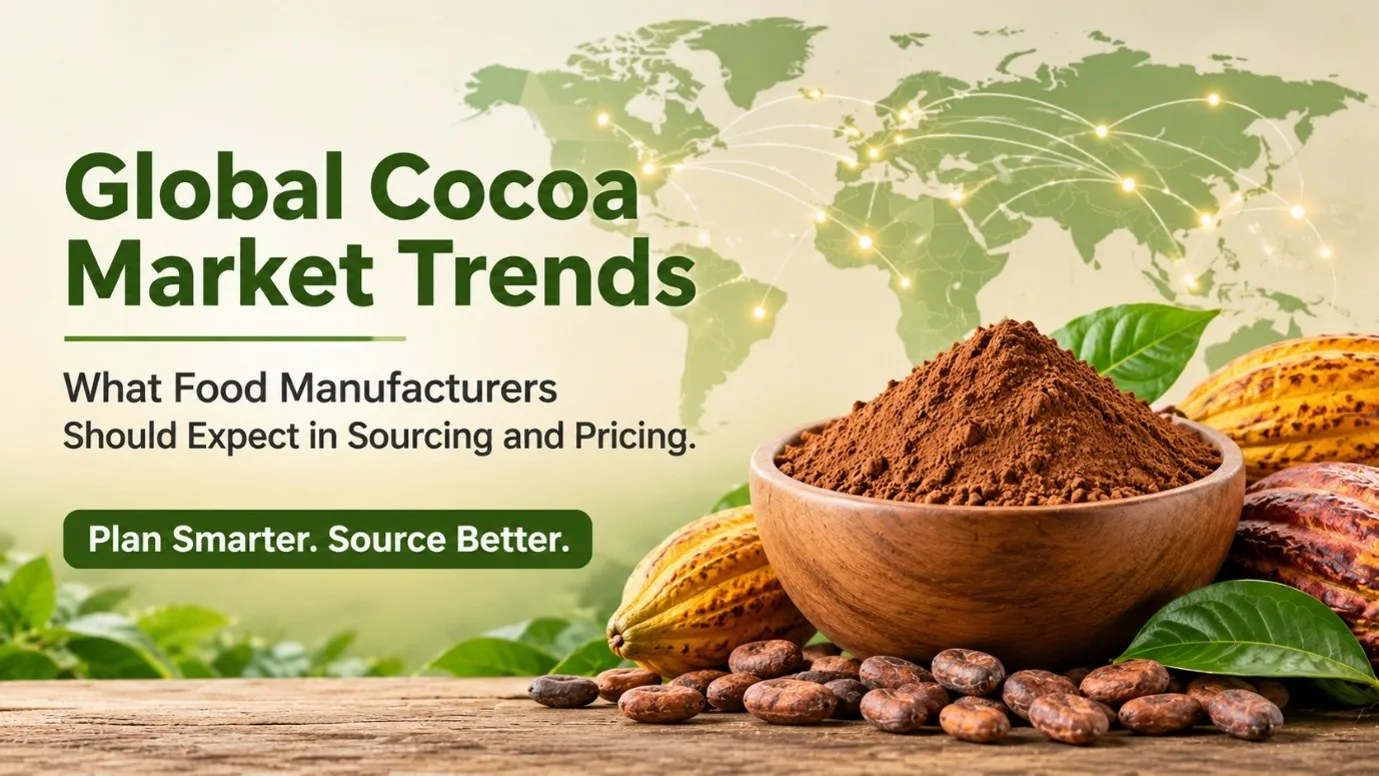
Cocoa is an essential ingredient across chocolate, bakery, dairy alternative, and beverage applications. However, changing crop outputs, weather unpredictability, fluctuating commodity prices, and international supply chain disruptions have made sourcing increasingly complex for US food manufacturers. Understanding market dynamics is crucial for procurement teams managing ingredient costs, supplier evaluations, and purchasing plans.
Global Supply & Market Drivers
West Africa—led by Côte d’Ivoire and Ghana—remains the primary cocoa-producing hub, alongside growing secondary suppliers like Ecuador, Indonesia, Brazil, and Nigeria. According to the International Cocoa Organization (ICCO), the 2024/25 cocoa year saw an estimated 8.5% production increase (4.733M tonnes) and a 3.3% decline in global grindings (4.649M tonnes), resulting in a 37,000-tonne surplus.
Despite this surplus, five key factors drive ongoing price volatility:
- Weather: Rainfall and temperature fluctuations impact yield and disease risks.
- Crop Diseases: Issues like cocoa swollen shoot disease delay immediate supply recovery.
- Global Demand: Lower grinding rates signal shifted consumer demand or elevated ingredient costs.
- Logistics: Shipping delays, freight rates, and trade policies influence landed costs.
- Market Lag: Lower bean prices rarely yield instant powder price drops due to existing inventory and processor operating expenses.
Key Considerations for Food Formulations
Bean availability does not guarantee specific processed ingredient availability. Manufacturers using Alkalized Organic Cocoa Powder (Dutch Process) must note that alkalization lowers natural acidity to alter flavor, color, and functionality compared to natural cocoa powder. Substituting cocoa types or suppliers without proper trials can alter a finished product's pH balance, color, texture, and taste profile. Furthermore, a 10–12% fat specification designates a reduced-fat powder, requiring buyers to verify pH, fineness, moisture, and microbiological standards.
5 Practical Sourcing Strategies
- Align Orders with Production: Schedule regular shipments based on lead times and actual consumption rather than buying annual requirements all at once.
- Review Detailed Specifications: Evaluate complete spec sheets (pH, fat, color, particle size) and request batch-specific Certificates of Analysis (COAs).
- Ensure Organic Compliance: Verify USDA Organic credentials and ensure electronic NOP Import Certificates are present for imported lots under the Strengthening Organic Enforcement framework.
- Inspect Packaging & Storage: Confirm suppliers utilize food-grade, sealed packaging stored in cool, clean environments to prevent quality degradation.
- Conduct Application Sampling: Test physical samples directly within target recipes (e.g., beverages or baked goods) prior to committing to bulk alkalized organic cocoa powder volume orders.
Procurement Outlook
Rather than attempting to time market bottoms, procurement teams should prioritize supply continuity, multi-region supplier qualification, and product quality. Evaluating technical parameters and securing transparent, well-documented supplier partnerships helps manufacturers navigate ongoing market shifts successfully.
Would you like help adapting this summary into a executive briefing, presentation slides, or a procurement checklist?