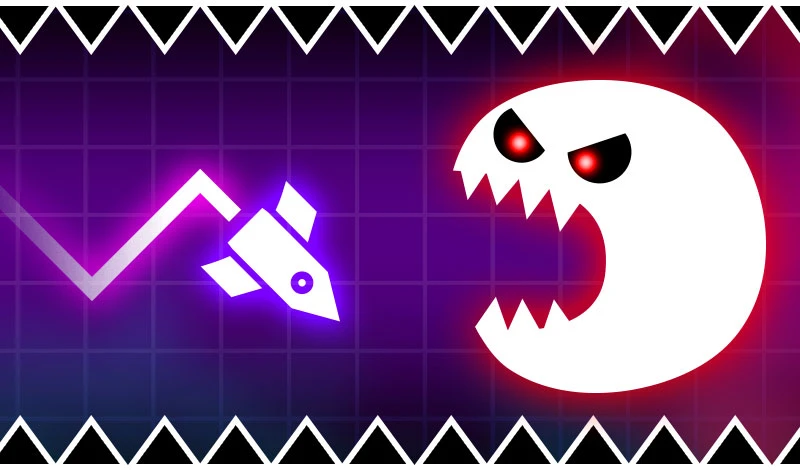
Fundamentally, Geometry Dash is deceptively straightforward: players maneuver a square-shaped icon that perpetually advances, with the sole action necessitated being a jump – accomplished by either tapping the screen or pressing a key. Nonetheless, the game's challenge is in its timing. Players must leap over spikes, evade obstacles, and maneuver through portals that alter gravity, velocity, or the configuration of the symbol. Every level is synchronized with a musical track, and the beat frequently dictates the timing of jumps and motions. A single error reverts the player to the start of the level, rendering endurance and memorization essential for achievement.
Geometry Dash encompasses more than only engaging with pre-designed stages. A much cherished feature is the level editor, enabling players to design and disseminate their own unique levels. This has resulted in a substantial online community where innovators challenge the limits of design and complexity. Certain user-generated levels are so intricate and beautiful that they rival, or even exceed, the official ones. The game has achievements, icon customisation, and hidden coins, enhancing its replayability.
Geometry Dash begins with rather uncomplicated levels but swiftly escalates in complexity. Levels such as “Deadlocked” and “Theory of Everything 2” are notorious for their intricacy. Notwithstanding — or perhaps due to — its arduous character, the game possesses a devoted community that flourishes on the challenge. Players frequently dedicate extensive hours to perfecting a single level, commemorating each successful attempt as a significant triumph. The game's compelling cycle of experimentation and failure, along with its gratifying sense of advancement, renders it attractive to both casual and dedicated gamers.