When winter temperatures begin to drop, your refrigerator may face challenges you rarely notice inside a climate-controlled kitchen. For homeowners who keep an extra refrigerator in the garage, basement, or another unheated space, cold weather can affect how the appliance operates and how well it preserves food.
Choosing between a garage-ready refrigerator and a standard refrigerator is about more than size, style, or storage capacity. The appliance must be designed to operate within the temperatures of its intended location.
If you are planning to purchase a second refrigerator or replace an older model before winter arrives, understanding these differences can help you make a more informed decision.
What Is a Garage-Ready Refrigerator?
A garage-ready refrigerator is designed and tested to operate within a specified range of surrounding temperatures. These appliances are intended for locations such as garages and basements where temperatures may fluctuate more than they would inside a home.
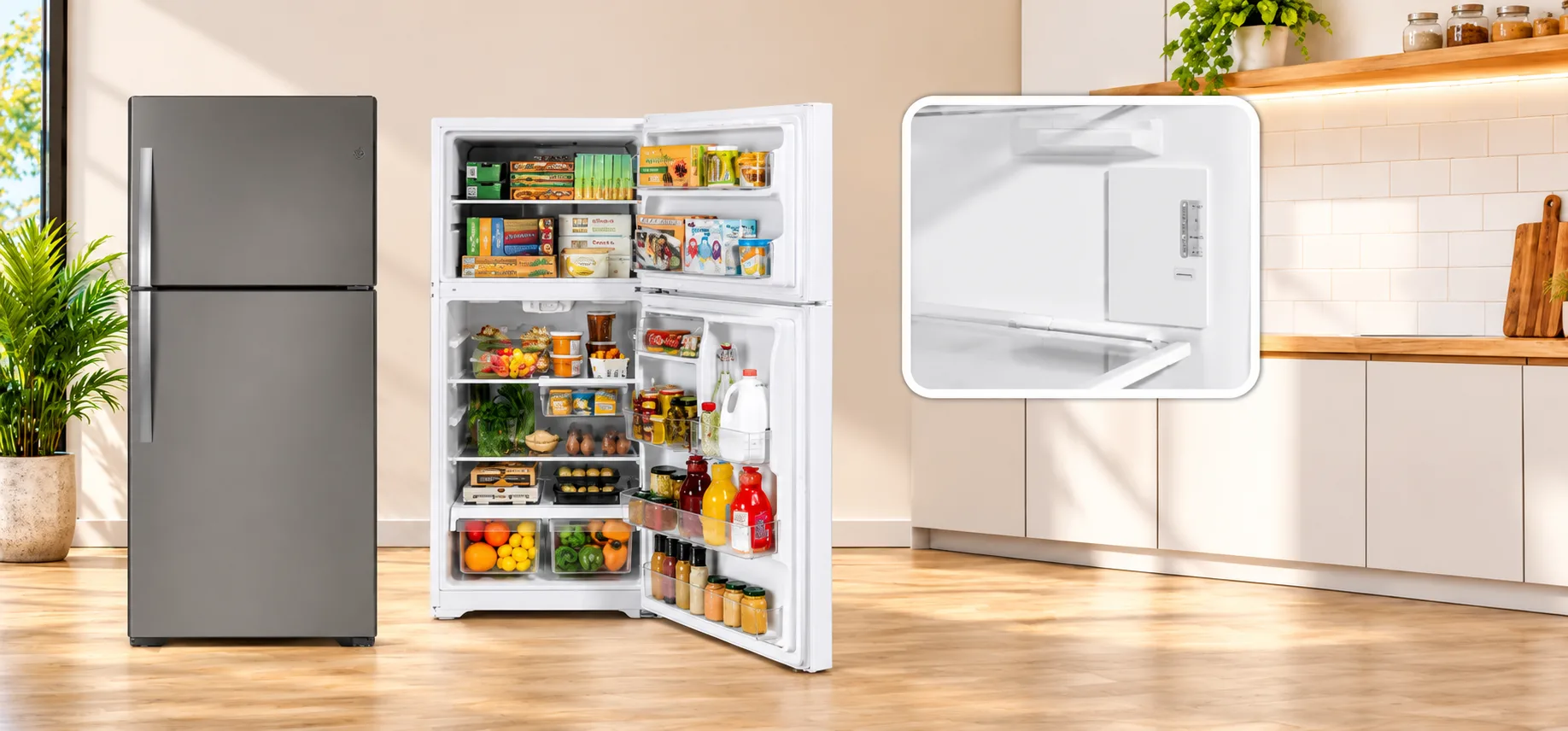
For example, selected GE garage-ready top-freezer refrigerators are rated for ambient temperatures ranging from 38°F to 110°F. This makes them a practical option for garages that remain within the manufacturer's specified limits.
Some models also offer adjustable temperature controls and convenient storage configurations for everyday groceries, beverages, and frozen foods.
However, garage-ready does not mean suitable for every winter condition. If your garage regularly drops below the minimum operating temperature listed for your refrigerator, you will need to consider another suitable location or a model specifically rated for colder conditions.
What Is a Standard Refrigerator?
A standard refrigerator is generally designed for indoor use, where room temperatures remain relatively stable. Most kitchens provide a more controlled environment than an unheated garage, helping the appliance maintain the required internal temperatures.
Standard refrigerators are available in several configurations, including French-door, bottom-freezer, top-freezer, and side-by-side designs. Each style offers different storage arrangements and convenience features.
A French-Door Refrigerator provides wide fresh-food shelves and a lower freezer compartment. A Bottom Freezer Refrigerator keeps frequently used refrigerated items at eye level while storing frozen food below.
These designs can work very well in kitchens. However, refrigerator style alone does not determine whether a model is suitable for garage use. Always check the individual model's approved operating temperature range before placing it in an unheated space.
Why Cold Weather Can Affect Your Garage Refrigerator
Refrigerators rely on temperature controls and a refrigeration system to maintain appropriate conditions inside their fresh-food and freezer compartments. When the surrounding air becomes unusually cold, the appliance may not operate as expected.
1. The Refrigerator May Not Cool Properly
When the surrounding temperature falls below the range for which a refrigerator was designed, its thermostat may not call for cooling as frequently. Depending on the model and conditions, the freezer compartment may not maintain the expected temperature.
This can become a concern when storing frozen foods for extended periods. An appliance that appears to be running normally is not necessarily maintaining safe food temperatures.
2. Food in the Refrigerator Compartment May Freeze
Cold ambient conditions can interfere with normal temperature regulation. Depending on the appliance design and settings, food in the fresh-food compartment may become colder than intended.
Produce, dairy products, beverages, and other refrigerated items may be affected. Checking the actual compartment temperature is more reliable than judging performance by how cold the garage feels.
3. Appliance Performance May Change
Refrigerator performance depends partly on the surrounding environment. Temperatures outside the manufacturer's specified range can affect operating efficiency and may place additional stress on components under extreme conditions.
A garage-ready model is designed for a defined temperature range, but it is not immune to extreme heat or cold. Following the installation instructions remains essential.
Garage-Ready Refrigerator vs. Standard Refrigerator: Key Differences
The main difference is the operating environment for which each appliance is designed.
Garage-ready refrigerators are tested for a specific range of ambient temperatures. Selected GE top-freezer models, for instance, are rated for environments from 38°F to 110°F.
Standard refrigerators are generally intended for indoor use under more stable conditions. Their suitability for a garage depends on the individual model's specifications.
Neither category is automatically the best choice for every household. Your decision should depend on where the appliance will be installed, how cold the space becomes, and how much food you plan to store.
Garage-Ready Refrigerators Available to Consider
If you need additional food storage in a garage, start by checking models that are explicitly identified as garage-ready. Riddle Appliance lists several options worth considering, subject to confirming the exact model specifications.
Frigidaire Top-Freezer Refrigerator: Model FRTE1936A
The Frigidaire FRTE1936A is a top-freezer refrigerator that may suit households looking for additional food storage. Before recommending it for garage installation, verify the exact model's garage-ready designation and minimum and maximum ambient operating temperatures with the manufacturer.
GE Top-Freezer Refrigerator: Model GTS22K
The GE GTS22K offers approximately 21.9 cubic feet of storage in a practical top-freezer configuration. Riddle Appliance lists this model as garage-ready, with a specified ambient operating range of 38°F to 110°F.
It may be a suitable option for a garage that remains within those limits. Check the full model number and manufacturer's documentation before purchasing.
GE Top-Freezer Refrigerator: Model GTS19K
The GE GTS19K provides approximately 19.2 cubic feet of storage in a top-freezer design. This model is also listed as garage-ready, with a stated operating range of 38°F to 110°F.
It is worth considering for households that need additional refrigerator space without choosing a larger model. However, the 38°F minimum is important: this model should not be assumed suitable for an unheated garage that regularly drops below that temperature.
Midea Convertible Refrigerator/Freezer: Model MRU17F5AWW
The Midea MRU17F5AWW is a convertible appliance that can operate as either a refrigerator or a freezer. Its listed ambient operating range is 38°F to 110°F in refrigerator mode and 0°F to 110°F in freezer mode.
This flexibility can be useful for households that need adaptable storage. As with any appliance, verify the exact model specifications and make sure the garage temperature remains within the approved operating range for the selected mode.
Standard Refrigerator Styles for Indoor Use
Not every household needs a garage-ready refrigerator. If you are shopping for your primary kitchen appliance, a standard model may be a better fit for your storage needs, layout, and available space.
GE French-Door Refrigerator
A GE French-Door Refrigerator offers convenient access to fresh food, wide shelving, and a separate lower freezer compartment. This layout can be practical for families who regularly store fresh produce, meal ingredients, and larger food containers.
When comparing GE Refrigerators, consider shelf adjustability, freezer capacity, dimensions, and the features that matter most to your household. Confirm the exact model's installation requirements before considering it for a garage.
GE Side by Side Refrigerators
GE Side by Side Refrigerators separate fresh and frozen food into vertical compartments, making frequently used items easier to organize and access.
This configuration can work well for busy kitchens where convenient access to both refrigerated and frozen foods is important. However, a side-by-side design does not automatically qualify as garage-ready. Check the individual model's documentation before installing it in an unheated space.
Bottom Freezer Refrigerator
A Bottom Freezer Refrigerator places the fresh-food compartment above the freezer, keeping commonly used ingredients within easy reach. This layout can be useful for households that access refrigerated items more frequently than frozen food.
Compare the available capacity, shelf arrangement, freezer organization, and dimensions before choosing a model. As with French-door refrigerators, confirm garage suitability separately if you intend to install the appliance outside a climate-controlled space.
Standard Top-Freezer Refrigerator
A standard top-freezer refrigerator offers a familiar layout with a freezer above the fresh-food compartment. It can be a practical choice for everyday household use and may offer the storage configuration you need at home.
However, not every top-freezer model is garage-ready. Even when two refrigerators look similar, their approved ambient temperature ranges may differ. Check the exact model number and manufacturer's specifications before installation.
How to Choose the Right Refrigerator Before Winter
Before purchasing a refrigerator for a garage or another unheated space, take these practical steps.
Measure the garage temperature. Check how cold the space becomes overnight and during the coldest part of winter. A thermometer can help you understand the conditions the appliance must handle.
Read the manufacturer's specifications. Look for an explicit garage-ready designation and the minimum and maximum ambient operating temperatures. Do not rely on appearance or refrigerator style alone.
Consider your storage needs. Decide whether you need extra space for drinks, groceries, frozen meals, or bulk purchases. Choose a capacity and layout that suit your household.
Check the installation location. Make sure the appliance has the required clearance, ventilation, electrical supply, and protection from unsuitable environmental conditions.
Monitor food temperatures. Use an appliance thermometer to check that refrigerated food remains at or below 40°F and frozen food remains at 0°F. If temperatures are outside safe limits, follow established food-safety guidance.
Find the Right Refrigerator for Your Home
Choosing a refrigerator for winter starts with understanding where you'll use it. A standard refrigerator may be an excellent fit for a kitchen, while a properly rated garage-ready model can provide additional storage in a suitable garage or basement.
Before making a purchase, compare the appliance's operating temperature range, storage capacity, layout, and installation requirements. These details matter more than appearance alone.
At Riddle Appliance, you can explore refrigerator options and compare available models to find one that fits your storage needs and intended installation location. Start with the GE Top Mount Refrigerators collection to review selected garage-ready options, or browse the French-door and bottom-freezer collection for other kitchen configurations.
Have questions about choosing the right garage-ready refrigerator? Contact our team at Riddle Appliance today for expert guidance and help finding the perfect fit for your home or garage!
Originally Posted At : Garage-Ready Refrigerator vs. Standard Refrigerator: Which Is Best for Winter?