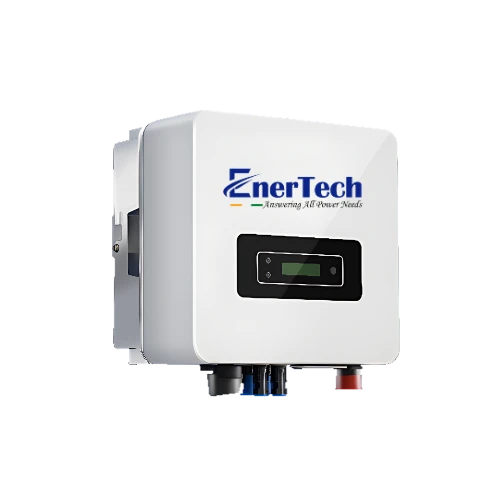
As the world accelerates its shift towards renewable energy, solar on-grid inverters are emerging as critical components in modern solar power systems. These inverters are responsible for converting the DC power generated by solar panels into AC power that can be fed directly into the grid. As solar adoption grows across residential, commercial, and industrial sectors, the technology behind on-grid inverters is also evolving rapidly.
Let’s explore the future trends shaping the solar on-grid inverter technology landscape:
1. 🌐 Smart and AI-Driven Inverters
One of the most exciting advancements is the integration of artificial intelligence (AI) and machine learning (ML) into solar inverters. Smart inverters are equipped with real-time monitoring, remote diagnostics, and predictive analytics. These systems can optimize power output based on weather patterns, load demands, and historical data, ensuring maximum efficiency and uptime.
Key Benefits:
- Automated fault detection
- Remote troubleshooting
- Intelligent load balancing
2. 📡 IoT Integration for Real-Time Monitoring
Internet of Things (IoT)-enabled inverters are transforming how users interact with their solar systems. From a mobile app or dashboard, users can track energy production, system performance, and grid export in real time. This allows homeowners and businesses to make data-driven energy decisions and ensure optimal system health.
3. 🔋 Hybrid Compatibility and Battery Integration
The future of on-grid inverters lies in their ability to seamlessly integrate with battery energy storage systems (BESS). While traditional on-grid inverters don’t support energy storage, modern models are becoming hybrid-ready, allowing users to store excess energy for backup during power outages or peak hours.
4. 🌱 Eco-Friendly and Sustainable Designs
As sustainability becomes a top priority, manufacturers are focusing on eco-friendly materials and energy-efficient components. The design and production processes of inverters are becoming more environmentally conscious, reducing their carbon footprint and enhancing overall system sustainability.
5. ⚡ Higher Efficiency and Performance
Efficiency is at the core of inverter technology. Next-generation solar on-grid inverters are designed to achieve conversion efficiencies of over 98%. Features like maximum power point tracking (MPPT) with multi-string inputs and adaptive cooling mechanisms are enhancing performance, even in partial shade or suboptimal conditions.
6. 🔌 Grid Stability and Smart Grid Support
Future on-grid inverters will play a bigger role in stabilizing grid operations. With bi-directional communication capabilities, smart inverters can assist in voltage regulation, frequency control, and reactive power compensation. This makes them a valuable asset for smart grid development in urban areas.
7. 🏢 Compact, Sleek & Modular Designs
As urban dwellings demand space-saving solutions, manufacturers are producing sleeker and modular inverter designs that are easy to install, maintain, and scale. These aesthetic improvements are particularly useful for residential rooftops and commercial installations with space constraints.
8. 🔒 Advanced Safety and Cybersecurity Features
With digital integration comes the need for enhanced cybersecurity. The latest on-grid inverters are equipped with firewall protection, encrypted communication, and automatic shutdown mechanisms during faults, ensuring safety both physically and digitally.
9. 📉 Cost Reduction Through Innovation
With increased R&D and economies of scale, the cost of solar inverters is decreasing. Simultaneously, innovations in design and manufacturing are enabling better performance at lower prices, making premium features more accessible for average users.
10. 🌍 Support for Decentralized Energy Grids
Future solar on-grid inverters will support peer-to-peer energy trading and virtual power plants (VPPs). This means households could sell excess energy to neighbors or local communities, enabling a decentralized, user-driven energy ecosystem.
Conclusion
The evolution of solar on-grid inverter technology is vital to the success of clean energy adoption. From AI-enhanced performance and real-time monitoring to hybrid integration and smart grid support, these inverters are becoming more intelligent, efficient, and future-ready.