
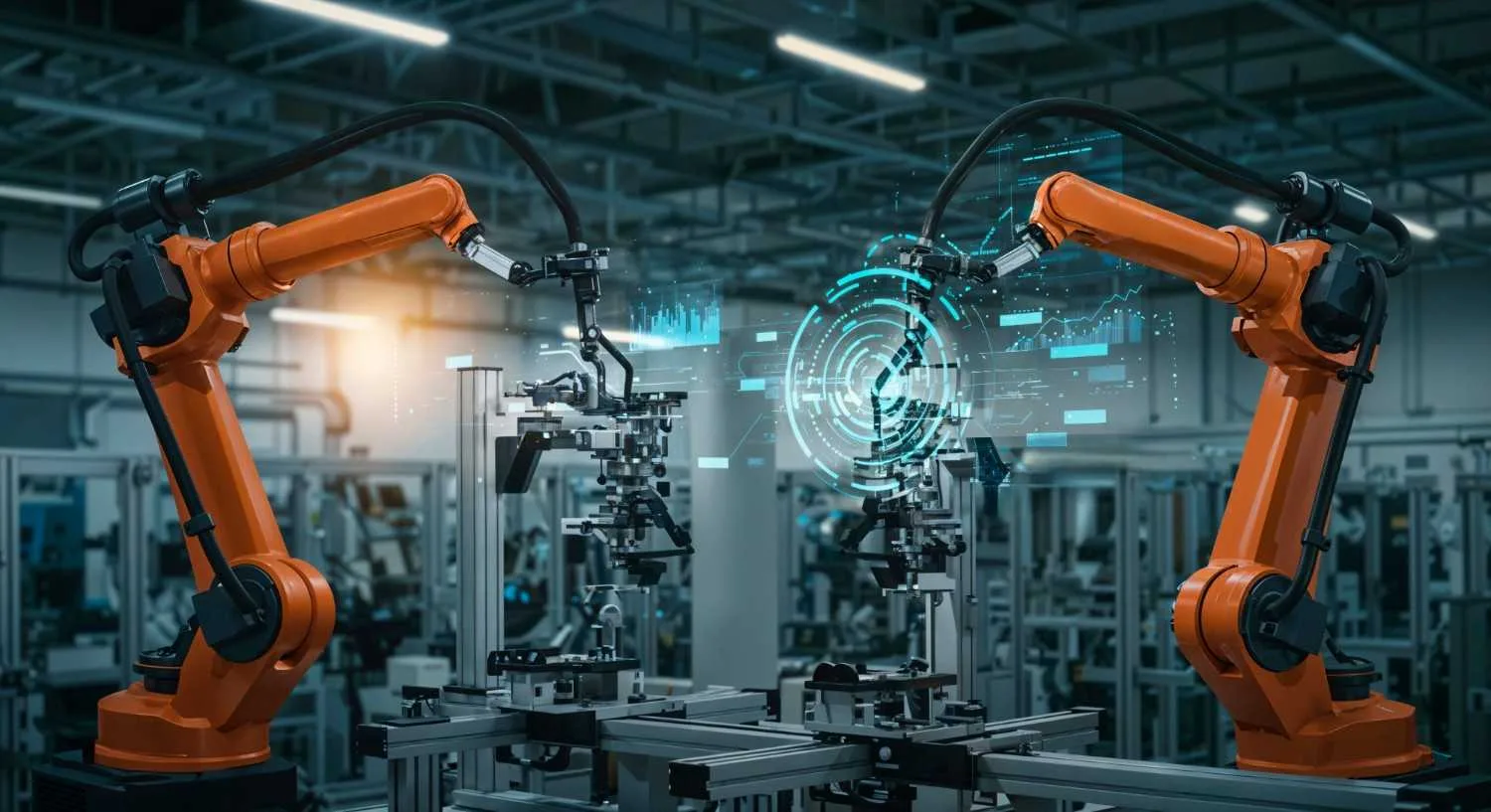
A factory in Pune had a problem no one could explain. One of their CNC machines kept producing slightly off-spec parts, but only on certain shifts. Not every time. Not enough to trigger a shutdown. Just enough to cause rework, waste material, and burn time. For months, the quality team ran checks, swapped operators, and changed tool settings. Nothing stuck.
Then someone pulled the vibration data logged by the machine sensors over six months. The pattern was clear once you knew where to look: the deviation happened when ambient temperature crossed 34 degrees, and the spindle had been running for more than four hours without recalibration. The machine was fine. The oversight system around it wasn't.
That story matters because it captures exactly where smart manufacturing engineering is headed by 2030. Not bigger robots or flashier automation. Better thinking, built into the system.
Why predictive systems are replacing reactive ones
Right now, most factories still run on what you could call "fix-it-when-it-breaks" logic, even the ones that think they've moved past it. Scheduled maintenance is an improvement, but it's still a guess. You're replacing parts on a calendar, not because the data says they're failing.
Predictive maintenance changes that. Sensors feed continuous data on temperature, vibration, torque, and pressure. Machine learning models read those patterns and flag problems before they become breakdowns. According to a 2026 smart manufacturing market report, facilities using predictive systems have cut unplanned downtime by over 30%. That's not marginal. That's the difference between a plant that ships on time and one that doesn't.
For students entering smart manufacturing engineering, this is the skill gap that matters most right now. It's not enough to know how a motor works or how to write a Python script. You need to connect those two things and know what a vibration anomaly actually means for that specific machine in that specific environment.
Digital twins: testing decisions before making them
A digital twin is a live virtual model of a physical asset, whether that's a machine, a production cell, or an entire factory floor. The early versions were mostly for monitoring: you could watch what was happening in real time. What's shifting now is the ability to test changes in the twin before touching the real system.
Say a production team wants to rearrange a line to add a new product variant. Traditionally, they'd plan it on paper, implement it, and discover the bottlenecks only after things slowed down. With an active digital twin, you run the change virtually, see where cycle times stretch, and fix the flow before a single bolt is moved. Siemens has been building this kind of simulation capability into its factory design tools since at least 2023, and adoption is spreading fast.
By 2030, expecting to simulate before you build will be standard practice, not a luxury reserved for large plants. This means smart manufacturing engineering students who understand both process design and simulation software will be more immediately useful than those who know only one.
Cobots aren't replacing workers; they're splitting the work differently
Industrial robots used to live in cages. High-speed, high-precision, no flexibility. You programmed a path, and they followed it forever, or until something changed and someone had to reprogram them from scratch.
Collaborative robots work differently. They use force sensors and vision systems to detect what's around them and adjust. They can work next to people without barriers. Mitsubishi Electric deployed a system in 2023 where cobots in a food-processing plant responded to voice commands, cutting a task that took 60 hours per week down to about 5. That kind of result doesn't come from the robot being clever. It comes from the engineer who designed the task split correctly.
That's the real job: deciding what the human should do and what the machine should do, and designing the handoff between them so both run at full effectiveness. Getting that wrong in either direction wastes either the worker's skill or the cobot's precision. Getting it right is what separates a well-designed cell from a frustrating one.
Why 5G on the factory floor changes more than just speed
The usual way this gets explained is: 5G is faster, so data moves faster. That's true, but it misses the point.
5G makes edge computing practical at scale. It means dozens of machines can each have local processing, connected wirelessly without the cable infrastructure costs that made this difficult before. India's government has been actively funding smart infrastructure projects, including 5G-enabled factory floors, as part of its Industry 4.0 push, particularly in manufacturing corridors in Gujarat and Maharashtra.
For a smart manufacturing engineering student, this is a reason to start understanding network architecture now. Not at the level of a telecom engineer, but enough to know whether your inspection system's decision pipeline can actually keep pace with the line it's watching.
Energy as a design constraint, not a cost line
A few years ago, energy efficiency in manufacturing was mostly an accounting exercise. Audit the plant, find wasteful equipment, replace it, and note the savings. That was the extent of it.
That approach is running out of road. Customer contracts, regulatory requirements, and import/export rules are increasingly tied to verified production-level emissions data. By 2030, energy use won't just be a cost to manage; it'll be a specification you design around from the start, the same way you'd design around cycle time or material cost.
What Industry 5.0 actually expects from the people building it
Industry 4.0 was about connecting machines and collecting data. The term "Industry 5.0" has started appearing more regularly since 2023, and what it's really describing is a shift in priority: the infrastructure is largely in place, so now the question is what humans and machines can do together that neither does well alone.
That's not a philosophy exercise. It's a practical design question. A person can notice that something feels wrong before the sensors register it. A machine can run the same torque setting for 12 hours without drifting. A well-designed system uses both of those things on purpose, not by accident.