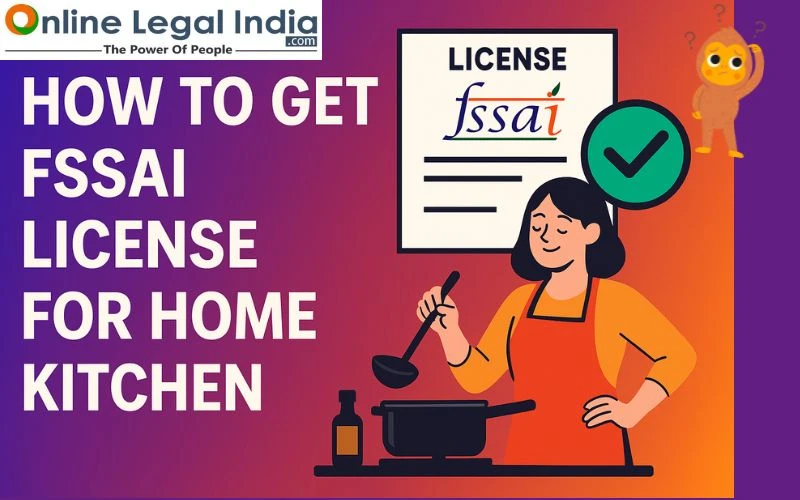
If you’re turning your passion for cooking into a business, getting an FSSAI license for home kitchen is the first step to sell legally and build trust. This guide explains eligibility, document requirements, the online process, and common mistakes—so you can start selling with confidence. If you need end-to-end assistance, Online Legal India can help you apply smoothly.
Do You Need FSSAI Registration or License?
FSSAI (Food Safety and Standards Authority of India) requires food business operators—including home kitchens—to be registered or licensed.
- Basic Registration (Form A): For small home businesses with lower annual turnover (entry level).
- State License (Form B): For higher turnover or wider operations.
- Central License: For large-scale or inter-state operations.
Most home chefs and bakers typically start with Basic Registration and upgrade as they grow.
Benefits of Getting FSSAI for a Home Kitchen
- Legal compliance: Sell without risk of penalties.
- Customer trust: FSSAI number on labels boosts credibility.
- Marketplace access: Many platforms require it for selling homemade products online.
- Growth ready: Easy to scale from registration to license as orders increase.
Documents Required (Typical)
Keep clear, scanned copies ready:
- Applicant’s photo and identity proof (Aadhaar/PAN)
- Address proof of premises (rent agreement/utility bill)
- Business details (proprietor name, mobile, email)
- Kitchen layout or simple description of food preparation area
- List of food products you intend to make (e.g., cookies, pickles, cakes)
- Declaration on food safety and hygiene
- For higher categories: water test report, NOC where applicable, and Form B
Step-by-Step: How Can I Get FSSAI License for Homemade Food?
Follow these steps to complete food product registration in India for a home kitchen:
- Determine category: Start with Basic Registration if you’re small-scale.
- Create login on FoSCoS: Register on the official FSSAI portal (FoSCoS).
- Fill the form: Provide personal details, business name (e.g., “Sreya’s Home Kitchen”), address, and product list.
- Upload documents: Identity, address proof, photos, product list, and declarations.
- Pay the fee: Fees vary by category and state.
- Application review: Authorities may ask for clarifications or an inspection (mainly for larger categories).
- Get your FSSAI number: Once approved, download the certificate. Display it in your kitchen and print the number on labels.
Labeling Basics for Homemade Products
Even for small batches, use simple, compliant labels:
- FSSAI logo and 14-digit FSSAI number
- Product name (e.g., “Chocolate Walnut Brownies”)
- Ingredient list (descending order) & allergen info (nuts, dairy, gluten)
- Net quantity, manufacturing date, best-before/use-by
- Your name and address (FBO details)
- Batch/lot code and customer contact
Good labels build trust and reduce customer queries—especially when selling homemade products online.
Hygiene & Safety Tips for Home Kitchens
- Maintain a clean workspace; sanitize counters and utensils.
- Use potable water; store ingredients in sealed containers.
- Follow FIFO/FEFO for inventory (First In First Out / First Expire First Out).
- Keep separate tools for veg/non-veg if applicable.
- Wear hair caps, gloves, and maintain personal hygiene.
- Track temperature for perishable products (refrigeration where needed).
These practices support compliance and reduce the chance of complaints or spoilage.
Common Mistakes to Avoid
- Applying for the wrong category (Basic vs License).
- Missing documents or unclear scans leading to delays.
- Not listing all products—update your license when you expand.
- Skipping label essentials (especially FSSAI number and allergens).
- Ignoring renewal reminders—renew before expiry to avoid penalties.
FAQs
Q1. How can I get FSSAI license for homemade products quickly?
Prepare documents in advance, choose the correct category, and ensure accurate product lists. Using a professional filing service like Online Legal India reduces errors and speeds approvals.
Q2. Is FSSAI mandatory for a small home baker?
Yes, at least Basic Registration is generally required for any commercial food activity.
Q3. What if I only sell occasionally?
If money changes hands, it’s a business activity—register to stay compliant.
Q4. Can I sell across India with Basic Registration?
Basic suits local, small-scale sales. For wider or inter-state sales and higher turnover, upgrade to State or Central License.
Q5. What about platforms and deliveries?
Marketplaces and delivery apps often require an FSSAI number before onboarding, which is key when selling homemade products online.
Why Choose Online Legal India?
From document collection to application filing, Online Legal India provides guided support for FSSAI license for home kitchen applications. You’ll get checklist-based document prep, error-free form filing, ongoing updates, and help with renewals or upgrades as your business grows.
Conclusion
Getting an FSSAI license for home kitchen is simpler than it seems when you know the steps. Whether you’re wondering how to get FSSAI license for homemade products or planning full food product registration in India, start right, label correctly, and maintain hygiene. Need a hassle-free journey? Partner with Online Legal India and focus on what you love—creating delicious, safe homemade products.