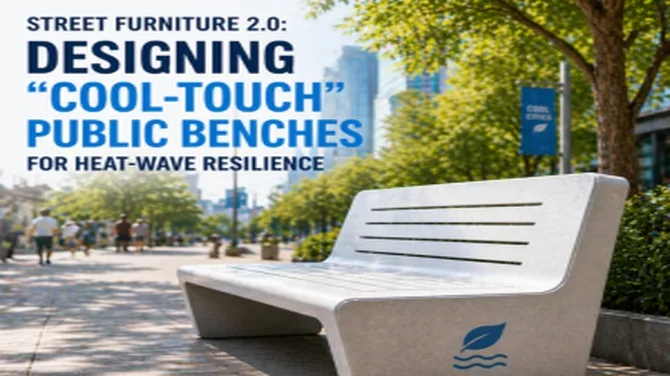
As cities expand and urban temperatures rise, climate-resilient infrastructure is becoming increasingly important. Public seating is an essential part of urban design, but traditional metal and concrete benches can become uncomfortable under direct sunlight. This is why frp benches are gaining attention as a practical option for parks, campuses, bus stops, and modern public spaces.
Made from Fibre Reinforced Plastic, FRP benches combine lightweight construction, corrosion resistance, and design flexibility, making them suitable for various outdoor applications.
The Growing Need for Heat-Resilient Public Seating
Heat waves can make outdoor public spaces uncomfortable, particularly for senior citizens, children, and daily commuters. Metal benches may become extremely hot during summer, while wooden benches can crack or splinter after prolonged exposure to changing weather conditions.
Urban planners increasingly prioritise thermal comfort, durability, safety, and low maintenance when selecting street furniture. FRP material offers an alternative that supports these requirements while helping create attractive and functional public environments.
Why FRP Benches Are Suitable for Outdoor Spaces
One major advantage of FRP is its relatively low thermal conductivity compared with metals. Consequently, FRP surfaces generally transfer heat less readily than steel or iron. However, actual surface temperatures depend on sunlight exposure, colour, and environmental conditions.
FRP benches also offer resistance to rust and corrosion, making them suitable for outdoor locations exposed to rain and humidity. Their lightweight construction can simplify transportation, handling, and installation.
These benefits make FRP seating a practical choice for public parks, school campuses, shopping complexes, railway stations, and smart city walkways.
FRP Garden Bench for Parks and Landscapes
An frp garden bench combines functional seating with modern design. Available in different colours, shapes, and configurations, these benches can complement landscaped gardens, residential communities, institutional campuses, and recreational areas.
Their weather-resistant properties make them suitable for many outdoor environments, while their design versatility allows architects and landscape designers to coordinate seating with surrounding greenery and other street furniture.
Selecting the appropriate bench design and providing shade where possible can further improve outdoor seating comfort during hot weather.
Choosing Reliable FRP Benches Manufacturers
Working with experienced frp benches manufacturers helps buyers identify products that meet their project requirements. Before purchasing, consider material quality, structural strength, weather resistance, surface finish, installation requirements, and expected maintenance.
For public infrastructure projects, benches should be designed to withstand anticipated usage and installed securely in accordance with site requirements. Regular cleaning and inspection can also help maintain their appearance and performance.
Supporting Climate-Smart Urban Development
FRP benches can contribute to modern urban planning by offering lightweight, corrosion-resistant seating with reduced dependence on rust-prevention treatments. Their durability may also help reduce certain maintenance activities over their service life.
However, sustainability depends on factors such as manufacturing processes, product lifespan, and end-of-life management. Evaluating these considerations helps infrastructure developers make informed purchasing decisions.
Conclusion
As cities adapt to rising temperatures and changing environmental conditions, comfortable and durable public seating is becoming increasingly important. FRP benches offer a practical alternative for outdoor spaces because of their corrosion resistance, design flexibility, and relatively low thermal conductivity compared with metals.
By choosing a suitable FRP garden bench from reliable FRP benches manufacturers, architects, municipalities, and landscape designers can create attractive, functional, and climate-conscious public spaces for everyday use.