Life can feel overwhelming at times. Between work responsibilities, family commitments, financial pressures, and the constant stream of information from our digital devices, many people find themselves struggling to keep up. What starts as occasional stress can gradually turn into emotional exhaustion, anxiety, and a persistent feeling of being stuck.
If you've been wondering how to not feel overwhelmed, you're not alone. Millions of people experience periods where life's demands seem too heavy to carry. The good news is that support is available, and therapy can provide the tools and guidance needed to help you regain control, restore balance, and truly breathe again.
Understanding the Feeling of Being Overwhelmed
Feeling overwhelmed happens when the demands placed on you exceed your perceived ability to cope. It can affect your emotional, mental, and physical well-being. You may notice symptoms such as:
- Constant worry or anxiety
- Difficulty concentrating
- Irritability or mood swings
- Trouble sleeping
- Physical tension and fatigue
- Feeling emotionally drained
- Loss of motivation
When stress becomes chronic, it can make even simple tasks feel impossible. You may find yourself avoiding responsibilities, withdrawing from loved ones, or feeling trapped in a cycle of stress and exhaustion.
The first step toward healing is recognizing that being overwhelmed is not a sign of weakness. It is often your mind and body signaling that something needs attention and care.
Why Therapy Can Make a Difference
Many people believe they need to handle everything on their own. However, seeking professional support is one of the most effective ways to improve mental well-being.
Therapy provides a safe, confidential space where you can openly discuss your thoughts, emotions, and challenges without judgment. A trained therapist helps you understand the root causes of your stress and develop healthier coping strategies.
Rather than simply managing symptoms, therapy helps address the underlying patterns that contribute to feeling overwhelmed.
Gaining Clarity and Perspective
When stress builds up, it's easy to lose perspective. Problems can seem larger than they actually are, and negative thoughts may begin to dominate your thinking.
Therapy helps you organize your thoughts and gain clarity. By talking through your concerns, you can identify what's within your control and what isn't. This shift in perspective often brings immediate relief and helps reduce feelings of helplessness.
Learning Practical Coping Skills
One of the most valuable aspects of therapy is learning tools you can use in everyday life. These may include:
- Stress management techniques
- Mindfulness practices
- Breathing exercises
- Time management strategies
- Healthy boundary-setting
- Emotional regulation skills
These techniques empower you to respond to challenges more effectively rather than feeling consumed by them.
How Therapy Helps You Breathe Again
The phrase "breathe again" resonates deeply because stress often affects our breathing patterns. When we're anxious or overwhelmed, we tend to take shallow breaths, keeping the body in a heightened state of alertness.
Therapists often teach relaxation and breathing techniques that help calm the nervous system. These practices can:
- Reduce anxiety symptoms
- Lower heart rate
- Improve focus
- Promote better sleep
- Create a sense of emotional balance
Many clients report that after beginning therapy, they feel lighter, calmer, and more capable of handling life's challenges. They are finally able to breathe again—not just physically, but emotionally as well.
Discovering the Benefits of Breathe Again Wellness
Mental health is about more than simply reducing stress. It's about creating a sustainable sense of well-being that supports every area of your life.
The concept of breathe again wellness focuses on holistic healing and emotional resilience. Therapy plays a crucial role in this journey by helping individuals develop self-awareness, strengthen coping mechanisms, and improve their overall quality of life.
When emotional wellness improves, people often experience positive changes in other areas as well, including:
- Better relationships
- Increased confidence
- Improved productivity
- Enhanced physical health
- Greater emotional stability
- A stronger sense of purpose
Therapy supports long-term wellness by addressing both immediate concerns and future challenges.
How to Not Feel Overwhelmed: Practical Steps You Can Start Today
While therapy offers professional support, there are also simple strategies you can implement right away if you're wondering how to not feel overwhelmed.
1. Break Tasks Into Smaller Steps
Large responsibilities can feel intimidating. Divide tasks into smaller, manageable actions and focus on completing one step at a time.
2. Prioritize What Matters Most
Not everything requires immediate attention. Create a list of priorities and focus on the most important tasks first.
3. Practice Deep Breathing
Even a few minutes of intentional breathing can help calm your nervous system and reduce stress.
4. Set Healthy Boundaries
Learn to say no when necessary. Protecting your time and energy is essential for maintaining emotional health.
5. Limit Information Overload
Constant exposure to news, social media, and digital notifications can increase feelings of overwhelm. Schedule regular breaks from screens.
6. Stay Connected
Talking to trusted friends, family members, or a therapist can provide emotional support and perspective.
7. Seek Professional Help Early
You don't need to wait until you're in crisis to benefit from therapy. Early intervention can prevent stress from escalating into more serious mental health concerns.
The Importance of Reaching Out
One of the biggest obstacles people face is believing they must handle everything alone. In reality, connection is a powerful part of healing.
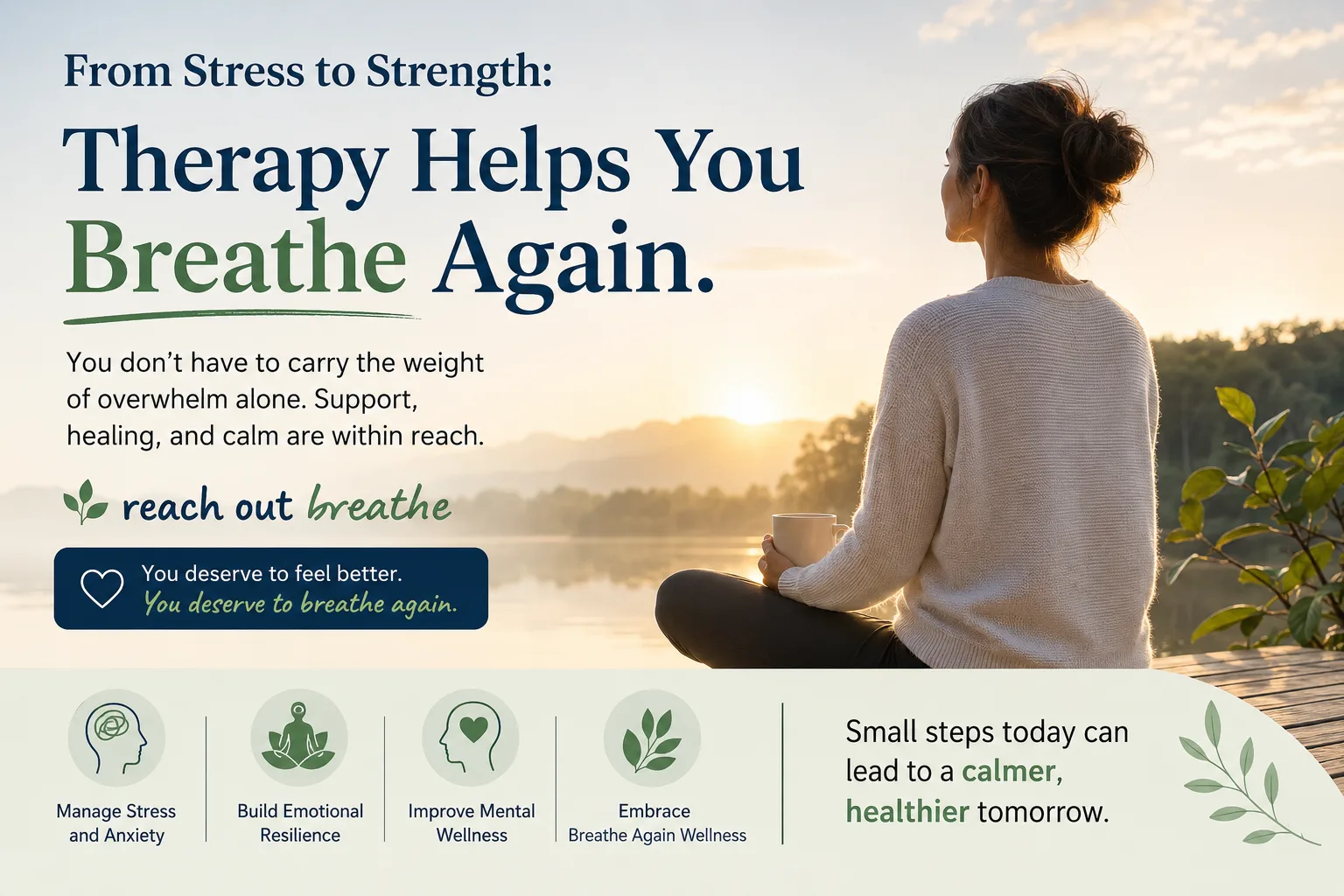
If you're struggling, remember this simple message: reach out breathe.
Reaching out for support can be the turning point that helps you move from survival mode to a healthier, more balanced life. Whether it's speaking with a therapist, confiding in a trusted friend, or joining a support group, connection reduces isolation and reminds you that help is available.
Many individuals discover that asking for help is not a sign of weakness but an act of courage and self-care.
Therapy Is an Investment in Yourself
Mental health deserves the same attention and care as physical health. Just as you would seek medical treatment for a physical illness, therapy provides professional guidance for emotional and psychological challenges.
Therapy is not about fixing something that's broken. It's about gaining insight, building resilience, and creating a life that feels more manageable and fulfilling.
No matter where you are in your journey, support is available. You don't have to carry the weight of stress alone.
Final Thoughts
Feeling overwhelmed can make life seem difficult, exhausting, and uncertain. But those feelings do not have to define your future. Therapy offers a pathway toward greater self-awareness, healthier coping skills, and lasting emotional well-being.
If you've been searching for answers about how to not feel overwhelmed, consider taking the next step toward support. Through therapy, you can gain the tools needed to manage stress, improve your mental health, and reconnect with a sense of calm.
Remember, healing begins when you choose to reach out breathe, embrace support, and prioritize your emotional well-being. With the right guidance and commitment to self-care, you can experience the transformative benefits of breathe again wellness and move forward with greater confidence, clarity, and peace.