
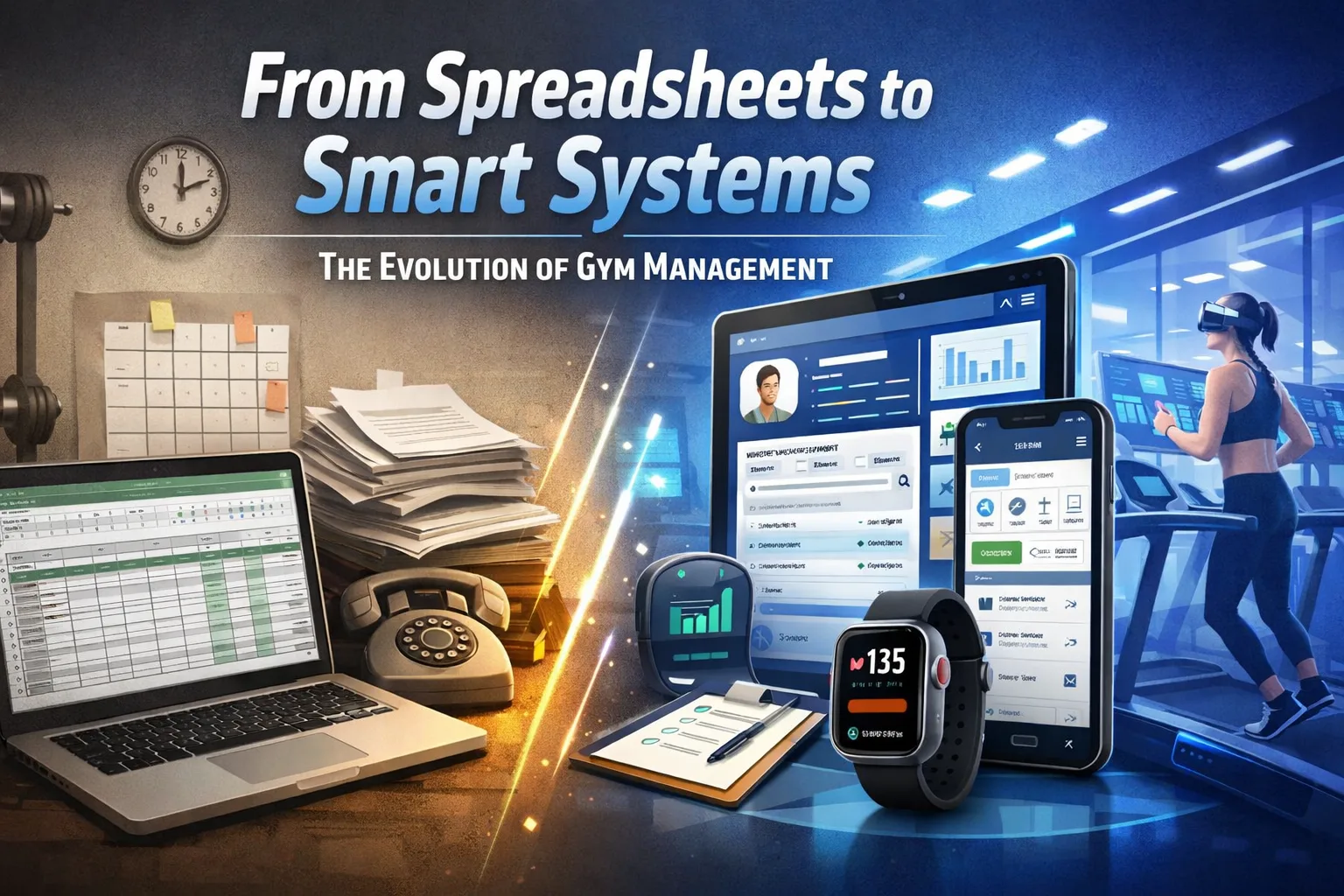
The entrepreneurs implemented spreadsheets, handwritten forms, and personally conducted enrolments to track appointments, clients, and payments when they first established a wellness organisation. These elementary setups, commonly involving basic Excel sheets and piles of clipboards, were just adequate for diminutive membership pools and manageable administrative needs. However, as fitness facilities expanded, so did the intricacy: staff dedicated more energy to clerical tasks than to supporting members' goals, prospective clients were missed, membership expirations lapsed, and hand-written tracking descended into disorder.
Presently, fitness center administration has seen a major transformation. Shifting from inflexible spreadsheets to advanced management systems augmented by artificial intelligence reflects a wider technological evolution impacting the whole fitness industry.
The Era of Spreadsheets: Manual, Dispersed, and Generally Ineffective
In the time before dedicated software, gym owners juggled numerous roles, including front desk attendant, membership administrator, scheduler, accountant, and marketer. The major difficulties were as follows:
- Errors are likely to occur when data is entered by hand.
- Spreadsheets are scattered across various devices without synchronization or backup copies.
- Absence of automated alerts for payments or renewals.
- Minimal or no clarity regarding member patterns or income.
This structure was precarious; it functioned when gyms were small but could not expand. As facilities grew, adding classes, equipment, and branches, owners became overwhelmed with administrative duties while opportunities diminished.
The Initial Shift: Fundamental Fitness Center Software
The first generation of digital management solutions substituted physical documentation with centralized software. The management of these systems included:
- Attendance records
- Billing
- Class planning
- Client tracking
Compared to spreadsheets, these early digital tools significantly cut down on the manual effort, provided more dependable information, and furnished a unified control panel for core functions.
Nevertheless, restrictions quickly emerged because these initial platforms lacked automated processes, immediate feedback, and different ways of communication. Managers still needed to verify class attendance records manually, send emails about the renewals, or update timetables. It was an improvement over spreadsheets, but still required considerable manual effort.
The Modern Era: Intelligent Fitness Center Software
Today, various platforms demonstrate how software has progressed into smart systems that go beyond mere administrative functions. These contemporary systems include attributes like:
- Automatic reminders for membership renewals
- Class scheduling and reservations
- Attendance and entry control, including biometric integration
- Unified interfaces for users for managing multiple premises effortlessly
Gym management interface maintains consistent member engagement through automated features such as WhatsApp notifications, scheduling reminders, membership renewal alerts, and follow-ups, all without manual intervention.
Other platforms have also advanced this domain. Some combine automation with customized alerts and payment processing to reduce manual oversight. Others focus on reliable mobile connectivity and built-in app features for better member interaction. Additionally, certain systems use AI-assisted scheduling, billing, and communication as part of comprehensive administrative solutions.
These platforms are no longer just record‑keeping tools; they function as operational drivers, helping gyms operate more shrewdly and expand more rapidly with exceptional ease.
AI Enters the Gym: Sharper, Quicker, and Tailored
AI is redefining fitness facility operations and transforming software from static instruments into perceptive systems. Artificial intelligence performs unforeseen tasks to help with alert scheduling; it collects data, makes predictions, and customises interactions for management and staff.
How is AI reshaping gym administration?
1. Automated Procedures with Smart Operations
Standard procedures call for hand-operated actions: checking attendance logs, dispatching written materials, and modifying payment records. AI systems are able to simplify entire workflows. For instance, should a patron have been absent for a while, the platform can then automatically trigger a set of tailored notifications prompting their re-engagement.
This kind of automation substantially lessens operational hurdles and allows staff to concentrate on member engagement and instruction.
2. Tailored Member Experience
Patrons anticipate tailored engagement, rather than standard exchanges. Machine learning models readily analyze navigation habits, engagement rhythms, and user leanings to suggest valuable training modules, fitness regimens, and nutritional advice, or even prompt ideas for sustaining enrollment. Such individualized attention helps maximise member satisfaction and prolong holding power.
3. Insightful Evaluation and Prospective Data
In addition to reporting previous events, AI assists in anticipating forthcoming outcomes. By way of illustration:
Which members are likely to depart?
Which classes are predicted to have massive enrollments?
Which marketing messages are highly appreciated by specific groups?
These platforms are now viewing gym data as operational insight, rather than just historical records. This level of awareness enables proprietors to act before issues become significant obstacles.
4. Coordinated AI Frameworks
Some software solutions employ multiple AI components, each handling areas like outreach, member retention, pricing, or daily tasks, operating collaboratively instead of separately. This establishes a dynamic structure that continuously adjusts workflows and organizational functions in real time.
This evolution signifies a core change in the gym software, which is evolving from a mere utility to an intelligent collaborator in your daily operations.
Advantages of AI‑Enhanced Fitness Center Administration
Modern fitness enterprises benefit substantially from AI and automated processes:
Operational Effectiveness
Automated billing, scheduling, and contact minimize manual tasks and decrease human error. Personnel can dedicate energy to coaching and relationships rather than administrative overhead.
Improved Member Loyalty
Personalized communications, curated class recommendations, and engagement triggers help maintain member activity and long‑term commitment.
Informed, Immediate Decision‑Making
Access to live data displays and predictive metrics allows owners to react swiftly to emerging trends and opportunities.
Heightened Business Understanding
AI enables dynamic strategy adjustments by identifying patterns that might be missed by human observation, such as changes in class popularity or signs of possible departures.
Selecting the Optimal Fit for Your Facility
Given the numerous available choices, choosing the correct software necessitates understanding your specific prerequisites:
- Small, specialized studios may value straightforward interfaces and mobile booking capabilities.
- Facilities spanning several locations require adaptable systems featuring unified reporting and entry control.
- Personalized services and automated marketing greatly benefit fitness facilities that prioritize member participation.
While some systems focus on advanced features and mobile engagement for specialized or premium gyms, others combine software automation with operational management for traditional fitness centers.
The Path Forward: Future Trends
Fitness center management software will only become more sophisticated. We are already observing the emergence of predictive retention models, dynamically adjusted pricing proposals, and AI-guided coaches that directly assist members with training programs and motivation.
The fitness location of the future is beyond just a physical area; it's a linked setting powered by data, computerization, and smart choices. The emphasis will increasingly move towards bettering the member journey, gaining foresight, and ensuring routine operations proceed without interruption.
For proprietors, this implies adopting scalable technologies, simplifying processes that qualify for automation, and highlighting key insights that assist you in flourishing instead of just persevering within the highly demanding fitness sector.
In Conclusion
The change in fitness center management, transitioning from basic records to smart, AI-driven platforms, shows how technology ultimately helps both members and the businesses. Rather than being bogged down by dull routines, proprietors now possess insightful assistants that handle daily necessities and provide valuable understanding.
Modern setups do more than just keep data; they utilize it to streamline operations, personalize member engagement, and secure the lasting prosperity of exercise locations.
Fitness Studios embracing these clever instruments now are setting the stage for a smarter, more effective, and client-focused future.