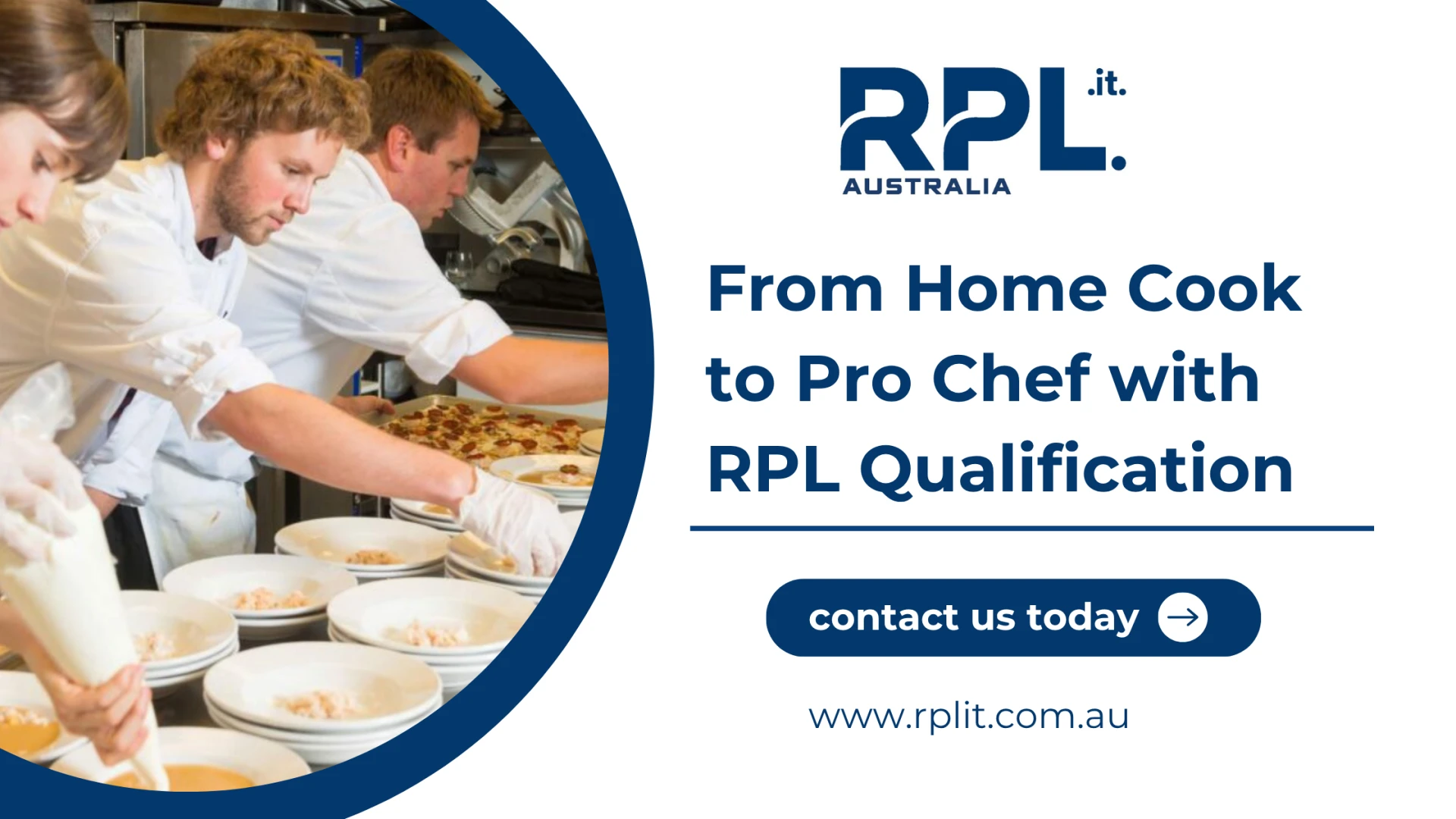
That doesn't automatically make you a professional chef, but here's the thing: all that experience actually counts for something. Lots of people have legitimate skills but zero paperwork to prove it.
That's where Recognition of Prior Learning comes in. It takes your years of actual cooking and converts them into formal qualifications, without making you sit through beginner classes relearning how to dice an onion.
What RPL Actually Does
RPL looks at what you already know and matches those skills against official training standards. If your experience lines up with what they're looking for, you get the qualification without the fluff.
You don't waste time on basics you mastered five years ago, which saves both time and money. It works for anyone with real-world experience in their field, not just cooking, either.
Getting Qualified in Commercial Cooking
If you've been working in cafes, restaurants, or handling catering events, you've probably got solid skills already. You know your knife work, understand food safety, and can manage rush hours without completely losing it. An RPL Certificate III in Commercial Cookery recognizes exactly that kind of experience.
This qualification covers things like proper food prep and cooking techniques, kitchen operations and keeping things moving smoothly, health and safety standards, and the basics of menu planning.
When you've got years of cooking under your belt, you can skip the classroom part entirely. Just gather proof of your work, photos, references, logbooks, whatever demonstrates your skills. Submit it and get assessed. If your skills match up with what they need, the certificate's yours.
Moving Into Hospitality Management
Cooking is just one piece of the food industry puzzle. Managing a venue or leading a team is a completely different challenge. If you've supervised staff, handled customers, or run front-of-house operations, you might qualify for RPL Hospitality credentials.
This path makes sense for people who've been shift supervisors, venue coordinators, or event managers. The qualification shows you can handle the business side of hospitality, not just what happens behind the kitchen line.
Why Some People Look at Fitness RPL
Not everyone stays in one industry forever, and some chefs actually pivot into personal training or group fitness instruction. If you've been coaching people, leading classes, or working in gyms, you might want to check out an RPL Certificate IV in Fitness.
It's definitely a different field, but the assessment process works the same way. They review your experience, match your skills to their standards, and issue qualifications if everything checks out properly.
How the Process Works
The steps are pretty straightforward when you break them down. You contact an RPL provider and tell them about your background and experience. Then you submit proof of your work, which could be work samples, references, or detailed logbooks. An assessor goes through everything and decides whether it meets the required standards.
If there are any gaps in your experience, they'll let you know what's missing. You can fill those gaps through some short training sessions or by providing additional evidence. Once everything looks good and meets their criteria, you get your certificate.
Final Words
Years of cooking experience don't need to sit there unrecognized anymore. RPL turns that experience into credentials that employers actually respect and value. It opens doors to better positions, higher pay rates, and genuine career advancement.
If you've been working in kitchens without formal qualifications, it's definitely worth checking out. You've already got the skills; the paperwork just makes it official.