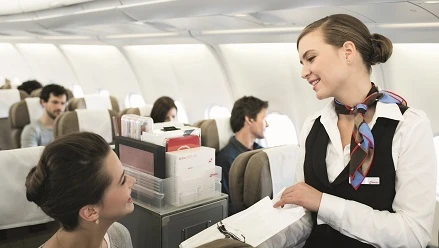
For a passenger, air travel usually begins with a boarding pass and ends with a suitcase on the conveyor belt. In between lies a few hours of waiting, sitting, eating, and resting. But what most travellers never see is the detailed, carefully structured system working behind the curtain — and the air hostess is at the heart of it.
Every journey, from check-in to touchdown, passes through multiple human and technical hands. While ground staff, engineers, and pilots play essential roles, the air hostess is the one who controls the in-flight environment with precision, calmness, and professionalism. Her job begins long before a passenger buckles their seatbelt and continues even after the aircraft has landed.
This hidden journey is one of the many reasons why choosing a professional air hostess course is so important for anyone who dreams of becoming part of the aviation industry. It is not about glamour alone. It is about learning what really happens inside an aircraft and how to handle it with responsibility.
Step One: The Briefing Room – Where Every Flight is Born
Before passengers even enter the airport terminal, the cabin crew is already hard at work. They attend a detailed pre-flight briefing where critical information is shared. This includes weather conditions, turbulence possibilities, medical updates, VIP passengers, special meal requirements, and security notices.
The air hostess must carefully memorize and understand each detail. One mistake or forgotten instruction can affect hundreds of lives. This is why structured training is essential. Only professionally trained candidates can process pressure and responsibility at this level.
Students who aim to enter the industry through the Best air hostess training institute in Guwahati are taught exactly how to handle these briefings, how to report issues, and how to work as a coordinated team under strict timing.
Step Two: Boarding – The Psychology of First Impressions
To a passenger, boarding is just about finding a seat. But to an air hostess, it is the most crucial psychological moment of the flight. This is where she reads faces, observes behavior, senses nervous travellers, identifies potential problems, and ensures that each person feels safe and welcomed.
Her smile is not just friendliness — it is assurance. Her posture is not just elegance — it is control. Even her words are precisely chosen to calm and guide passengers.
This level of professional behavior is developed through intense grooming, confidence building, and communication training. Students are taught how to maintain presence even in stressful situations. They learn how to deal with elderly passengers, families with children, nervous flyers, and even aggressive individuals with politeness and authority.
Step Three: Takeoff – Where Awareness Is Everything
During takeoff, the aircraft is at its most sensitive stage. This is when air hostesses must be fully alert, seated in their jump seats, and focused on the cabin. They monitor unusual sounds, smells, vibrations, or passenger movements.
While passengers look out the window in excitement, the air hostess is mentally prepared for any possible outcome. She is trained to act within seconds if something goes wrong. That is the difference between a normal traveler and a trained aviation professional.
Such intense skill and readiness can only be built through repeated practice, technique building, and simulation training — one of the main reasons professional institutes stand apart.
Step Four: In-Flight – More Than Just Serving Meals
Many people assume that most of an air hostess’s job is walking in the aisle with a food trolley. In reality, that is just a small part of it. The real duty lies in monitoring cabin pressure, checking passenger comfort, controlling conflicts, responding to medical needs, and maintaining discipline throughout the journey.
An air hostess must be observant in a quiet way. She notices if someone hasn’t moved for too long, if a child is unwell, or if a passenger is feeling anxious. She has to respond instantly but gracefully.
Behind the pleasant voice asking, “Would you like tea or coffee?” is a professional scanning every inch of the environment. That is responsibility in its purest form.
Step Five: Descent and Landing – Precision to the Very End
As the aircraft begins to descend, the air hostess once again shifts back into safety mode. She secures the cabin, checks windows are open, seatbelts are fastened, and all electronic devices are turned off. She conducts final checks to ensure the cabin is ready for landing.
Even one unsecured bag or unfastened belt can be dangerous. That is why her role is as critical as the pilot’s during landing. While the pilot manages the aircraft from above, she manages the people inside it.
This coordination between cockpit and cabin is a result of disciplined training and structured education.
Guwahati – Where Aviation Dreams Are Taking Off
Cities like Guwahati are quickly becoming new centers for aviation careers. With the expansion of airlines, improved connectivity, and increasing interest in the aviation industry, more and more students are stepping forward to pursue cabin crew training here.
Students from different parts of the Northeast now prefer Guwahati due to its peaceful environment, affordable cost of living, and access to quality training institutes. If you are planning a visit or in-person counselling, here is our Guwahati location which is easy to find and well connected.
The city is no longer just a destination on the map — it is a launchpad for thousands of aspiring aviation professionals.
Training That Shapes Attitude, Not Just Skills
Becoming an air hostess is not only about qualification. It is about attitude, patience, confidence, listening ability, and self-discipline. A good institute focuses on building the human inside the uniform.
Students must learn punctuality, professionalism, self-care, communication skills, teamwork, and leadership. A delay of even one minute can affect an entire flight schedule. That is why time management and responsibility are deeply integrated into the training programs.
Institutes that combine discipline with encouragement are the ones that truly shape successful aviation careers. One such well-known name is Skyetch Aviation, which continues to support and guide aspiring students into the professional world of aviation.
Aviation: A Career That Changes Your Identity
Aviation is not like an ordinary 9-to-5 job. It transforms the way a person thinks, dresses, speaks, and interacts with others. It expands cultural exposure, builds confidence, and creates an international outlook.
Air hostesses develop a strong sense of independence. They learn to manage themselves, their time, their appearance, and their career with pride. Over time, this profession becomes a lifestyle, not just employment.
It is a career filled with challenges, rewards, learning, and unforgettable experiences.
Final Words
Skytech Aviation is best for doing course etc. They have offer air hostess course, airport managment course, hospitality managment course. Their professional approach, experienced trainers, modern facilities, and student-centered training environment make them a top choice for anyone who dreams of building a career in the aviation and hospitality industry.