
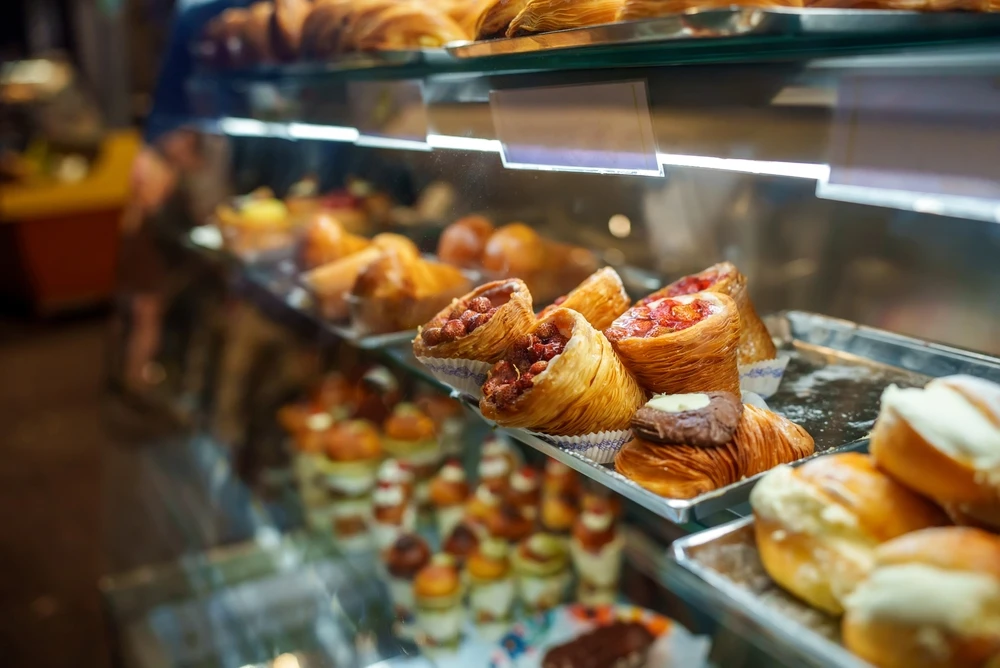
A warm baguette yields under the knife with a sharp crack. Steam rises. The interior pulls apart in soft, open strands. That texture defines authentic French bakery bread and sets it apart from denser supermarket loaves. Boulangerie French bakery tradition creates this result through flour selection, water ratios, fermentation length, shaping technique, oven conditions, and cooling time. Bakers make deliberate choices at each step. Dough reaches 70 percent hydration. Fermentation spans 18 hours. Steam drives oven spring. These methods produce bread that feels structured yet tender. Home bakers study them. Customers expect them from every reputable boulangerie, French bakery.
1. Flour protein builds the gluten frame
● French bread starts with T55 or T65 flour at 11 percent protein content, which forms gluten networks that trap fermentation gases without turning chewy.
● Stronger flour overdevelops toughness. Weaker flour fails to hold shape. The balance creates a crumb that stays light under the crust.
● Bakers perform windowpane tests to confirm flour strength before mixing begins.
2. High hydration forms steam pockets
● Dough carries 65 to 75 percent water by flour weight, which turns to steam during baking and opens the interior structure.
● Autolyse holds flour and water alone for one hour, so gluten develops naturally before salt or yeast enters the process.
● Wet dough needs gentle folding for over four hours to gain strength without losing air.
3. Slow fermentation develops lift and taste
● Bulk fermentation runs 12 to 24 hours at cool temperatures, which converts starches to sugars and strengthens dough walls.
● Levain or poolish preferments add acidity that improves gas trapping and creates nutty depth in the final loaf.
● Time replaces shortcuts. Authentic French bakery bread gains character through patient rising.
4. Shaping aligns the structure
● Three folds during bulk fermentation tighten gluten strands while preserving trapped air from the early rise.
● Final shaping pulls the dough's surface taut to support proofing and early oven expansion without collapse.
● Overworked dough loses openness. Underworked dough spreads flat.
5. Scoring guides the crust split
● Blades slice 6 mm deep at 30-degree angles to direct steam into controlled tears along the loaf surface.
● Baguettes take lengthwise tickets. Round loaves use crosshatch patterns matched to their rise.
● Cuts match the loaf shape. Poor angles trap steam unevenly.
6. Steam creates oven spring
● Ovens reach 250°C for 20 minutes with steam injection, which delays crust set, so volume increases before hardening begins.
● Stone decks deliver even bottom heat. Radiant walls brown the exterior consistently.
● Without steam, the crust locks early and stops expansion.
7. Cooling sets the final feel
● Loaves rest two hours on wire racks so internal steam crisps the shell from the inside out.
● Hot slicing releases moisture and collapses the tender crumb structure immediately.
● Full cooling completes starch changes that define French bread texture.
Find French bread done right
Bread lovers notice texture first. Crust snaps. Crumb stays light. Reputable boulangerie French bakeries deliver this result daily through flour tests, hydration control, long ferments, careful shaping, precise scoring, steam ovens, and cooling racks. Edmonton offers strong options that follow these steps. La French Taste stands among them as a boulangerie, French bakery that bakes authentic French bread fresh each day. Their loaves show proper oven spring and open interiors. Pair the bread with cheese or simply tear it warm. Texture tells the real story.