Running a transportation or freight business involves much more than moving goods from one location to another. Fuel expenses, driver wages, vehicle maintenance, insurance, permits, and other operating costs must often be paid before customers settle their invoices. Even when a trucking company is profitable on paper, waiting weeks or months for outstanding freight invoices to be paid can create serious pressure on working capital. This is one reason many transportation companies explore Freight Bill Factoring as a way to improve cash flow and maintain more consistent access to working capital.
Freight bill factoring is a financial arrangement that allows a transportation business to receive funds against eligible outstanding freight invoices rather than waiting for customers to pay according to their normal payment terms. Instead of treating unpaid invoices as money that must simply sit on the company's books, a business can work with a factoring company to convert qualifying receivables into available cash.
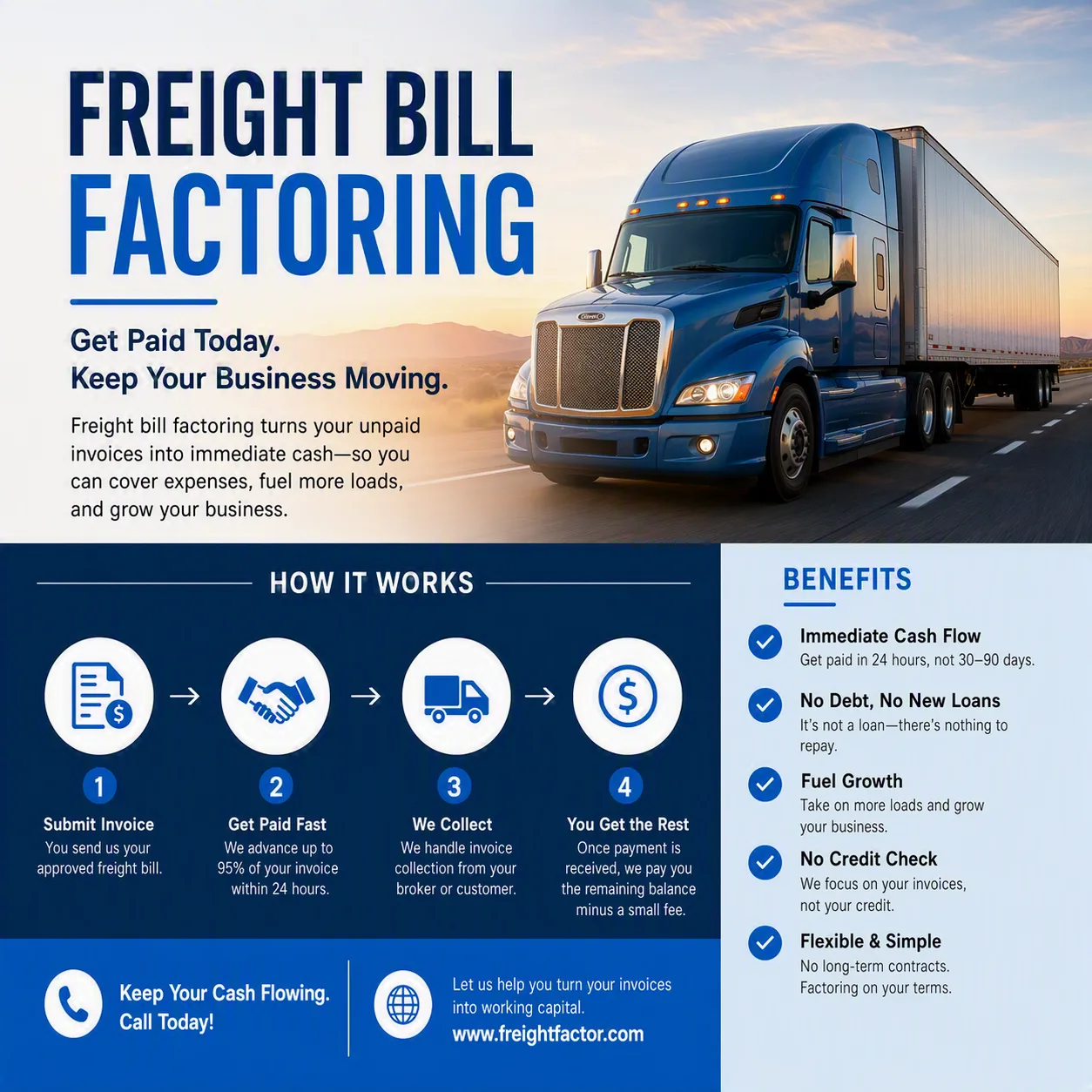
The process is generally straightforward. After completing a shipment, a trucking or transportation company invoices its customer. Instead of waiting for the customer to pay, the company submits the eligible invoice to a factoring provider. Once the invoice is approved, the factoring company advances a portion of its value to the transportation business. When the customer's payment is received, the remaining balance is generally released to the business after applicable fees and charges.
For transportation companies, access to faster working capital can be particularly valuable because expenses continue regardless of when customers pay their invoices. A truck may need fuel before completing its next load, a driver may need to be paid according to a regular schedule, and unexpected maintenance can arise at any time. Having predictable access to funds can make it easier for a company to manage these obligations without constantly waiting for accounts receivable to clear.
Another potential advantage of Freight Bill Factoring is that it can help businesses manage growth. Taking on additional loads can increase revenue, but growth can also increase short-term expenses. A company that accepts more freight may need additional fuel, drivers, equipment, insurance, and operational resources before receiving payment from customers. Faster access to invoice funds can help bridge this timing gap and provide greater flexibility as the business expands.
Factoring can also be different from traditional business financing. Depending on the agreement and provider, factoring is primarily based on eligible accounts receivable rather than solely on the business owner's personal credit profile or the company's ability to qualify for a conventional loan. However, requirements, fees, advance rates, recourse provisions, and approval processes vary between factoring companies, so transportation businesses should carefully review the terms before entering into an agreement.
When evaluating a Freight Bill Factoring provider, business owners should look beyond the advertised advance rate. Understanding the complete fee structure is important because processing fees, minimum volume requirements, contract terms, reserve policies, and other charges can affect the actual cost of the service. Companies should also determine how quickly invoices are funded and what happens if a customer disputes or delays payment.
Choosing a provider familiar with the transportation industry can also be beneficial. Freight businesses often deal with brokers, shippers, freight forwarders, and other customers, each with different payment practices and documentation requirements. A factoring company experienced in freight and transportation receivables may understand these operational details and provide a process designed around the industry's needs.
Ultimately, Freight Bill Factoring is not simply about receiving money faster. It is a cash-flow management tool that can help transportation businesses reduce the gap between completing a job and receiving customer payment. For companies dealing with extended invoice terms or rapid growth, improving the timing of available cash can make day-to-day financial management more predictable.
Before choosing a factoring arrangement, business owners should compare providers, understand all contractual terms, and consider how the service fits into their broader financial strategy. With the right structure and provider, freight bill factoring can give transportation companies greater flexibility to cover operating expenses, accept new opportunities, and continue building their businesses without being constrained by slow-paying invoices.