
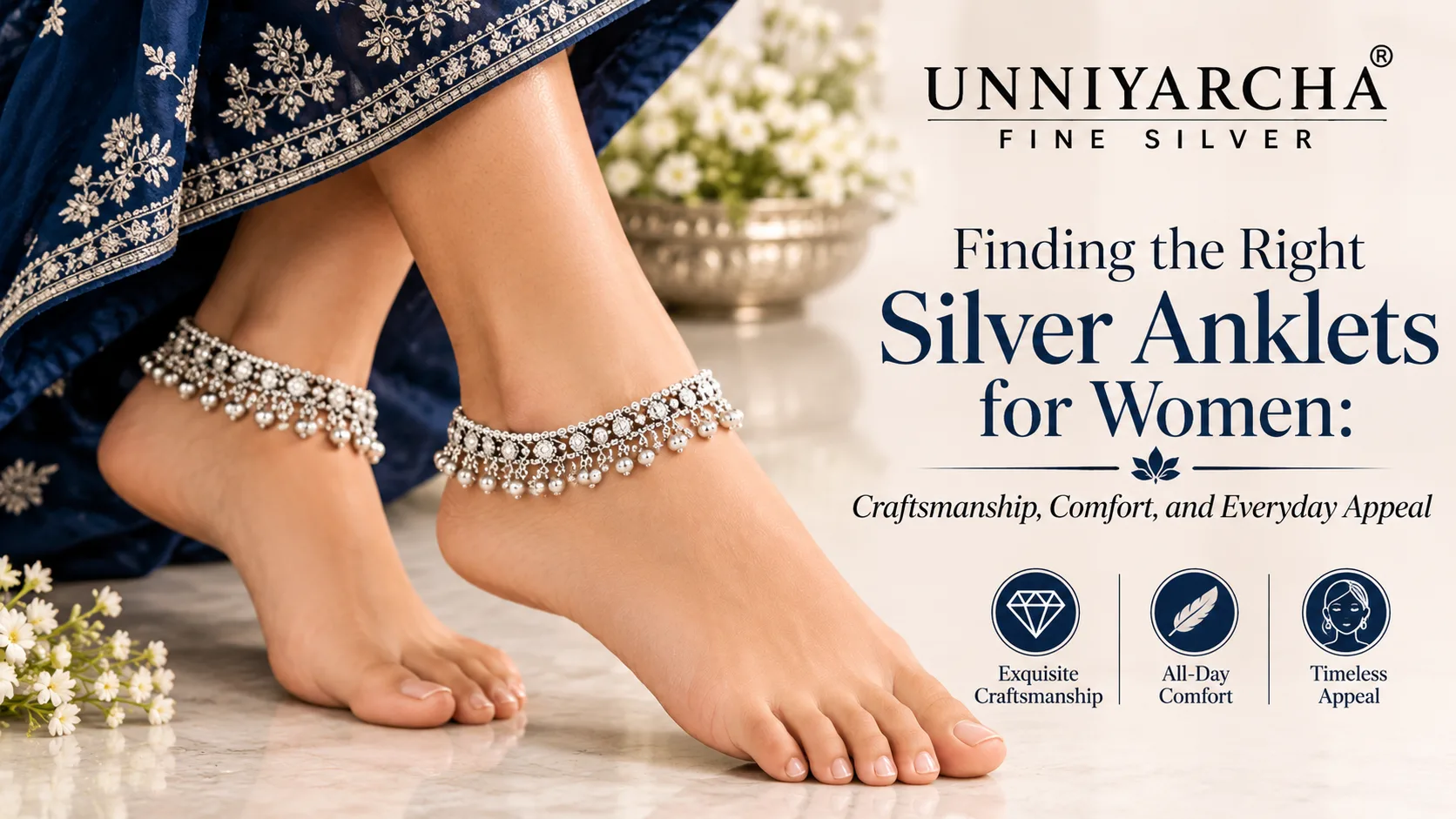
Jewellery that sits near the ankle occupies a unique space in personal style. Unlike a necklace that frames the collarbone or earrings that catch attention near the face, an anklet moves with every step, catching natural light softly along the lower leg. That subtle motion is precisely why silver anklets have stayed relevant across shifting fashion cycles. Whether worn as a single delicate strand on a quiet workday or paired with festive attire during family celebrations, a well-made silver anklet brings warmth, tradition, and quiet poise without ever feeling loud.
Selecting a piece that truly fits into your routine takes a bit of awareness. Silver varies in finish, chain weave, weight, and clasp design, and each detail shapes how comfortable the anklet feels after hours of walking, sitting, or travelling. Looking closely at how silver anklets are crafted, how different designs behave in daily life, and how to keep them looking fresh makes it much easier to choose pieces you will genuinely enjoy wearing.
What Makes Silver Such a Natural Choice for Anklets
Silver has been used in ankle ornaments for generations, and its enduring appeal comes down to both aesthetics and practicality. Visually, silver has a cool, bright tone that pairs naturally with both warm and cool skin undertones. It looks crisp against cotton and linen in warm weather, and it brings a distinct, luminous contrast to rich silk, velvet, and brocade during festive months.
From a practical standpoint, ankle jewellery faces constant movement. Every step creates gentle tension along the chain and clasp, while footwear edges, hems, and floor dust all interact with the metal throughout the day. Silver offers a dependable balance of strength and workability when properly alloyed, allowing artisans to shape fine links, smooth edges, and secure fastenings that hold up well over time.
There is also an emotional element that keeps silver close to everyday life. For many people, silver feels approachable rather than overly formal. You do not have to save it only for once-a-year events. A thoughtfully chosen anklet can become part of your regular rhythm—something you put on in the morning and feel comfortable wearing from errands to evening gatherings.
Exploring Different Styles and Finishes
Because ankle jewellery serves so many moods and settings, silver anklets are made in a wide range of styles. Understanding the main categories helps narrow down options based on what you actually wear rather than chasing fleeting trends.
Delicate Everyday Chains
Fine cable chains, box chains, and sleek snake chains are popular choices for women who want something understated. They sit close to the skin, rarely catch on looser trousers, and add a subtle glint when you walk or cross your legs. Some feature tiny motifs—such as small stars, hearts, evil eye accents, or minimal beads—that give the chain a personal touch while keeping the overall profile light and easygoing. When browsing curated options in silver anklets for women, starting with a clean, lightweight chain is often the simplest way to test how comfortable an anklet feels in daily wear.
Traditional and Festive Payals
Traditional Indian anklets bring a completely different energy. Whether crafted with rows of tiny ghungroos, floral relief work, or antique oxidised finishes, these designs celebrate heritage and movement. A soft tinkle adds charm to traditional outfits, especially during weddings, pujas, and family functions. Oxidised silver, with its darkened crevices and raised highlights, gives intricate patterns extra depth and pairs naturally with handloom sarees, salwar suits, and festive lehengas.
Beaded and Charms-Accented Designs
Adding small beads, pearls, or subtle charms changes how light reflects around the ankle. Tiny freshwater pearls or coloured beads spaced along a fine silver chain create texture and break up a solid metallic line. These styles often feel relaxed and expressive, making them easy to pair with summer dresses, cropped kurtas, or casual sandals when you want a bit of detail without heavy metalwork.
Layered and Statement Anklets
For days when you want more visual presence, double-strand anklets or slightly wider link designs offer extra dimension. Layered chains create movement and fullness without needing to wear two separate pieces that might twist around each other. Wider links or heavier traditional patterns also work well when balanced with flowing skirts or wide-leg trousers where a ultra-thin chain might get lost.
Comfort, Sizing, and Clasp Details That Matter
Even the prettiest anklet loses its appeal if it pinches, slides over the heel, or feels awkward around the ankle bone. Getting the fit right is one of the smartest steps before buying.
Start by measuring around your ankle just above the ankle bone with a soft tape measure or a strip of string. Once you have that measurement, add a little breathing room—usually around half an inch for a closer fit, or up to an inch if you prefer a looser drape that sits slightly lower. Ankles can swell a bit in warm weather, during long travel days, or after standing for hours, so a slightly relaxed fit or an extender chain with extra jump rings makes a noticeable difference in day-long comfort.
Clasps deserve attention too. A sturdy lobster clasp is easy to fasten and stays securely closed through regular movement. Spring rings work well on lighter chains, while traditional hooks or screw clasps are common on heavier heritage styles. Checking that jump rings are tightly closed and edges are smoothly finished helps prevent snags on socks, dupattas, or fine fabrics.
Pairing Silver Anklets With Your Wardrobe
Styling an anklet works best when the piece complements the cut of your clothing and the type of footwear you have on. You do not need complicated rules—just a sense of proportion.
With cropped jeans, culottes, ankle-grazing trousers, or midi skirts, the lower leg is already visible, so the anklet becomes a natural focal point. Flat sandals, strappy flats, mules, and clean sneakers all pair easily with everyday silver chains. If you are wearing boots that cover the ankle or shoes with tight straps rubbing right over the bone, a delicate chain can get pressed or tangled, so saving the anklet for more open footwear is usually more comfortable.
With ethnic wear, think about balance. A detailed kurta set, sharara, or saree looks cohesive when the anklet's style matches the occasion—lighter chains or subtle bells for daily or casual wear, and richer payals or oxidised pieces for celebrations. Wearing one anklet gives a clean, modern look, while wearing a matching pair feels classic and symmetrical.
Simple Habits for Caring for Silver Anklets
Silver naturally reacts to air, moisture, sweat, and everyday cosmetics over time, which can dull its shine or create a dark film known as tarnish. Good care does not require complicated routines; small daily habits go a long way.
Make it a habit to put your anklet on after applying lotion, perfume, or sunscreen, and take it off before swimming in pools or seawater, using harsh household cleaners, or showering if you prefer to keep the finish extra bright. When you take it off, storing it in a dry pouch or a closed jewellery box—ideally away from damp bathrooms and separated from other pieces—helps slow down tarnishing and keeps fine chains from tangling.
Every few weeks, a gentle wipe with a soft silver-polishing cloth or microfibre cloth can lift light surface dullness. If a piece needs a deeper clean, mild soap and lukewarm water with a soft brush, followed by thorough rinsing and complete drying before storage, will keep it looking neat and ready to wear. With thoughtful care, a silver anklet remains a dependable, expressive favourite in your jewellery collection for years to come.