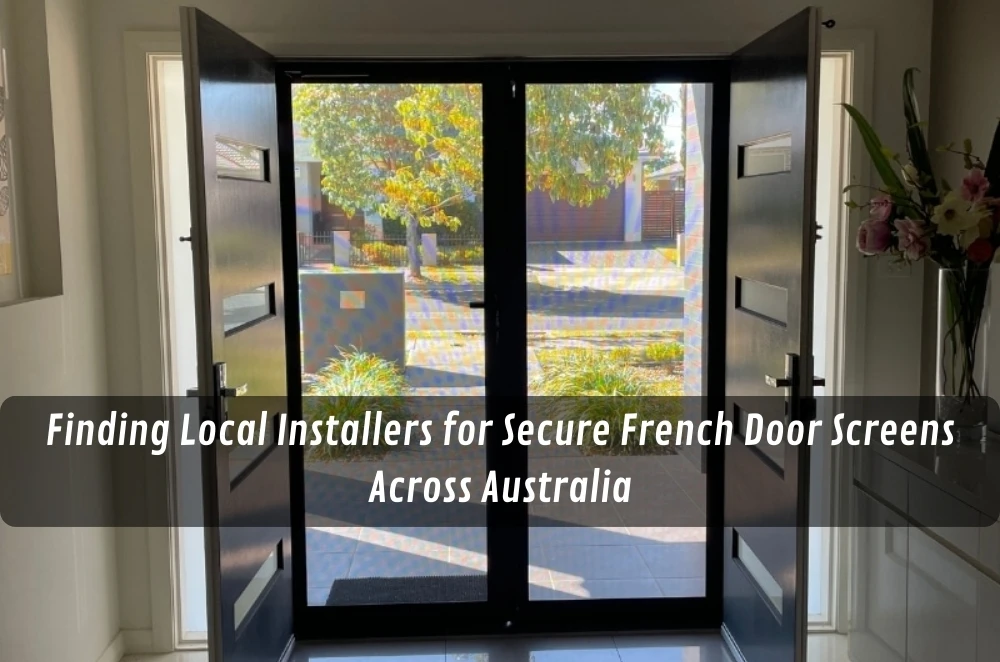
French doors do something few other door styles can: they open a room up to the outdoors in a way that feels generous and bright. But they also create a common dilemma for Australian households—how do you keep the airflow and open feel, without leaving a large, often glazed entry point feeling exposed?
Security screen solutions for French doors are popular for that reason. They’re designed to let you ventilate, keep insects out, and add a physical barrier at a key entry point. The part that’s easy to underestimate is the installation. French doors are unforgiving: two leaves, multiple meeting points, and tight tolerances. A good product can underperform if it’s measured or fitted poorly.
This editorial is about choosing the installer—not just the screen. If you’re searching for local installers for secure French door screens across Australia, here’s what to look for so the result feels solid, lines up cleanly, and gets used every day (instead of becoming a frustrating “almost right” add-on).
Why French doors are a special case
Compared with a single hinged door, French doors add complexity in a few predictable places:
- The centre meeting stile: Where the two door leaves meet is a natural point of movement, flex, and potential gaps if things aren’t aligned.
- Clearances and swing paths: Security screens need to open and close smoothly without fouling handles, floor trims, mats, or uneven thresholds.
- Locking and latching interfaces: Even if your internal doors lock well, the screen system needs its own reliable hardware and alignment.
- Existing door condition: Older doors can be slightly out of square, which becomes obvious once a tight-fitting screen is added.
A capable installer won’t treat French doors like a standard doorway. They’ll anticipate these pinch points and design the solution accordingly.
“Local installer” isn’t just about distance
When people say “local,” they often mean “someone nearby who can come out quickly.” That matters—but it’s not the whole picture. A truly suitable local installer is one who:
- Understands common door styles in your area (new builds vs older homes, coastal vs inland)
- Can service you after installation if adjustments are needed
- Has a supply chain that supports parts, hardware, and follow-up work
- Measures and installs to a consistent standard (not “close enough”)
Australia-wide networks can still deliver a local experience if the on-the-ground fabricator/installer has strong processes and accountability. The point is to confirm who is actually responsible for the measure, the build specs, and the final fit.
Questions worth asking before anyone measures
A good quote starts with a good site visit. Here are questions that quickly reveal how thorough the installer is.
1) Who does the final measure?
Ask whether the person quoting is the person measuring. If not, confirm how measurements and notes are captured and transferred. French doors often need more than width and height—handle clearance, swing direction, threshold details, and reveal depth can all matter.
2) How will the screen doors meet in the middle?
This is where shortcuts show up. Ask how they manage:
- the centre overlap (or meeting detail)
- potential daylight gaps
- alignment across the two leaves
If the answer is vague, that’s a sign they may be applying a “standard door” approach.
3) What hardware is included, and what are the options?
You don’t need to memorise lock types, but you should understand:
- how the screen doors latch
- whether there’s a shared centre latch or independent latching
- what the everyday use feels like (one motion vs fiddly steps)
If you have children, older relatives, or accessibility considerations, usability matters as much as security.
4) How do you handle uneven floors and thresholds?
Many homes have slight fall, tile lip, or threshold variations. A careful installer will check for:
- door swing clearance over rugs/mats
- consistent gaps along the bottom edge
- whether an adjuster or threshold solution is needed
5) What’s the plan for coastal conditions (if relevant)?
If you’re near the ocean, ask about:
- material suitability for salt air
- cleaning and care expectations
- how hardware holds up over time
A credible installer won’t promise “maintenance-free” in harsh environments. They’ll talk realistically about care.
What a good quote should include
Quotes vary widely, which makes comparison hard. You’ll make better decisions if you ask for quotes that clearly state:
- Exact door configuration (double hinged, one active leaf, both active, inward/outward opening)
- Frame and mesh type (including finish)
- Hardware (latch/lock style, hinges, closers if applicable)
- Colour/finish details (especially if matching existing frames)
- Scope (removal of old screens, disposal, patching, any carpentry/trim changes)
- Timeframe assumptions (without relying on vague “subject to” wording)
- Warranty terms (what’s covered, and what counts as maintenance)
If a quote is one line with minimal detail, it’s difficult to hold anyone accountable later.
Signs the installer is thinking long-term
French door screens are high-touch. You’ll use them constantly in warmer months. That means small quality differences become daily annoyances—or daily relief.
Look for signs like:
- They check door squareness and note any structural issues.
- They discuss alignment at the centre meeting point.
- They talk about how the doors will behave in heat (some movement is normal in many materials).
- They explain what maintenance looks like in plain terms.
- They leave you with a clear description of what you’re getting.
A practical litmus test: do you feel like they’re designing your solution, or selling a generic product?
Common installation pitfalls (and how to avoid them)
Misalignment at the centre
If the two screen leaves don’t align properly, you can end up with rubbing, rattling, or a visible gap. Avoid this by insisting on a measured, site-specific approach and by choosing installers who routinely fit French door configurations.
Handles and lock clashes
French doors often have existing hardware that protrudes more than you realise. A good installer checks clearance so the screen doesn’t collide with handles or restrict operation.
Doors that “feel heavy” or don’t close cleanly
This can happen with poor hinge selection, poor adjustment, or an uneven threshold. Ask how they will ensure smooth closing and consistent gaps.
Overpromising on “invisible” screens
All mesh is visible at some angle and in some light. If visibility is a priority, ask to see a full-size sample or installed job—small swatches can be misleading.
Aftercare: the part most people forget to price in
Even excellent installations can benefit from minor adjustments after settling-in—especially if doors are used heavily or exposed to weather.
Ask:
- Is a post-install adjustment included?
- What’s the process if a latch needs tweaking in six months?
- Who do you contact for service?
A local installer with real aftercare is often worth more than a slightly cheaper quote that disappears once the invoice is paid.
How to choose confidently, even if you’re comparing multiple installers
If you’re collecting quotes across an Australia-wide service area, try this approach:
- Shortlist by clarity: keep the quotes that specify configuration, materials, and hardware.
- Check for French door experience: ask for examples of similar installs.
- Assess communication: responsiveness now often predicts service later.
- Confirm the installer-of-record: who measures, who installs, who services.
- Choose the most complete solution: not the lowest number.
A secure French door screen should feel like part of the home—not a compromise you work around.
Key Takeaways
- French doors need a more precise approach than single doors—centre alignment and clearances matter.
- “Local installer” should mean reliable measuring, fitting, and aftercare, not just a nearby postcode.
- Strong quotes spell out configuration, materials, hardware, finish, and scope—vague quotes are hard to compare.
- Ask direct questions about centre meeting details, thresholds, and hardware usability before committing.
- Plan for real-world conditions (especially coastal) and confirm what post-install support looks like.