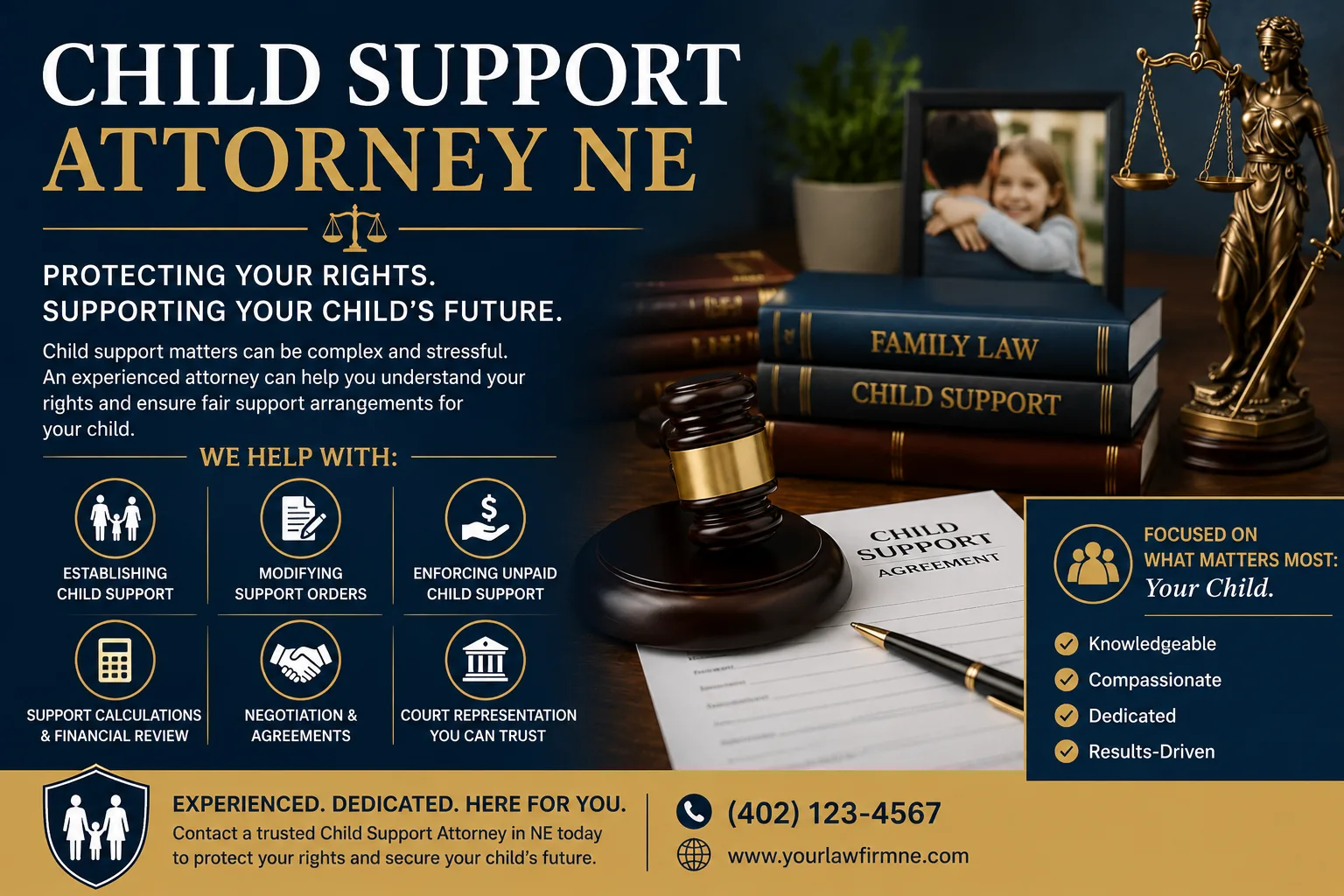
Family law deals with a variety of the types of legal matters that impact on families and personal relationships. Knowing the basics of Family Law in Nebraska can benefit you in a variety of situations, such as divorce, child custody, child support, adoption, and guardianship cases, to ensure you make informed decisions and safeguard your rights.
Family related legal issues can be very emotional and complicated. Nebraska courts attempt to settle matters fairly, keeping the interests of children in mind and making sure matters are dealt with appropriately.
What Is Family Law?
Family law is a field of law that deals with Family Relations and domestic issues. Nebraska Family Court doesn't hear only divorce cases - it also addresses other issues that impact spouses, parents, children and more.
Some typical family law issues involve:
- Divorce and legal separation
- Child custody and visitation.
- Child support
- Spousal support (alimony)
- Adoption
- Paternity actions
- Guardianship
- Domestic violence protection orders
- Post-divorce modifications
Every case is different and courts consider the circumstances of each case when deciding on a sentence.
Divorce in Nebraska
One of the most frequently handled family law cases is a divorce. Nebraska has a no-fault divorce system. Nebraska has a no-fault divorce system, which means there must be no fault found for the spouse to receive a divorce.
In a divorce, there are a number of serious issues that need to be addressed, including:
Property Division
Nebraska courts divide marital property in a fair and equitable manner. The assets to be divided can include:
- Real estate
- Retirement accounts
- Bank accounts
- Investments
- Vehicles
- Business interests
The court takes into account many factors in deciding about asset and debt division.
Spousal Support
However, in some situations, it may be necessary for one spouse to support the other financially. Alimony is considered based on factors including income, financial resources, earning capacity, length of the marriage.
Child Custody and Parenting Time
Involving children makes custody matters one of the main concerns.
Nebraska courts emphasize the best interests of the child and promote opportunities for meaningful connections with both parents where possible.
Legal Custody
Legal custody gives the power to make important decisions about:
- Education
- Healthcare
- Religious upbringing
- General welfare
- Physical Custody
Physical custody is the definition of where the child resides (the major residential parent) and how parenting time is shared between the parents.
Parenting plans are sometimes developed to provide clear schedules and responsibilities for both parents.
Child Support in Nebraska
Child support is meant to provide financial assistance to children following a separation or divorce from their parents.
Nebraska child support guidelines take into account:
- Both parents' income is taken into account.
- Parenting time arrangements
- Healthcare expenses
- Childcare costs
- The number of children who are involved in the action.
Support orders can be adjusted if there are significant changes affecting a parent's income or the custody order.
Adoption and Guardianship
Family law also helps families with adoption and guardianship cases.
There are several different types of adoption, such as:
- Stepparent adoption
- Relative adoption
- Private adoption
- Agency adoption
Guardianship can be obtained when a person is not able to care for a child or a dependent person. These cases are considered carefully by courts to ensure that the best interests of the parties are being looked after.
Paternity Matters
When a child is born, parents have legal rights and responsibilities by virtue of their paternity. Paternity Claims can impact:
- Child support
- Custody rights
- Parenting time
- Healthcare and educational decisions.
Legal parentage provides for children to have financial and emotional support from both parents.
A domestic violence order or protection order.
The courts in Nebraska offer legal protection to people who are victims of domestic violence, harassment, or threats.
Consider protection orders:
- Prevent unwanted contact
- Keep children and family members safe.
- Establish legal boundaries
- Improve personal safety
These are legal options which are a crucial aspect of family law and which help people in challenging circumstances.
Why Legal Representation Matters
Family law proceedings can have emotional and monetary ramifications. An experienced family law attorney can offer you:
- Advice and guidance on the Law.
- Ensure your rights are protected.
- Help with paperwork and filing cases in court.
- Assistance in negotiation and mediation work.
- Courtroom representation
Having a lawyer provide professional legal support can help ease tension and increase the chances for a positive outcome.
Conclusion
Knowing the fundamentals of Nebraska Family Law is crucial to everyone who is involved in a divorce case, child custody case, child support case, adoption, or any other type of family law case. Nebraska family laws are intended to advance the rights of parents, children, and families while making certain any conflicts are settled fairly. Navigating family law matters can be a daunting task, but by seeking legal advice and understanding your rights, you can navigate these matters with greater confidence and move towards a secure future for yourself and your loved ones.