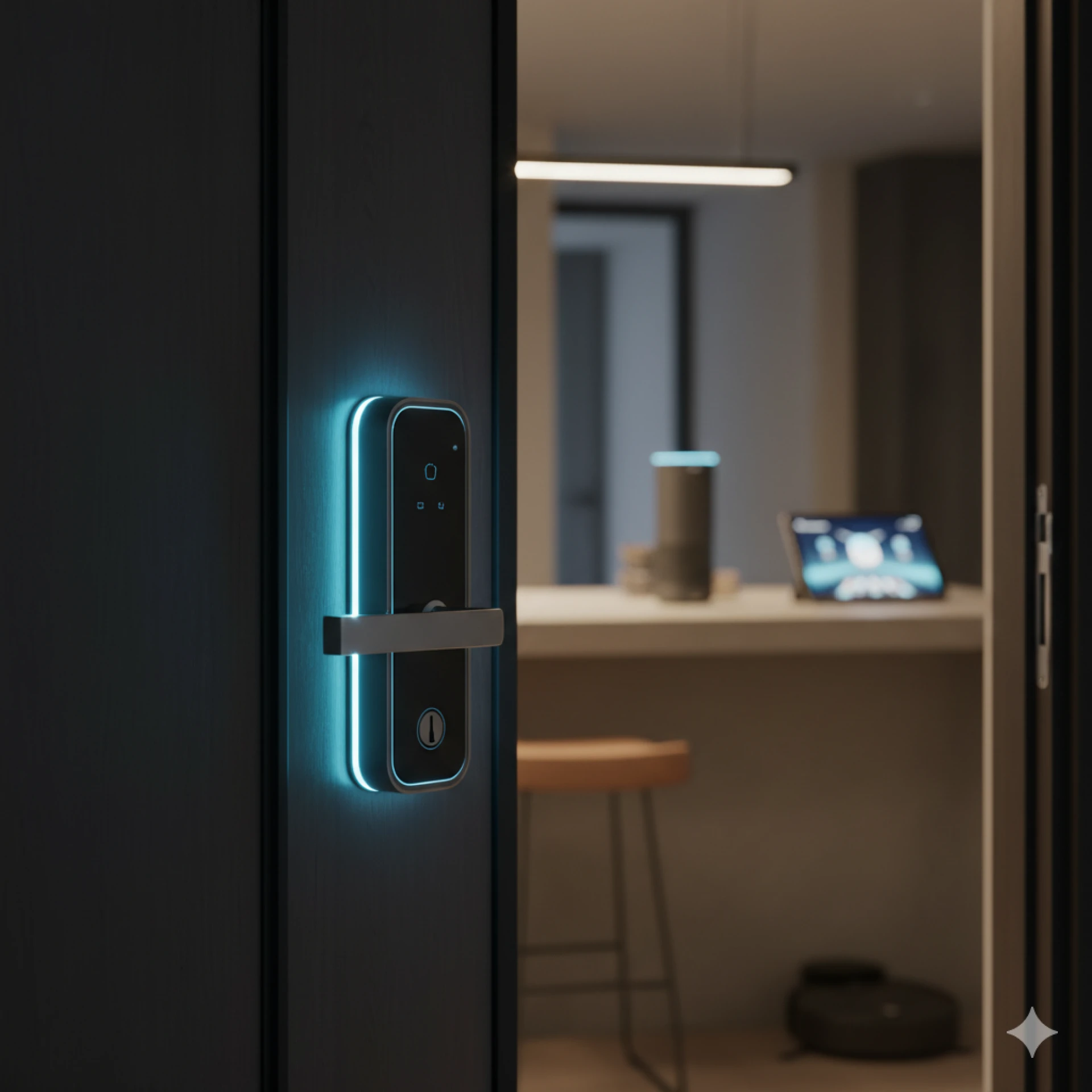
Do you know what the major charm of smart door automation is? What’s the secret that compels people to consider smart doors? The Convenience, but it can somehow serve a paradoxical purpose. REASON?
Convenience is not the most crucial aspect of an automatic door opener. Before a security breach or an accessibility complaint, business owners wish they had known about them.
This article highlights key facts that facilities managers should be aware of regarding smart door automation, legal compliance, and access control.
Facts To Know About Smart Gate Automation
Fact #1: ADA Compliance Is Not About the Door, It's About the Force
Many business owners see an automated door opener as a luxury device for upscale establishments and an optional enhancement. This is a harmful false belief. In actuality, an automatic opener ceases to be voluntary and becomes required by law if a manual door fails to comply with the Americans with Disabilities Act (ADA) 5-pound maximum opening force requirement.
An essential part of ADA door compliance for interior doors is this 5-pound guideline. Many hefty commercial steel or glass storefront doors still fail to meet the reasonable force criteria, even though wind pressure provides exterior doors with a little more leeway. For those with disabilities, pushing or pulling a large, non-compliant door can be a major obstacle and expose the company to legal action.
Finding out the price of non-compliance is the "wish you knew" moment. ADA infractions can result in federal fines of up to $75,000 for the first offense and up to $150,000 for consecutive infractions. Legal costs and state-level penalties are not included in this.
"Low-energy" operators come into play here. The answer to this widespread issue is these operators. They are "knowing act" devices, which means a push plate activates them. They are made expressly to enable anyone who has to open a non-compliant door to do so with the least amount of effort. Proactive automation is more than simply a cost; it's a solution. Ignoring this can have disastrous cost repercussions when it comes to door installation.
Fact #2: Your Access Control is Only as Smart as Its Dumbest Part
If a high-tech keypad, card reader, or biometric scanner is not correctly linked with the door's physical locking hardware, it isn't beneficial, despite its stunning appearance. Hardware synchronization is the key to a safe and efficient automated entrance.
There are two steps involved in access control:
Authentication - The system confirms a user's identification (via a card, code, or app).
Physical Action - The door must be (a) unlocked and (b) opened by the system.
When this sequence is set up wrong, a critical door installation error occurs. The "secret" is that a group of parts must cooperate at precisely the right moment. This team consists of the "opener" and the "lock" (usually an electric strike that releases the latch or a magnetic lock that retains the door) (the automatic door opener motor).
This is one key difference between home and business systems. A homeowner may investigate the best smart lock that uses rings to manage a single deadbolt. However, a commercial building needs to combine electrified locking hardware with a high-traffic automated door opener in order to offer features like touchless access. In this complex integration, professional and planning components cannot be compromised.
Fact #3: You Don't Need a New Building—You Just Need a Retrofit
Many decision-makers put off automation because they believe it necessitates a large-scale, brand-new building project. When they see the heavy-duty steel or glass storefront doors they now have, they assume the entire unit has to be torn out. This "all or nothing" mentality is another expensive door installation error that keeps companies from enhancing their security and accessibility.
In actuality, the great majority of smart automation systems are made to be installed on already-existing doors. Surface-mounted operators are intended to be fitted on pre-existing door frames, especially the low-energy ADA operators. This implies that a company can just install the automation components while keeping its safe, current door. By doing this, the enormous cost and inconvenience of redoing the entire entrance are avoided.
Additionally, wiring is a frequent source of trouble during the installation process. Here, using wireless transmitters and receivers is the "wish you knew" option. These devices remove the need to extend wires from the operator above the door to the activation push plate, which is frequently located on a wall or bollard. This can save thousands of dollars on labor expenses related to trenching concrete or cutting drywall.
Retrofitting remote activation is a flexible and scalable technology used in various applications, including smart gate automation and smart garage control.
Do Not Miss: “5 Ways to Boost Your Home Security Using Commercial-Grade Doors”
From "Convenient" to "Critical"
Smart door automation is a crucial technology that strikes a balance between intelligent operation, smart security, and legal accessibility. It is not a straightforward improvement. Knowing these facts completely alters one's viewpoint.
Businesses may prevent expensive door installation errors by understanding that hardware integration is crucial, accessibility is frequently required, and retrofitting is more accessible than most people realize. Find out what you wish you had known sooner rather than waiting for a security breach or a compliance litigation.
Examine how smart door automation can make your building's entrances genuinely safe, accessible, and effective.