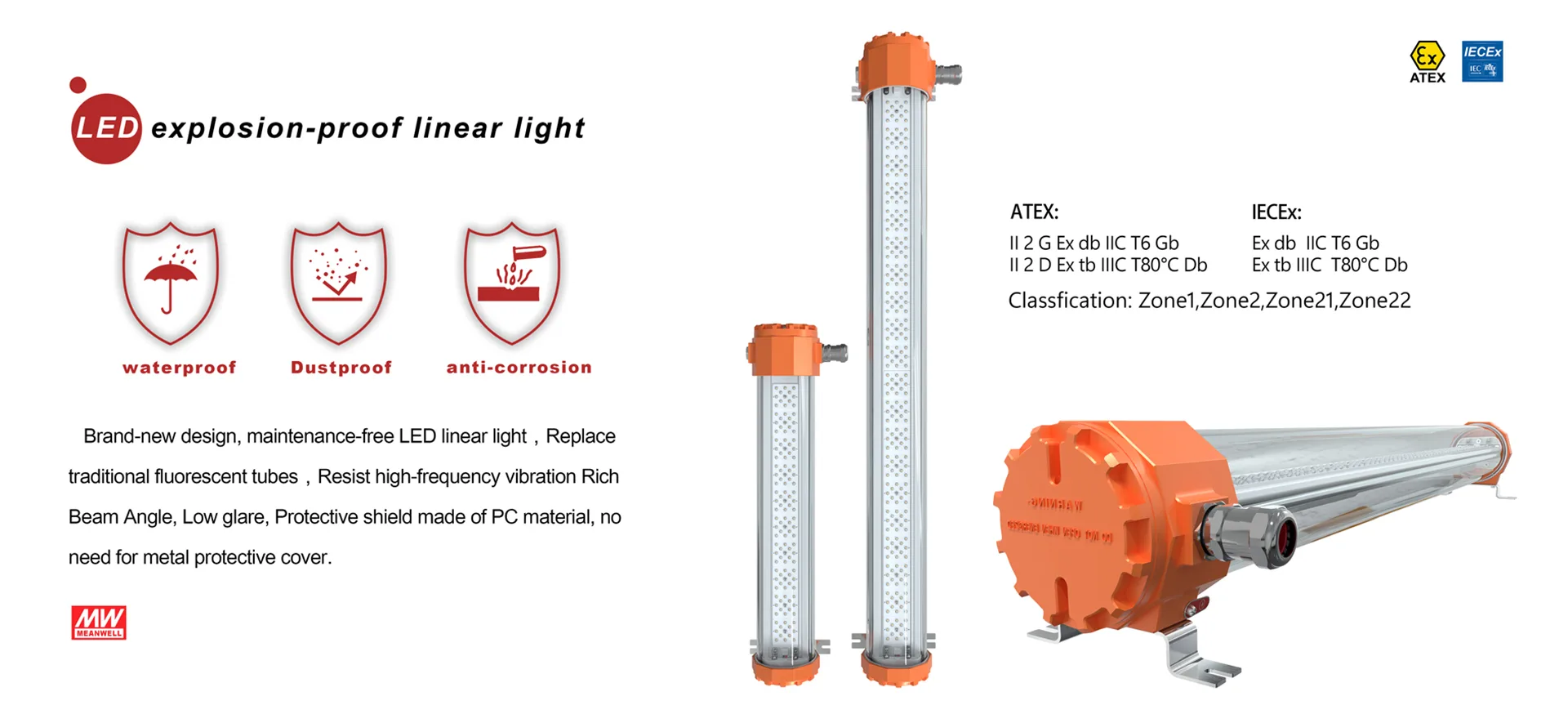
The short answer, before anything else: explosion proof lighting is built to contain ignition—sparks, heat, or internal faults—so they never reach the surrounding explosive atmosphere.
That’s the definition you’ll find in standards. But in the field, it’s simpler.
It’s the light you don’t worry about when everything around it is a risk.
Where the real risk starts (and it’s not where most think)
People often imagine explosions as sudden, dramatic failures. In reality, most risks start quietly.
I remember walking through a paint solvent storage area during a routine inspection. The lighting system had been installed just three years earlier—standard industrial LED fixtures, not rated for hazardous zones.
No visible issues. No flicker.
But one driver housing showed minor carbon traces near the terminal. That’s it. A small sign of arcing.
According to industry guidance, even minor electrical faults—sparks or elevated surface temperatures—can ignite flammable vapors or dust if conditions align .
That installation didn’t fail. It was replaced before anything happened.
Still, that’s usually how it begins.
What “explosion proof” actually means (beyond marketing)
There’s a misconception that explosion proof lighting prevents explosions entirely.
It doesn’t.
It assumes an explosion can happen—inside the fixture—and designs for that scenario.
Under IEC 60079, the core principle is containment:
- The enclosure must withstand internal pressure
- Any escaping gases must cool before reaching the outside
- External atmosphere must not ignite
In flameproof (Ex d) design, internal ignition is allowed—but controlled. The enclosure absorbs pressure, and flame paths reduce temperature before gases exit .
That’s a very different mindset compared to standard lighting design.
You’re not avoiding failure. You’re designing for it.
Zones, gases, and why selection is rarely straightforward
Hazardous areas are classified into zones:
- Zone 0: explosive atmosphere continuously present
- Zone 1: likely during normal operation
- Zone 2: unlikely, but possible
Each zone demands different levels of protection.
Then comes gas grouping—IIA, IIB, IIC—based on how easily substances ignite.
Hydrogen, for example, falls into IIC, requiring stricter containment than propane. This affects enclosure tolerances, sealing methods, and testing.
And it’s not optional.
Explosion proof lighting must match both the zone and gas group to be compliant and safe .
I’ve seen projects delayed simply because the fixture rating didn’t match the actual site classification—not a technical failure, just a mismatch.
Still costly.
Heat is where most failures quietly begin
LEDs are efficient, yes. But inside sealed enclosures, heat behaves differently.
In one refinery project, fixtures mounted under direct sun experienced ambient temperatures exceeding 45°C. Within months, lower-quality drivers started drifting—light output inconsistent, then partial shutdown.
The enclosure didn’t fail. The electronics did.
IEC standards assume equipment operates within defined temperature ranges (typically -20°C to +60°C under standard conditions) . But real sites often push beyond that.
That’s why better explosion proof lighting designs:
- Separate driver and LED chambers
- Use higher-rated electronic components
- Increase thermal mass through housing design
You don’t always see this on spec sheets. But you see it after six months of operation.
Sealing isn’t just about IP ratings
IP66, IP67—useful, but incomplete.
In offshore environments, I’ve seen fixtures pass all ingress tests yet still develop internal moisture over time.
The reason is pressure cycling.
Temperature shifts cause expansion and contraction. Without proper pressure equalization, the fixture draws in humid air. Over time, condensation forms inside.
Better explosion proof lighting includes controlled breathing systems—allowing pressure balance without letting hazardous gases in.
It’s subtle engineering. Often overlooked.
But once you’ve opened a fogged lens in a corrosive environment, you stop ignoring it.
Installation mistakes happen more than design failures
You’d expect most failures to come from manufacturing. Not always true.
Some of the most common issues I’ve seen:
- Non-certified cable glands used during installation
- Thread damage affecting flame paths
- Missing seals after maintenance
Under IEC guidelines, explosion protection applies to the entire system, not just the fixture .
So even perfectly designed explosion proof lighting can become unsafe if installed incorrectly.
One site supervisor summed it up bluntly:
“Products don’t fail audits. Installations do.”
Why some facilities go beyond minimum requirements
Interestingly, not all facilities strictly follow minimum classification requirements.
There are cases—especially in fuel handling—where companies install explosion proof lighting even when standards might not strictly require it.
From industry discussions, the reasoning is simple: risk tolerance.
“It is very possible… to spend more and be cautious”
Because even if explosion probability is low, consequences are not.
That mindset is more common than many realize.
What we’ve learned at SEEKINGLED (from field feedback)
At SEEKINGLED, product development rarely starts with theory. It usually starts with complaints.
One client in a coastal plant reported recurring corrosion near mounting interfaces. The fix wasn’t electrical—it was coating thickness and material selection.
Another case involved vibration-related failures in heavy machinery environments. The solution came from reinforcing internal driver mounting—not changing electronics.
These adjustments are small, but over thousands of installed units, they define reliability.
Our field data shows failure rates consistently below 0.3% over multi-year deployments. That includes installations in high humidity, high temperature, and chemically aggressive environments.
Not perfect. But predictable.
Efficiency vs durability: a trade-off people don’t talk about
There’s always pressure to push lumens per watt higher.
But in hazardous areas, efficiency is not the primary metric.
A slightly less efficient explosion proof lighting system that runs cooler and more stable will often outperform a high-efficiency design that operates near its thermal limits.
Over time, stability reduces maintenance cycles—important in areas where access requires permits, shutdowns, and safety supervision.
So the question shifts from:
“How efficient is it?”
to
“How long will it run without intervention?”
The part that only shows up after time
New installations always look good. Bright, uniform, clean.
The real test starts later:
- After one hot season
- After months of vibration
- After exposure to chemicals or salt air
That’s when sealing, thermal design, and material choices reveal themselves.
Good explosion proof lighting doesn’t stand out.
It just keeps working.
Final thought from the field
After enough site visits, your priorities change.
You stop asking how bright the light is.
You start asking whether it will still be there—unchanged—after a year of operation in a hostile environment.
Because in hazardous areas, reliability isn’t impressive.
It’s expected.
And that’s exactly what explosion proof lighting is built for.